
 Thanksgiving hosting

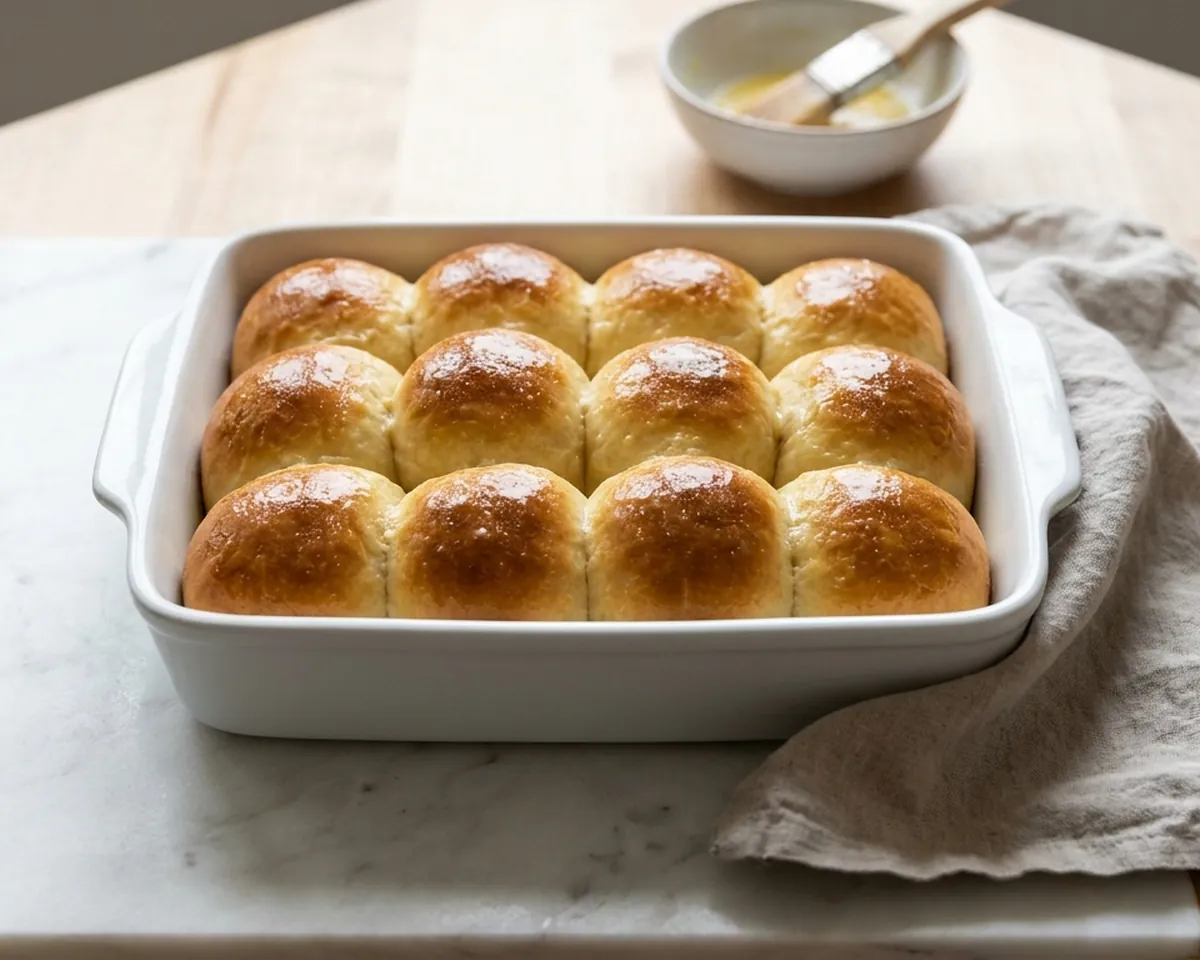
The short answer: Soft homemade dinner rolls need 7 pantry ingredients and about 3 hours, mostly hands-off. Mix flour, instant yeast, sugar, salt, warm milk, melted butter and an egg. Knead the dough until smooth, let it double, and shape 15 balls in a 9x13 pan.
Prep time: 20 minCook time: 22 minTotal time: 2 hr 27 minServings: 15 rollsTotal includes 1 hr 45 min of resting, chilling or rising.
Let them puff up again, then bake at 375°F for 18 to 22 minutes. Brush the hot tops with butter and serve.
I love cooking, and warm bread on the table is a small detail that makes a meal feel like a celebration. Rolls also fit around a busy holiday schedule. You can shape them the night before or bake and freeze them weeks ahead.
Dinner roll ingredients
This batch makes 15 rolls in a 9x13 pan.
| Component | Measure | Role in the dough |
|---|---|---|
| All-purpose flour | 4 cups, plus more as needed | Tender structure |
| Instant yeast | 1 packet (2 1/4 tsp) | Makes the dough rise |
| Granulated sugar | 1/4 cup | Feeds the yeast and adds softness |
| Salt | 1 1/4 tsp | Flavor and a steady rise |
| Whole milk, warmed | 1 cup, about 110°F | Soft, rich crumb |
| Butter, melted | 1/4 cup, plus 2 tbsp for brushing | Tenderness and a shiny top |
| Large egg | 1 | Richness and color |
How to make dinner rolls step by step
- Warm the milk. Heat it until it feels warm on your wrist, about 110°F. Too hot can kill the yeast.
- Mix the dough. Combine 3 cups flour, the yeast, sugar and salt. Add the milk, melted butter and egg. Stir until shaggy.
- Add flour slowly. Mix in more flour, a little at a time, until the dough pulls from the bowl but feels slightly tacky.
- Knead. Knead 8 to 10 minutes by hand, or 5 to 6 minutes with a stand mixer and dough hook, until smooth and stretchy.
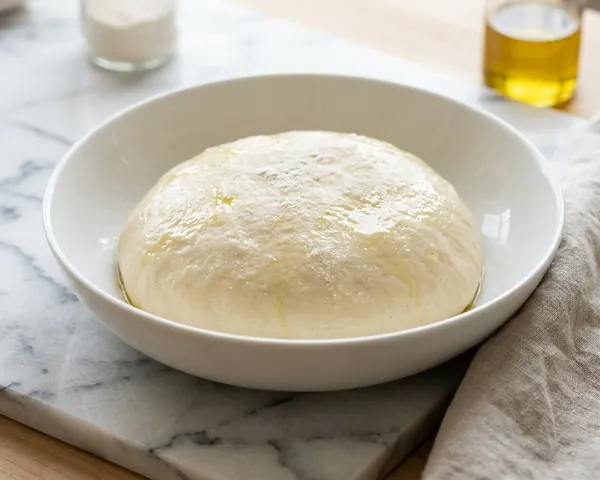
- First rise. Cover the bowl and let it rise in a warm spot 60 to 90 minutes, until doubled.
- Shape. Divide the dough into 15 equal pieces. Roll each into a tight ball and set them in a greased 9x13 pan.
- Second rise. Cover and let them rise 45 to 60 minutes, until puffy and touching.
- Bake. Bake at 375°F for 18 to 22 minutes, until deep golden. A center temperature of about 190°F is a good sign.
- Butter the tops. Brush them with melted butter right out of the oven.
Nutrition (per serving, estimated)
Serving size: 1 roll.
| Calories | 180 |
|---|---|
| Total fat | 4 g |
| Saturated fat | 2 g |
| Cholesterol | 20 mg |
| Sodium | 230 mg |
| Total carbohydrate | 30 g |
| Dietary fiber | 1 g |
| Total sugars | 4 g |
| Protein | 5 g |
Excludes extra amounts listed for dusting, topping, brushing or serving.
This is an estimate calculated from USDA FoodData Central data for the listed ingredients and amounts. Actual values vary with brands, portions and substitutions.
Skip the taste test of raw dough. The FDA's flour safety guidance explains that raw flour isn't a ready-to-eat food. Bake it fully and clean up well after shaping.
Rate this recipe
Dinner roll shapes and flavors
The same dough makes several styles. Shaping changes the look, and a topping changes the taste.
| Style | How to shape or flavor | Bake time at 375°F |
|---|---|---|
| Pull-apart pan rolls | 15 balls touching in a 9x13 pan | 18 to 22 minutes |
| Cloverleaf rolls | 3 small balls in each muffin cup | 14 to 18 minutes |
| Knots | Roll ropes and tie a loose knot | 14 to 18 minutes |
| Garlic herb | Brush with garlic butter and parsley | Same as the shape |
| Honey butter | Brush with butter mixed with honey | Same as the shape |
| Everything topping | Brush with egg wash, add seasoning | Same as the shape |
Fixes for common dinner roll problems
- Rolls didn't rise: Check the yeast date and keep the milk warm, not hot. Give the dough more time.
- Dense crumb: Use less flour and let each rise go fully.
- Pale tops: Bake a few more minutes, or brush with egg wash before baking.
- Dark bottoms: Move the pan up a rack or use a light-colored metal pan.
- Dry the next day: Store cooled rolls airtight, and rewarm them in foil.
Not sure the yeast is alive? Proof the yeast in warm water first; it takes 10 minutes.
Roll timing for the holiday
| Schedule | What happens |
|---|---|
| Up to 2 to 3 months early | Bake, cool, and freeze rolls airtight |
| The night before | Shape the rolls, cover the pan, and refrigerate |
| Holiday morning | Let chilled rolls warm up and puff for 1 to 2 hours |
| While the main dish rests | Bake for 18 to 22 minutes |
| At the table | Brush with butter and keep warm in a towel-lined basket |
Freezing is the easiest head start. The USDA's freezing and food safety page notes that food kept at 0°F stays safe, while quality slowly drops. That's why a 2 to 3 month window keeps rolls tasting fresh.
Want a tangier loaf for the basket too? Follow a 5-day sourdough starter recipe and feed it on a simple schedule.
Wondering how it compares on nutrition? Our guide to sourdough vs regular bread covers fiber, blood sugar and gluten.
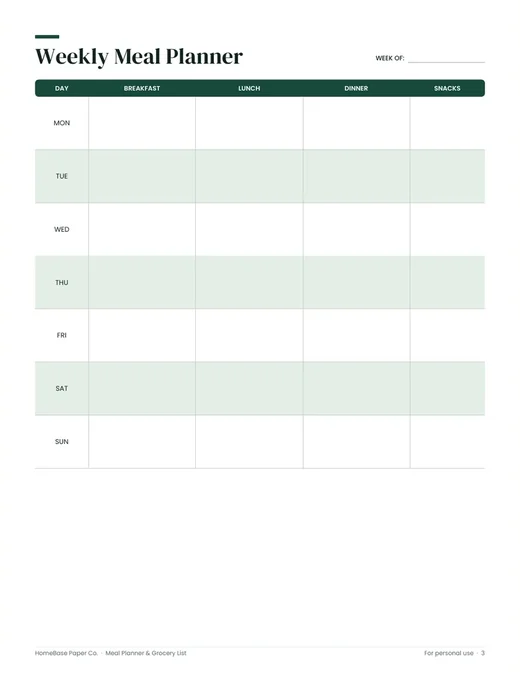
Schedule the bread basket
Rolls depend on timing, so they belong on a written plan.
Find more in our holiday shop and the full Printables line.
Plan the rest of the meal
More breads you'll love
Frequently asked questions
How do you make soft dinner rolls? Soft dinner rolls come from an enriched dough: flour, yeast, warm milk, butter, sugar, an egg and salt. Knead until smooth and stretchy, let it double, shape 15 tight balls in a 9x13 pan, rise again, and bake at 375°F for 18 to 22 minutes. Brush the tops with melted butter.
How long do dinner rolls take to make? Homemade dinner rolls take about 3 hours from start to finish, but only about 30 minutes is hands-on work. Most of the time is the first rise (60 to 90 minutes), the second rise (45 to 60 minutes), and 20 minutes of baking.
What temperature do you bake dinner rolls at? Bake dinner rolls at 375°F for 18 to 22 minutes, until the tops are deep golden. Many bakers check that the center of a roll reads about 190°F on an instant-read thermometer, which means the crumb is baked through.
Can I make dinner rolls the night before? Yes, shape the dinner rolls, cover the pan, and refrigerate it overnight for up to about 18 hours. The next day, let the rolls sit at room temperature for 1 to 2 hours until puffy, then bake as usual.
Can you freeze dinner rolls? Baked dinner rolls freeze very well for about 2 to 3 months. Cool them completely, bag them airtight, and thaw them at room temperature. Warm them at 350°F for 5 to 10 minutes, wrapped in foil, before serving.
Why didn't my dinner rolls rise? Dinner rolls usually fail to rise because the yeast was old or the milk was too hot. Use milk that feels warm, about 110°F, not hot, and check the yeast's date. A cold kitchen also slows the rise, so give the dough more time in a warm spot.
Why are my dinner rolls dense? Dense dinner rolls usually come from too much flour or too little rising time. Add flour gradually until the dough is soft and slightly tacky, and let each rise go until the dough has doubled or looks puffy.
Can I use all-purpose flour or bread flour for dinner rolls? Both work for dinner rolls. All-purpose flour gives a softer, more tender roll, while bread flour gives a chewier, taller roll. If you use bread flour, you may need a tablespoon or two more milk.
How many dinner rolls per person should I make? Plan on about 2 dinner rolls per person for a holiday meal, and a few extra if you love leftovers for sandwiches. One batch of this recipe makes 15 rolls, enough for 7 or 8 guests.
Is it safe to taste raw roll dough? No, don't taste raw roll dough. The FDA warns that raw flour and raw eggs can carry germs, so bake the dough fully and wash your hands and counters after handling it.
How do I keep dinner rolls warm for serving? Keep dinner rolls warm by wrapping them in a clean towel inside a basket, or holding them in foil in a 200°F oven for up to 20 minutes. Bake them last, while the turkey or ham rests, so they come out fresh.
Newsletter
Get the HomeBase email
Fresh tips three times a week, Mon/Wed/Fri, with our deals and new products, from printables, spreadsheets and bundles to paperback planners and apparel, plus simple home, money and planning tips.
Sources
- FDA: Handling flour safely fda.gov
- USDA FSIS: Freezing and food safety fsis.usda.gov
Made this? Tell us how it went
Your notes help the next cook: what you changed, how long it took, how it turned out.