

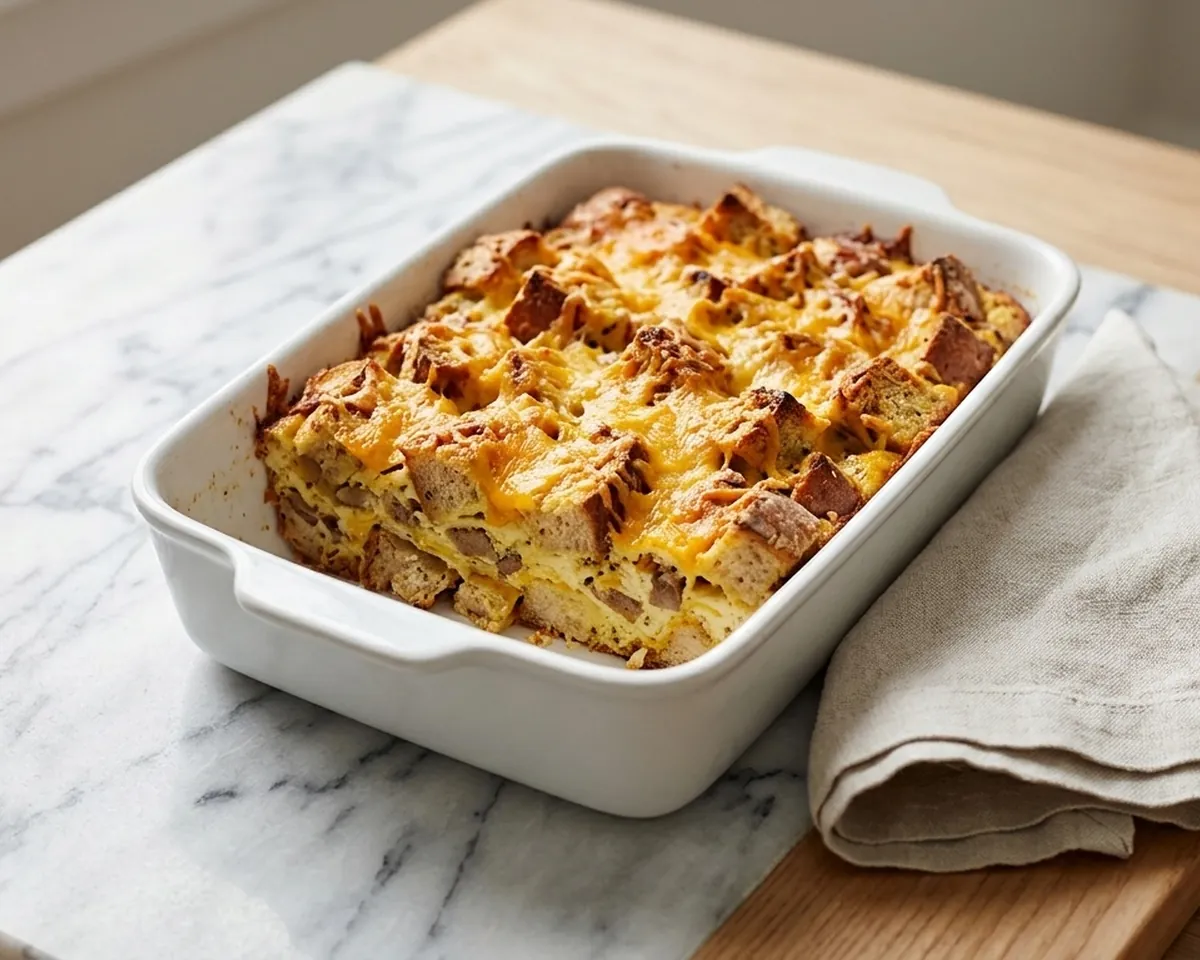
The short answer: strata is an overnight bread and egg casserole: cube sturdy bread, add cheese and mix-ins, pour on egg-milk custard, chill, then bake until the center hits 160°F.
- Key numbers: 8 cups bread cubes · 8 eggs · 2 cups milk · 2 cups cheese · 9x13 pan · 160°F center
- Top moves: day-old bread, overnight soak, press cubes under custard, bake until set
Prep time: 25 minCook time: 50 minTotal time: 1 hr 55 minServings: 8 to 10 servingsTotal includes 40 min of chilling and resting.
Amounts and methods for this strata recipe were checked November 6, 2026.
Strata ingredients (9x13 pan, 8 to 10 servings)
| Ingredient | Amount | Notes |
|---|---|---|
| Sturdy bread, cubed | 8 cups (about 1 pound) | Day-old French, Italian or sourdough |
| Eggs | 8 large | |
| Milk | 2 cups | Whole or 2% |
| Shredded cheese | 2 cups | Cheddar, Gruyere or mix |
| Cooked breakfast sausage or bacon | 1 pound cooked, crumbled | Optional; cook sausage to 160°F |
| Onion | 1 small, diced | Sautéed |
| Spinach or broccoli | 2 cups cooked, drained | Squeeze spinach dry |
| Dijon mustard | 1 teaspoon | Optional in custard |
| Salt and black pepper | 1 teaspoon salt, ½ teaspoon pepper | Adjust to taste |
| Butter | For the pan |
Serves 8 to 10.
How to make overnight strata
- Cook mix-ins. Brown sausage to 160°F if using. Sauté onion. Cook and drain greens well. Allow about 15 minutes.
- Butter a 9x13 dish. Scatter half the bread cubes. Add half the cheese and mix-ins. Repeat with remaining bread, cheese and mix-ins.
- Make the custard. Whisk eggs, milk, mustard, salt and pepper until even, about 2 minutes.
- Pour and press. Pour custard evenly over the dish. Press bread down with a spatula so every cube gets wet.
- Chill. Cover and refrigerate at least 30 minutes, ideally overnight (8 to 12 hours).
- Bake. Heat oven to 350°F. Bake uncovered 45 to 55 minutes until puffed, golden and the center reaches 160°F. Rest 10 minutes before cutting.
Nutrition (per serving, estimated)
Serving size: 1 serving (1/8 of the recipe).
| Calories | 380 |
|---|---|
| Total fat | 18 g |
| Saturated fat | 8 g |
| Cholesterol | 220 mg |
| Sodium | 860 mg |
| Total carbohydrate | 33 g |
| Dietary fiber | 2 g |
| Total sugars | 7 g |
| Protein | 20 g |
Excludes ingredients listed without an amount (to taste, for serving, for the pan). Excludes optional ingredients and garnishes.
This is an estimate calculated from USDA FoodData Central data for the listed ingredients and amounts. Actual values vary with brands, portions and substitutions.
Wash tools that touched raw eggs or raw sausage in hot, soapy water.
Money-saving tip: strata is built for leftover bread heels and end-of-week vegetables; stale bread works better than fresh soft loaves.
Rate this recipe
Mix-in ideas
| Style | Add |
|---|---|
| Classic sausage | Breakfast sausage, cheddar, onion |
| Spinach and Gruyere | Spinach, Gruyere, nutmeg pinch |
| Mushroom | Sautéed mushrooms, Swiss, thyme |
| Veggie loaded | Peppers, onion, broccoli, cheddar |
| Ham and Swiss | Diced ham, Swiss, mustard in custard |
For a sweet brunch bake instead, see French toast casserole. For a crust-based egg bake, see quiche. For faster egg mornings, see egg bites and scrambled eggs.
Strata vs. egg casserole, quiche and bread pudding
| Dish | Base | Crust | How it differs from strata |
|---|---|---|---|
| Strata | Cubed bread soaked in egg custard | None | Layered, soaked ahead, bakes up puffy and bread-pudding soft inside |
| Breakfast egg casserole | Eggs with hash browns, tater tots or little bread | None | Eggs dominate; no overnight soak needed |
| Quiche | Egg custard | Pastry | Pie crust holds it together; more custard, no bread |
| Savory bread pudding | Bread and custard | None | Nearly the same technique; usually served as a side, while strata is the main dish |
See quiche if you want the pastry version.
No stale bread? Dry fresh bread first
Soft, fresh bread turns mushy because it collapses when it soaks. Cube it, then either leave the cubes uncovered for several hours or overnight, or spread them on a sheet pan and dry them in a 300°F oven for about 10 minutes, tossing once, until they feel dry but not browned. Cool before layering. Sturdy bread, like French, Italian or sourdough, holds its shape best.
Fixes for soggy or dry strata
| Problem | Likely cause | Fix |
|---|---|---|
| Soggy center | Underbaked / watery vegetables | Bake to 160°F; drain greens |
| Dry edges | Overbaked / not enough custard | Tent with foil; check early |
| Mushy texture | Soft sandwich bread | Use sturdy day-old bread |
| Bland | Under-seasoned custard | Salt the custard; use flavorful cheese |
| Collapsed | Cut too soon | Rest 10 minutes |
What to serve with strata
- Fresh fruit
- Simple green salad for brunch
- Hot sauce, salsa or ketchup on the side
- Coffee and juice
Strata fits a high protein breakfast weekend and pairs with other breakfast ideas.
Storing, reheating and freezing
Refrigerate within 2 hours. USDA guidance says cooked leftovers keep 3 to 4 days. Reheat squares in a 325°F oven or microwave until hot (160°F).
Affiliate links: we may earn a small commission. As an Amazon Associate we earn from qualifying purchases. Details.
Airtight glass containers with lids keep leftovers fresh and can go from the fridge to the microwave.
For freezing, FoodSafety.gov cold food storage charts list about 2 to 3 months for best quality. Freeze baked portions, thaw in the fridge and reheat until hot.
What to make next
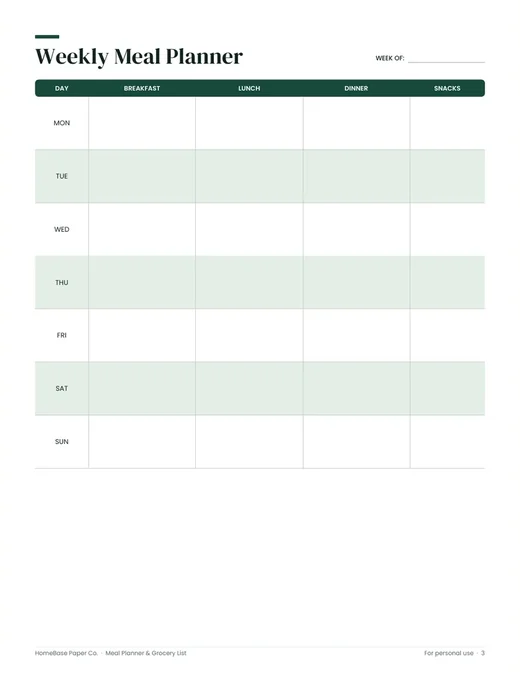
Pair with meal planning on a budget.
More casseroles you'll love
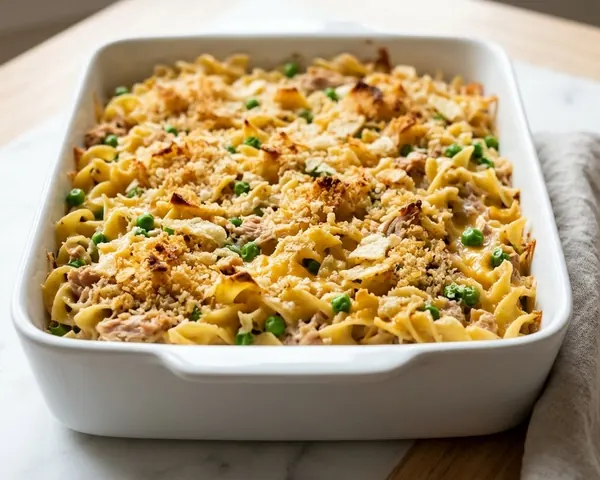
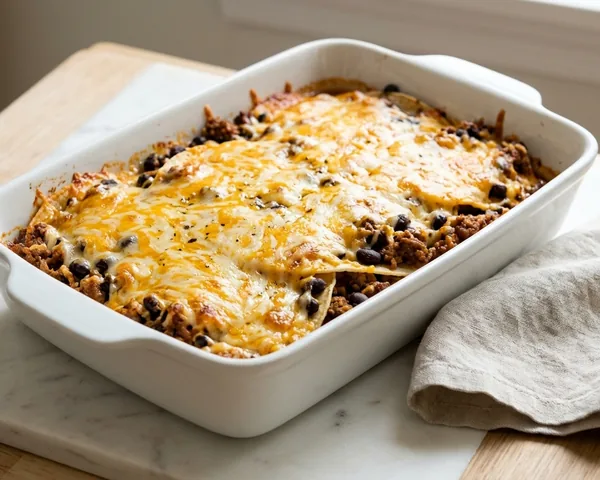
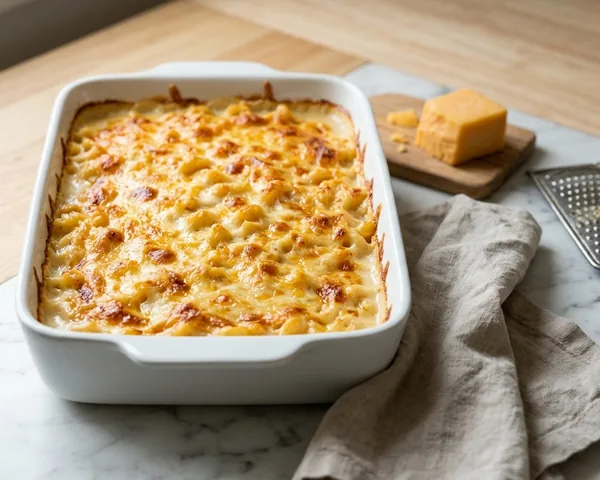
Frequently asked questions
What is a strata? A strata is a savory bread-and-egg casserole. Cubed bread soaks in an egg-and-milk custard with cheese and mix-ins, then bakes until puffed and set. It is often assembled the night before.
How do you make breakfast strata? Butter a baking dish, layer cubed bread with cheese and cooked mix-ins, pour beaten eggs mixed with milk over the top, press the bread down, chill at least 30 minutes or overnight, then bake until the center reaches 160°F and looks set.
What temperature should strata reach? Bake until the center of the egg casserole reaches 160°F, the safe minimum internal temperature for egg dishes on FoodSafety.gov. The top should be golden and the center should not look wet.
Can I make strata the night before? Yes, you can make strata the night before. Assembling ahead lets the bread soak. Cover and refrigerate, then bake in the morning. Add 5 to 10 minutes if the dish goes into the oven cold.
What bread is best for strata? The best bread for strata is day-old sturdy bread such as French, Italian, sourdough or a firm sandwich loaf. Soft squishy bread can turn mushy. Cube it about 1 inch.
Can strata be vegetarian? Yes, strata can be vegetarian. Skip sausage and use sautéed mushrooms, spinach, peppers, onions and cheese. Squeeze cooked spinach dry so the custard is not watery.
Strata vs quiche vs French toast casserole? Strata is a bread cube casserole with savory custard. Quiche is an egg custard in a pastry crust. French toast casserole is the sweet cousin with sugar and cinnamon.
How long do leftovers last? USDA guidance says cooked leftovers keep about 3 to 4 days in the refrigerator. Reheat until hot throughout (160°F for egg dishes).
Can I freeze strata? You can freeze baked strata in portions for about 2 to 3 months for best quality per FoodSafety.gov cold storage charts. Thaw in the refrigerator and reheat until hot. Texture softens slightly.
Why is my strata soggy? Strata turns soggy from too much milk, soft bread, watery vegetables, or underbaking. Use sturdy bread, drain vegetables, and bake to 160°F in the center.
Where can I save my strata recipe? The Family Recipe Binder ($6.99) from HomeBase Paper Co. has fillable recipe pages and dividers for your mix-ins and pan size. It prints at home on US Letter paper.
Newsletter
Get the HomeBase email
Fresh tips three times a week, Mon/Wed/Fri, with our deals and new products, from printables, spreadsheets and bundles to paperback planners and apparel, plus simple home, money and planning tips.
Sources
- FoodSafety.gov: Safe minimum internal temperatures foodsafety.gov
- USDA FSIS: Leftovers and food safety fsis.usda.gov
- FoodSafety.gov: Cold food storage charts foodsafety.gov
Made this? Tell us how it went
Your notes help the next cook: what you changed, how long it took, how it turned out.