

The short answer: how to make edible cookie dough: beat 1/2 cup softened butter with 1/2 cup brown sugar and 1/4 cup white sugar, add vanilla and salt, then stir in 1 cup flour sold as heat-treated, 2 tablespoons milk and 1/2 cup mini chocolate chips. No eggs. It takes about 10 minutes and makes about 2 cups.
- Safety rule: regular flour is raw. Use flour labeled heat-treated, or the baked cookie crumb swap below, and never add raw eggs
- Storage: about 5 days covered in the refrigerator, or about 3 months frozen
- Next step: get the free recipe book starter pages (we email it to you), or save your mix-ins in the Family Recipe Binder ($6.99)
Our picks for how to make edible cookie dough
 Starter pick
Printables
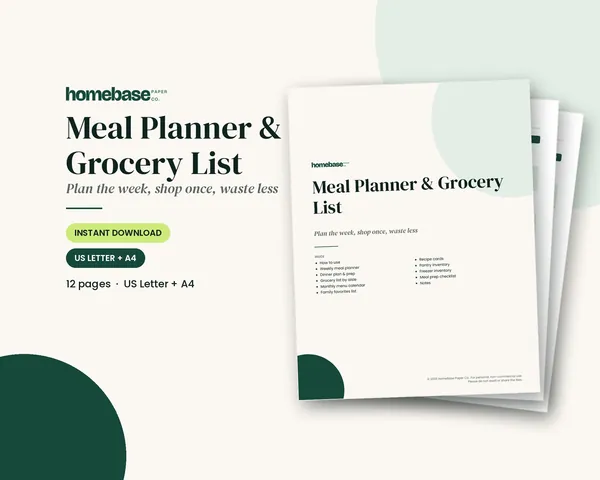
Meal Planner & Grocery List
Weekly meals, a grocery list sorted by aisle, and pantry and freezer inventories so you shop once and waste less.
Printables
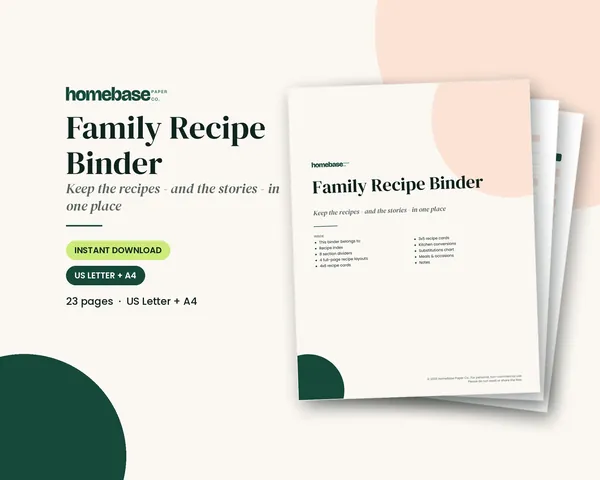
Family Recipe Binder
Section dividers, four recipe page layouts with room for the family story, 4x6 and 3x5 cards and a conversion chart - print it or type into the fillable version.
Prep time: 15 minCook time: 0 minTotal time: 35 minServings: 2 cupsTotal includes 20 min of resting, chilling or rising.
Edible cookie dough is a spoonable dessert that tastes like chocolate chip cookie dough but leaves out the two ingredients that make regular dough risky: raw flour and raw eggs. The flour is the part most people miss.
Why regular cookie dough is not safe to eat raw
The FDA's flour safety page explains that grains grown outdoors can carry Salmonella and pathogenic E. coli, and that turning grain into flour does not kill them. It says never to eat or taste raw flour, dough or batter, and that cooking is the only way to be sure foods made with flour and raw eggs are safe. The CDC's raw flour and dough guidance puts it plainly: flour does not look like a raw food, but most flour is raw, and germs are killed only when it is baked or cooked.
So edible cookie dough needs two changes, not one:
- No raw eggs. This recipe uses milk for moisture instead.
- No raw flour. Use flour sold as heat-treated. The CDC notes that some companies make edible cookie dough with heat-treated flour and pasteurized eggs or no eggs, and says to check the label to be sure a product is meant to be eaten without baking.
A note on microwaving flour. Many edible cookie dough recipes tell you to heat flour in the microwave or oven until it reaches a set temperature. The FDA page says not to try to heat-treat flour in your own home, because home methods may not kill all the bacteria. This page follows that guidance: buy flour already labeled heat-treated, or use the baked cookie crumb version, which replaces flour with crumbs that were fully baked.
Edible cookie dough ingredients
| Ingredient | Amount | Notes |
|---|---|---|
| Unsalted butter, softened | 1/2 cup (1 stick) | Soft enough to dent with a finger |
| Light brown sugar, packed | 1/2 cup | Gives the classic caramel flavor |
| Granulated sugar | 1/4 cup | Or powdered sugar for a smoother dough |
| Vanilla extract | 1 teaspoon | |
| Salt | 1/4 teaspoon | 1/8 teaspoon if using salted butter |
| Heat-treated flour | 1 cup | Bag must say heat-treated or ready to eat |
| Milk | 2 to 3 tablespoons | Pasteurized; any kind works |
| Mini chocolate chips | 1/2 cup | Minis spread through the dough better |
Makes about 2 cups, about 6 servings of 1/3 cup.
Baked cookie crumb swap (no flour at all): replace the 1 cup heat-treated flour with 1 1/4 cups very finely ground, fully baked plain shortbread cookies or graham crackers, and cut the granulated sugar to 2 tablespoons because the crumbs are already sweet. Start with 1 tablespoon of milk and add more only as needed. The texture is softer and a little sandier, and it works when you cannot find heat-treated flour.
How to make edible cookie dough
- Beat the softened butter, brown sugar and granulated sugar in a bowl with a hand mixer or a sturdy spatula for about 2 minutes, until creamy and lighter in color.
- Beat in the vanilla and salt.
- Add the heat-treated flour and mix on low or fold by hand until crumbly. Keep this bowl and spoon away from any raw flour you are using for other baking.
- Add 2 tablespoons of milk and mix until it comes together into a soft dough. Add the last tablespoon only if it still looks dry.
- Stir in the mini chocolate chips. Eat right away for a soft, scoopable texture, or chill 20 to 30 minutes for a firmer, rollable dough.
If you bake regular cookies the same day, wash your hands, bowls and counters with warm, soapy water after handling raw flour, as the FDA advises, before you make the edible batch. Flour is a fine powder and spreads easily across a counter.
Flavor variations
| Version | Change |
|---|---|
| Sugar cookie dough | Skip the chips, use all granulated sugar, add 1/4 teaspoon almond extract and sprinkles |
| Peanut butter | Replace 1/4 cup of the butter with 1/4 cup creamy peanut butter; add peanut butter chips |
| Monster | Add 2 tablespoons peanut butter, 1/4 cup mini candy-coated chocolates and 1/4 cup chips |
| Double chocolate | Replace 2 tablespoons of the flour with unsweetened cocoa powder and add 1 extra tablespoon milk |
| Brownie batter style | Use the double chocolate version with semisweet chips and a pinch of extra salt |
| Snickerdoodle | Skip the chips, add 1 teaspoon cinnamon and roll the balls in cinnamon sugar |
| Birthday cake | Use all white sugar, add 1/4 cup rainbow sprinkles and 1/2 teaspoon butter extract |
Avoid uncooked oats unless the package says they are meant to be eaten without cooking, and do not stir in raw cake mix or baking mix. The FDA page warns against using products that contain raw flour, like cake mix, to make ready-to-eat treats.
How to serve it
- By the spoonful in small bowls or jars, 1/3 cup per serving.
- Cookie dough bites: roll into 1-inch balls, chill until firm, then dip in melted chocolate.
- Ice cream topping: crumble chilled edible dough over vanilla ice cream. Use edible dough only; the FDA specifically says not to put raw cookie dough into ready-to-eat ice cream.
- Dip: thin with 1 more tablespoon of milk and serve with apple slices, pretzels or graham crackers.
- Party jars: pack in small lidded jars with a label that says "made with heat-treated flour, no eggs," so guests know which dough is safe.
Make-ahead and storage
- Refrigerator: keep covered for about 5 days. The FDA suggests a refrigerator thermometer to confirm your fridge holds 40°F or below.
- Freezer: scoop or roll into balls, freeze on a parchment-lined tray until firm, then move to a labeled freezer bag. Use within about 3 months for best texture.
- Serving from cold: chilled dough firms up because of the butter. Let it sit 10 minutes before scooping, or eat frozen bites straight from the bag.
- Do not leave it out for hours at a party. Return it to the refrigerator within 2 hours.
Troubleshooting
- Too dry or crumbly: add milk 1 teaspoon at a time.
- Too soft or greasy: the butter was too warm. Chill 20 minutes, or add 1 tablespoon more heat-treated flour.
- Grainy: beat the butter and sugars longer, or swap the granulated sugar for powdered sugar.
- Too sweet: add a pinch more salt, use dark chocolate chips, or cut the white sugar to 2 tablespoons next time.
- Tastes floury: some heat-treated flours taste slightly toasty; extra vanilla and a pinch of salt balance it.
Edible dough vs baked cookies
This page is for dough you eat unbaked. It has no eggs and no leavening, so it will not bake into a proper cookie. For the baked version with exact bake times and chill tips, use our chocolate chip cookies, and for more ideas sorted by type see our cookie recipes. If you want another no-bake dessert for a crowd, rice krispie treats need only a pot and a pan.
A budget-friendly treat
Edible cookie dough uses pantry staples: butter, two sugars, vanilla, milk and chocolate chips. Heat-treated flour is the one specialty item, and a single bag covers many batches because each batch uses only 1 cup. A homemade batch makes about 6 servings, which suits a family dessert or a party tray. Put it on the weekly plan alongside groceries you already buy so nothing is a last-minute extra; see meal planning on a budget for the system.
Plan dessert and save the recipe
Add the heat-treated flour to your list once and it is there for the next batch.
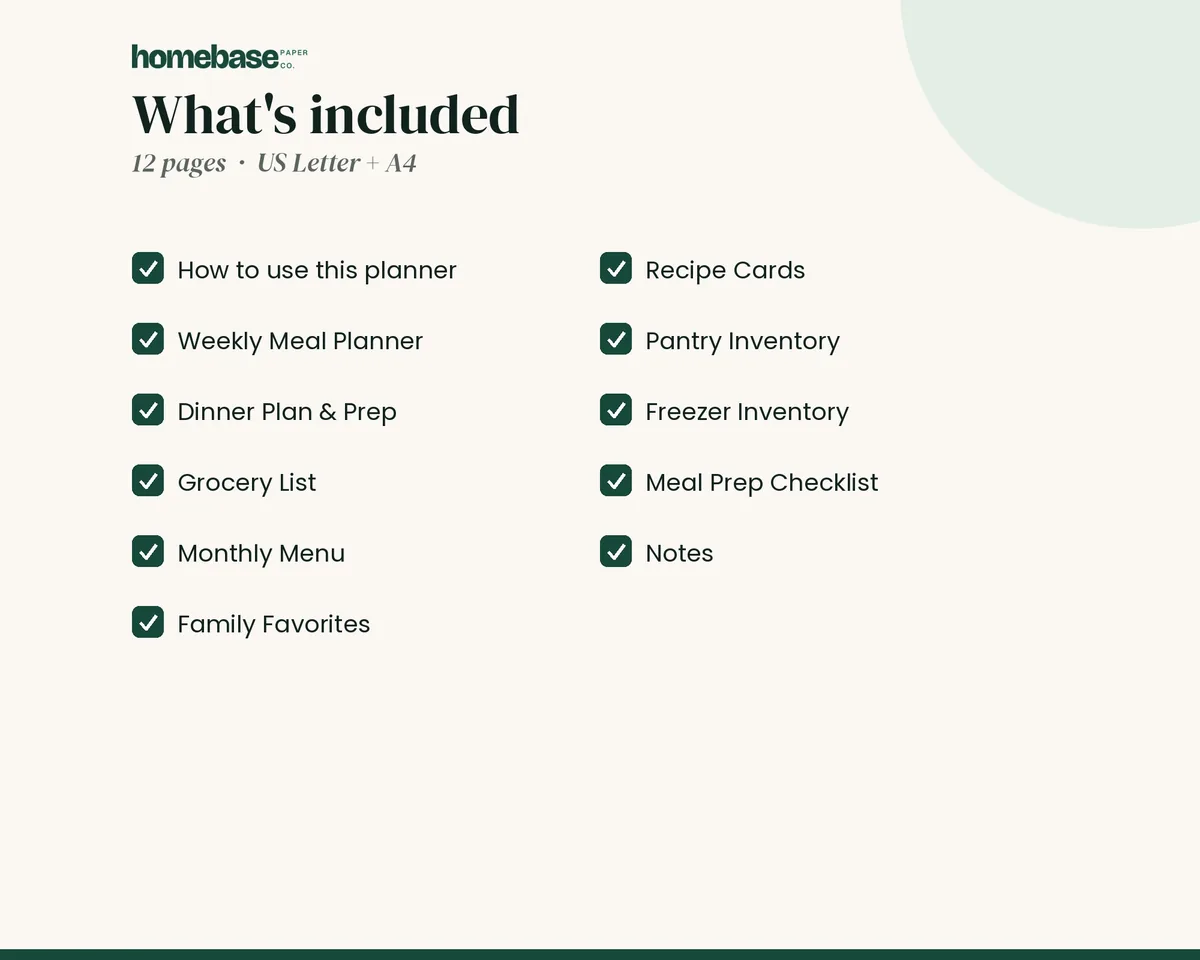
- Meal Planner & Grocery List, $3.99. A weekly menu and an aisle-sorted grocery list.
- Family Recipe Binder, $6.99. Write down which flour you used, your favorite mix-ins and how long the batch kept.
Browse more kitchen printables in the printables shop.
Want free starter pages first? Get the free recipe book starter pages (we email it to you).
Frequently asked questions
How do you make edible cookie dough? Edible cookie dough is made by beating softened butter with brown and white sugar, vanilla and salt, then mixing in flour sold as heat-treated, a splash of milk and mini chocolate chips. It uses no eggs, takes about 10 minutes and is meant to be eaten by the spoonful, not baked.
Why is regular raw cookie dough unsafe? Regular raw cookie dough is unsafe because it contains raw flour and usually raw eggs, and both can carry harmful bacteria. The FDA says grains can carry Salmonella and pathogenic E. coli, that milling does not kill them, and that you should never eat or taste raw flour, dough or batter.
Can you heat-treat flour at home in the microwave or oven? Edible cookie dough recipes often tell you to microwave or bake flour, but the FDA advises against trying to heat-treat flour at home because home methods may not kill all bacteria. This recipe uses flour sold as heat-treated, or a baked cookie crumb swap, instead.
Where do you get heat-treated flour for edible cookie dough? Heat-treated flour for edible cookie dough is sold by some flour brands and is labeled heat-treated or ready to eat; check the baking aisle or order it online. Regular all-purpose flour is raw even though it looks dry and processed.
Can you bake edible cookie dough into cookies? Edible cookie dough is not built for baking, because it has no eggs or baking soda and will spread into greasy, flat puddles. For baked cookies, use a tested recipe such as our chocolate chip cookies.
How long does edible cookie dough last? Edible cookie dough keeps about 5 days in a covered container in the refrigerator, which should hold 40°F or below. For longer storage, freeze scoops on a tray, bag them, and use within about 3 months for best texture.
Can you freeze edible cookie dough? Edible cookie dough freezes well. Roll it into balls or scoop it onto a parchment-lined tray, freeze until firm, then store in a labeled freezer bag. Let it sit 10 minutes before eating, or eat the bites straight from the freezer.
Is edible cookie dough safe for kids? Edible cookie dough made with flour labeled heat-treated, no raw eggs and pasteurized milk is the version meant for eating unbaked, which is why the CDC points shoppers to dough labeled edible or safe to eat raw. Regular dough, play dough and craft dough made with raw flour should not be eaten or played with by children.
Can you make edible cookie dough without butter or dairy? Edible cookie dough can be made dairy-free by using a plant-based butter stick and a plant milk such as oat or soy, plus dairy-free chocolate chips. Coconut oil works too, but the dough sets hard in the refrigerator, so let it soften before eating.
Why is my edible cookie dough grainy? Grainy edible cookie dough usually means the sugar did not dissolve into the butter. Beat the butter and sugars for a full 2 minutes, add the milk, and let the dough rest 10 minutes. Some cooks use part powdered sugar for a smoother texture.
Where can I save my edible cookie dough variations? The Family Recipe Binder ($6.99) from HomeBase Paper Co. has fillable recipe pages, so your heat-treated flour brand, mix-ins and storage notes stay with your other family desserts.