

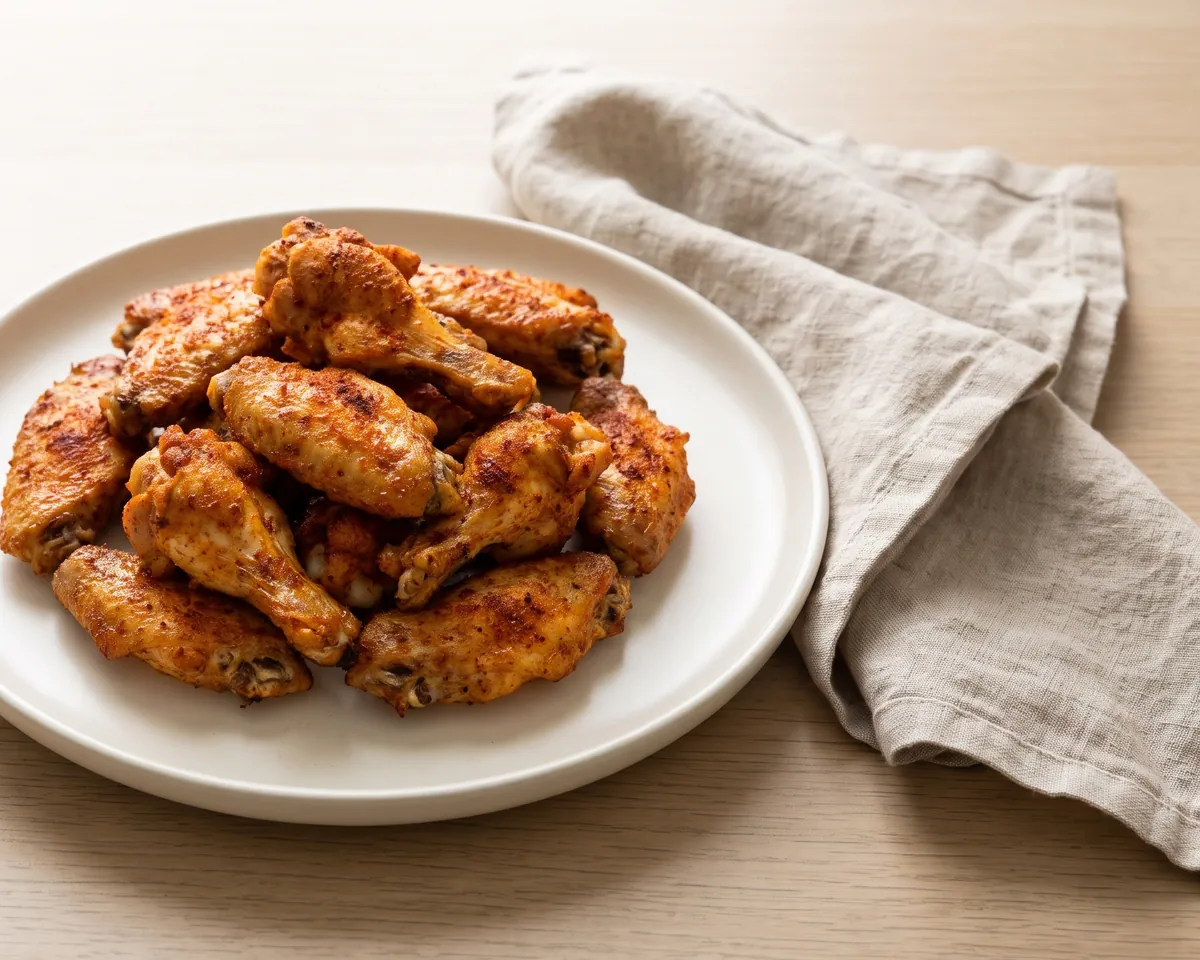
The short answer: this chicken wing method coats thawed wing pieces with oil, cornstarch and a measured spice mix, then bakes them on an oven-safe rack at 400°F. Check for 165°F in the thickest meat before serving. Sauce goes on after cooking, not in the raw-chicken bowl.
Prep time: 10 minCook time: 55 minTotal time: 1 hr 5 minServings: 4 servings
The amounts and rack-baking approach are adapted from Beth Moncel's Baked Chicken Wings at Budget Bytes. This page adds practical thermometer, portioning and storage guidance in original wording; it does not claim an independent kitchen test. Allow about ten minutes for preparation and roughly fifty to fifty-five minutes for baking, while recognizing that smaller pieces can finish sooner.
Chicken wing ingredients for a 2½-pound batch
Serves 4 to 6 as an appetizer.
| Ingredient | Amount | Purpose |
|---|---|---|
| Thawed chicken wing pieces or drumettes | 2 1/2 pounds | Keep refrigerated until preparation |
| Neutral cooking oil | 1 tablespoon | Helps distribute the coating |
| Cornstarch | 1 tablespoon | The specified dry coating, not baking powder |
| Paprika | 1/2 teaspoon | Part of the spice mixture |
| Smoked paprika | 1/2 teaspoon | Adds a smoky flavor |
| Garlic powder | 1/2 teaspoon | Use powder, not garlic salt |
| Onion powder | 1/4 teaspoon | Mix with the other dry ingredients |
| Cayenne pepper | 1/8 teaspoon | Omit for a less hot batch |
| Black pepper | 1/4 teaspoon | Ground |
| Salt | 1/2 teaspoon | For the entire batch |
Use wing sections of reasonably similar size rather than mixing tiny flats with much larger whole wings and expecting one finish time. The total weight is the planning anchor. A package's piece count can differ, so do not promise every guest a fixed number without counting what you bought. If you have whole wings and do not want to separate the joints, choose a method specifically written for whole wings instead of assuming identical timings.
How to make oven-baked chicken wings
- Heat the oven to 400°F. Preheating takes about 10 minutes, so start it first.
- Set up the pan. Place an oven-safe wire rack inside a rimmed baking sheet and make sure the rack fits securely. A cooling rack is not automatically oven-safe: check the manufacturer's instructions, especially if it has a coating. Line the pan underneath only with material rated for 400°F, and keep it away from the heating elements.
- Mix the dry coating. In a small bowl, stir together 1 tablespoon cornstarch, 1/2 teaspoon paprika, 1/2 teaspoon smoked paprika, 1/2 teaspoon garlic powder, 1/4 teaspoon onion powder, 1/8 teaspoon cayenne, 1/4 teaspoon black pepper and 1/2 teaspoon salt for about 2 minutes. Mixing it before you touch the chicken means you will not reach into spice jars with contaminated hands.
- Set out clean tools. Keep a clean plate and clean serving utensils aside for the finished wings.
- Dry the wings. Pat the 2 1/2 pounds of thawed wing pieces dry with paper towels, then discard the towels.
- Oil the wings. Put the chicken in a mixing bowl, add 1 tablespoon of oil and turn the pieces until every one is coated.
- Season the wings. Sprinkle the dry mixture over the chicken and toss again until no seasoning is clumped at the bottom of the bowl. Coating takes about 5 minutes in all.
- Arrange on the rack. Lay the wings on the rack with space between pieces so air can reach every side.
- Bake for 30 minutes. Turn the pieces with tongs, and at this first turn check the temperature of one smaller and one larger piece to see how the batch is progressing.
- Bake 20 to 25 minutes more, until done. Those minutes are a typical range, not a mandatory minimum: small wings may finish sooner. The wings are done when the skin is browned and a thermometer reads 165°F.
- Check the temperature in more than one piece. FoodSafety.gov lists 165°F as the safe minimum internal temperature for poultry. Put the probe in the thickest meat without touching bone or the hot rack. Do not judge safety from brown skin, clear-looking juice or how long a timer has been running.
- Bake longer only for texture. If a piece has reached 165°F but you want more browning, keep baking and watch it rather than assuming every piece needs the full longest time.
- Transfer to the clean plate. Move finished wings to the clean plate, not back into the bowl that held raw poultry, and wash utensils used on undercooked chicken before they touch the finished food.
Nutrition (per serving, estimated)
Serving size: 1 serving.
| Calories | 380 |
|---|---|
| Total fat | 26 g |
| Saturated fat | 7 g |
| Cholesterol | 195 mg |
| Sodium | 440 mg |
| Total carbohydrate | 3 g |
| Dietary fiber | 0 g |
| Total sugars | 0 g |
| Protein | 31 g |
This is an estimate calculated from USDA FoodData Central data for the listed ingredients and amounts. Actual values vary with brands, portions and substitutions.
Rate this recipe
Cutting whole wings into drumettes and flats
Packages sold as party wings are already split. A bag of whole wings has three parts joined together, and Natasha's Kitchen shows the same split before baking: drumette, flat and wing tip.
- Drumette: the thick section that looks like a small drumstick, attached to the body end.
- Flat (wingette): the middle section with two thin bones and a flatter shape.
- Tip: the small pointed end with little meat. Cut it off and discard it, or freeze it for stock.
Find each joint by bending the wing and cutting through the gap between the bones with a sharp knife rather than sawing through bone. Use a cutting board only for raw poultry, then wash the board, knife and your hands with hot soapy water before touching anything else. Sorting the pieces into drumettes and flats gives you wing sections of reasonably similar size, which is what the baking times above assume.
Crispness problems to solve next time
A crowded rack makes it harder for air to reach all sides. Use a second prepared pan when necessary rather than stacking raw wings on top of one another. If you use two oven shelves, monitor both pans because their progress may differ; move or rotate pans only when you can do so safely without spilling hot fat.
Drying the surface before coating is different from leaving raw chicken on the counter to air-dry. Keep the package refrigerated until you are ready, pat it dry during preparation, then proceed to the oven. Do not create an extended room-temperature holding step in pursuit of crisp skin.
Heavy sauce can soften a dry coating. For more control, put clean sauce in a separate serving bowl or toss only the portion about to be eaten. The existing teriyaki sauce and sweet chili sauce pages offer different flavors; this chicken page does not take over their condiment keywords. Never pour raw-chicken drippings into a cold dipping sauce.
Serving and storing chicken wings safely
This amount provides roughly three main-meal portions, depending on the pieces and sides. Vegetables, bread or a rice dish can round out the plates. If the wings are part of a larger spread, count the actual pieces and the other foods before deciding how many people the tray will serve. Do not turn the recipe author's serving estimate into a guaranteed appetite calculation.
Use USDA leftover guidance: refrigerate perishable leftovers within two hours, or one hour when the air is above 90°F. Divide leftovers into shallow containers, keep the refrigerator at 40°F or below, and use them within three to four days. Reheat the meat to 165°F, checking a thick piece rather than relying on steam or a hot tray edge.
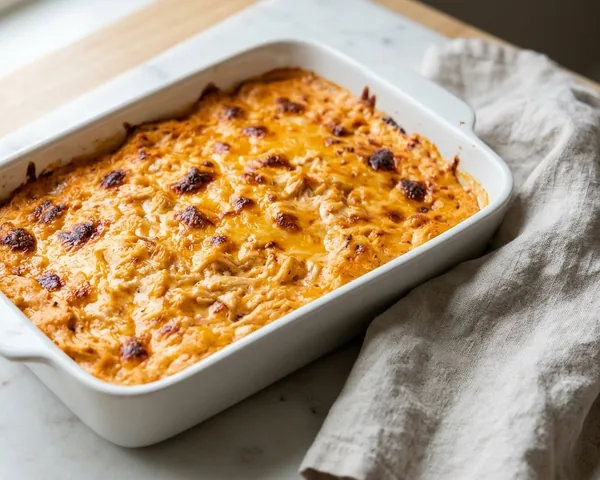
Building a game-day spread? Serve the wings with garlic aioli for dipping, a warm buffalo chicken dip and Rotel dip, or browse more easy appetizers. For a saucier main dish, try our BBQ chicken or honey garlic chicken.
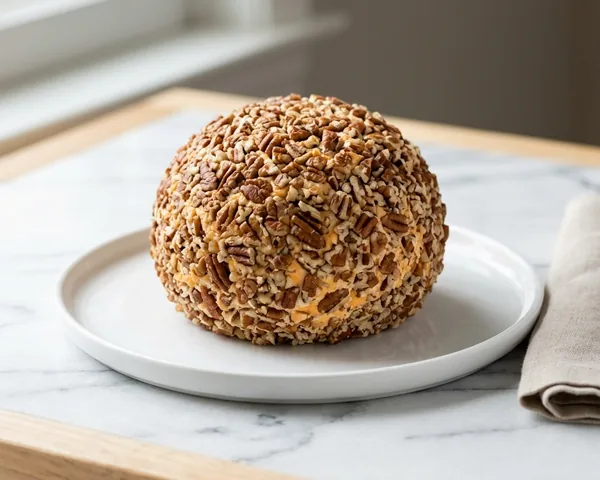
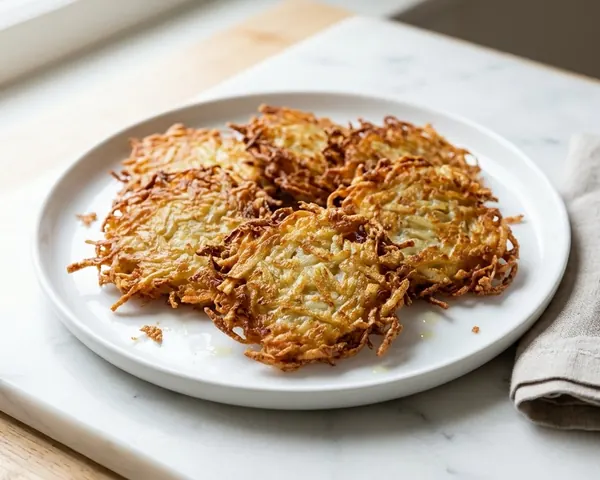
More party appetizers you'll love
Frequently asked questions
What is the easiest chicken wing method without frying? A chicken wing can be baked on an oven-safe rack with a light oil, cornstarch and spice coating. This method uses a 400°F oven and a thermometer rather than a deep fryer.
What temperature should a chicken wing reach? A chicken wing must reach at least 165°F in its thickest meat, measured without touching bone. Color, clear juices and crisp skin do not replace that thermometer check.
How long does a chicken wing take in the oven? A chicken wing batch in the cited 400°F method takes roughly 50 to 55 minutes, but small pieces may finish sooner. Start checking around the first turn, and let 165°F and the desired texture guide removal.
Does a chicken wing need baking powder for this recipe? A chicken wing in this recipe uses cornstarch, not baking powder. Measure one tablespoon of cornstarch for the 2 1/2-pound batch; do not silently substitute an equal amount of another ingredient.
Can a chicken wing be baked from frozen with this method? A chicken wing should be thawed before using this method. Thaw safely in the refrigerator; the stated timing is not a validated frozen-wing cooking schedule.
When should a chicken wing be tossed in sauce? A chicken wing should be cooked safely before it is tossed with a clean serving sauce. Coat just before serving, or offer sauce separately to keep more of the dry coating intact.
How long do chicken wing leftovers keep? Chicken wing leftovers keep 3 to 4 days refrigerated under USDA guidance. Refrigerate within 2 hours, or 1 hour above 90°F, and reheat to 165°F.
How many chicken wing servings does this batch make? The chicken wing batch uses 2 1/2 pounds and provides about three main-meal portions, depending on piece size and sides. Count your actual pieces before dividing them among guests.
Newsletter
Get the HomeBase email
Fresh tips three times a week, Mon/Wed/Fri, with our deals and new products, from printables, spreadsheets and bundles to paperback planners and apparel, plus simple home, money and planning tips.
Sources
- Budget Bytes: Baked Chicken Wings, Beth Moncel budgetbytes.com
- FoodSafety.gov: Safe minimum internal temperatures foodsafety.gov
- USDA FSIS: Leftovers and food safety fsis.usda.gov
- Natasha's Kitchen natashaskitchen.com
Made this? Tell us how it went
Your notes help the next cook: what you changed, how long it took, how it turned out.