

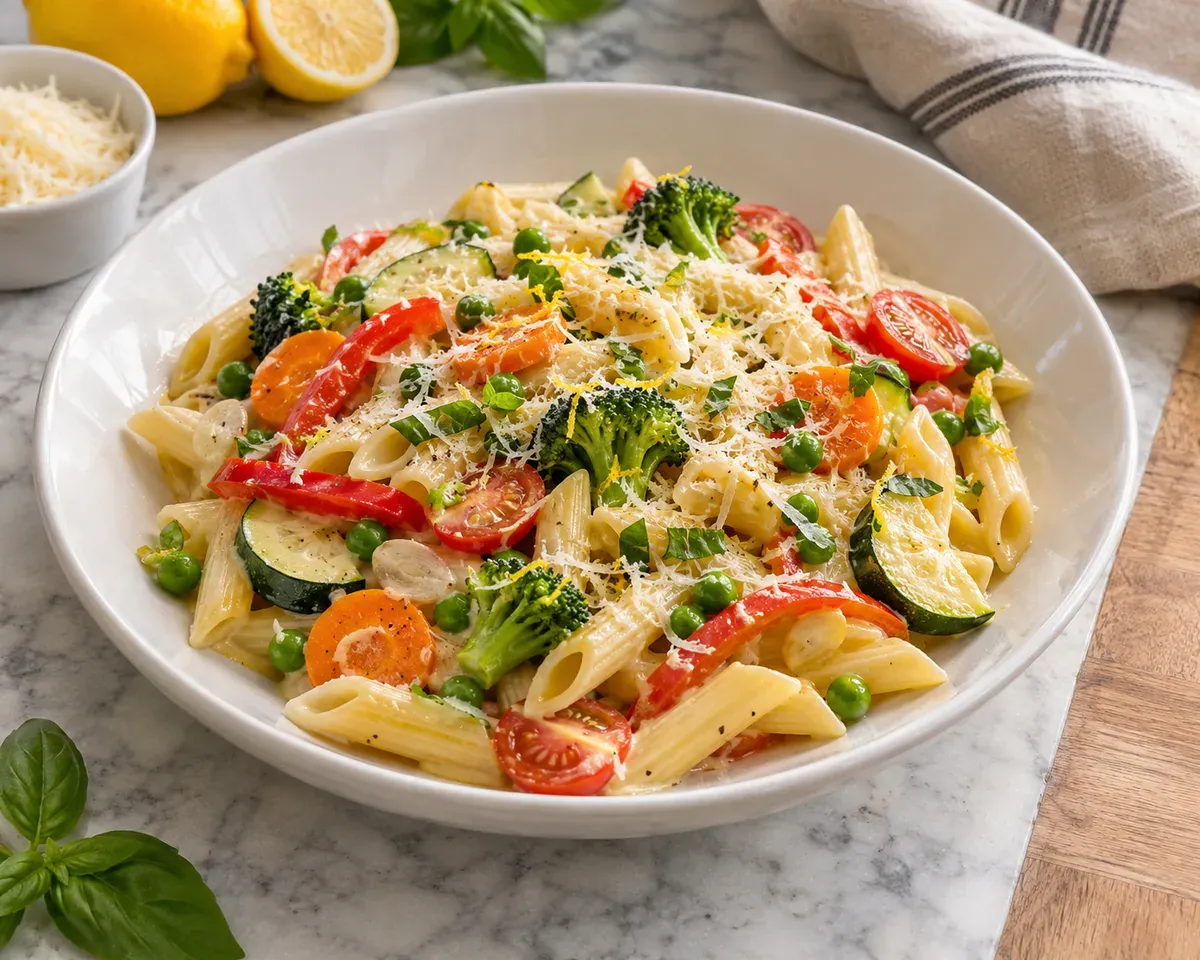
The short answer: pasta primavera is pasta tossed with crisp-tender vegetables (broccoli, zucchini, peppers, peas and tomatoes) in a garlic-Parmesan sauce or a light cream sauce. It takes about 30 minutes and feeds 4 to 6.
- Key numbers: 1 lb pasta · 5 cups vegetables · 1 cup Parmesan · ½ cup pasta water · 30 minutes
- Top moves: cook vegetables in stages, save pasta water, toss off the heat with cheese and lemon
Prep time: 15 minCook time: 15 minTotal time: 30 minServings: 4 servings
Amounts and methods for this pasta primavera were checked November 8, 2026.
Pasta primavera ingredients
| Ingredient | Amount | Notes |
|---|---|---|
| Penne or farfalle | 1 pound | Or spaghetti for the cream version |
| Broccoli florets | 1½ cups | Small florets |
| Carrot | 1 medium | Thin coins or matchsticks |
| Zucchini or yellow squash | 1 medium | Half-moons |
| Bell pepper | 1 red | Strips |
| Peas | 1 cup frozen | No need to thaw |
| Cherry tomatoes | 1 cup | Halved |
| Garlic | 4 cloves | Sliced |
| Olive oil + butter | 3 tbsp oil + 2 tbsp butter | |
| Parmesan | 1 cup grated | Plus more to serve |
| Lemon | 1 | Zest and 1 to 2 tbsp juice |
| Fresh basil or parsley | ¼ cup | Chopped |
| Heavy cream (optional) | ½ to ¾ cup | For creamy primavera |
Serves 4 to 6.
Rinse produce under running water before you cut it (FDA produce safety).
How to make pasta primavera
- Boil the pasta. Cook pasta in well-salted water 1 minute short of the package time, usually 9 to 11 minutes. Scoop out 1 cup of pasta water, then drain.
- Cook firm vegetables. While the pasta cooks, heat oil in a wide skillet over medium-high. Add carrots and broccoli with a pinch of salt; cook 4 minutes.
- Add soft vegetables. Add zucchini and pepper; cook 3 minutes until crisp-tender. Add garlic for 1 minute, then peas and tomatoes for 1 minute more.
- Toss. Lower the heat. Add pasta, butter and ½ cup pasta water. Toss for 1 to 2 minutes, until glossy. For creamy primavera, add the cream now and simmer 1 to 2 minutes.
- Finish off the heat. Toss in Parmesan, lemon zest and juice and herbs. Loosen with more pasta water. Season and serve right away with extra cheese.
Nutrition (per serving, estimated)
Serving size: 1 serving.
| Calories | 740 |
|---|---|
| Total fat | 25 g |
| Saturated fat | 9 g |
| Cholesterol | 35 mg |
| Sodium | 570 mg |
| Total carbohydrate | 104 g |
| Dietary fiber | 9 g |
| Total sugars | 10 g |
| Protein | 27 g |
Excludes optional ingredients and garnishes.
This is an estimate calculated from USDA FoodData Central data for the listed ingredients and amounts. Actual values vary with brands, portions and substitutions.
Rate this recipe
Light vs creamy pasta primavera
| Version | Sauce | Calories feel | Best with |
|---|---|---|---|
| Light (olive oil, garlic, lemon) | Pasta water + Parmesan | Lighter, bright | Penne, farfalle, fusilli |
| Creamy (restaurant style) | Butter, cream, Parmesan | Rich | Spaghetti, fettuccine |
| Roasted-vegetable | Sheet-pan veg at 425°F, olive oil | Deeper, sweeter | Short shapes; see sheet pan dinners |
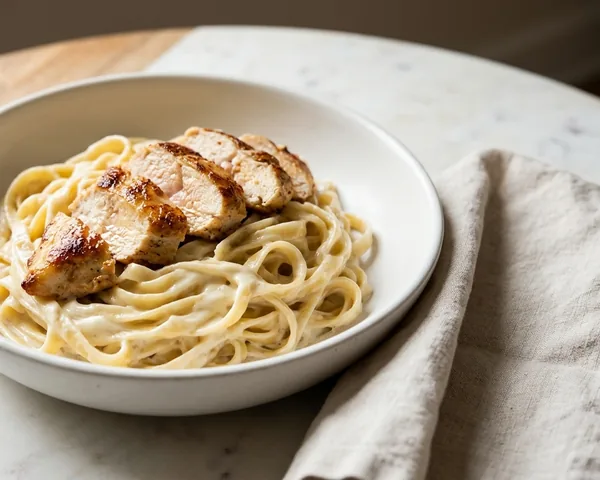
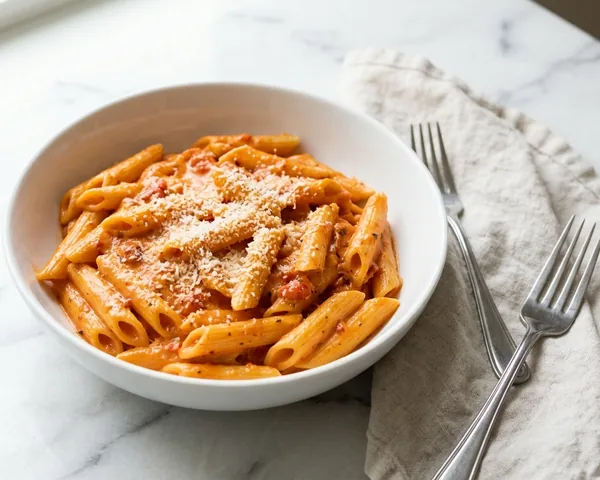
Love a rich white sauce? Our Alfredo sauce recipe works as the creamy base. For a red version, toss the vegetables with marinara sauce.
Add-ins and swaps
- Protein: grilled chicken (cook to 165°F), shrimp cooked until opaque, or white beans for a meatless boost.
- Seasonal vegetables: asparagus and snap peas in spring; mushrooms, spinach and kale in fall and winter.
- Gluten-free: use a gluten-free penne and cook it just to al dente; it softens fast.
- Vegan: skip butter, cream and cheese; add nutritional yeast and extra lemon. More in vegan recipes.
Put vegetable swaps in the right cooking stage
A seasonal swap works best when it replaces the cooking stage as well as the ingredient. Inspired Taste's primavera method separates hearty vegetables from tender ones so the latter do not turn mushy. Keep the total vegetable amount in this recipe in mind rather than adding every substitute on top of the original mix.
| If you substitute | Add it at this point | Look for this cue |
|---|---|---|
| Asparagus for broccoli | With the firmer vegetables; cut thick stalks smaller | A fork enters with a little resistance |
| Mushrooms for some zucchini | Sauté before the quick-cooking vegetables | Released moisture has cooked away and edges begin to brown |
| Snap peas for some bell pepper | Toward the end with the softer vegetables | Bright color and a crisp bite |
| Spinach for some peas | At the finish, before the off-heat cheese | Leaves have just wilted |
| Kale for some broccoli | Remove tough stems and start with the firm vegetables | Leaves are tender enough to chew comfortably |
If the pan becomes crowded, cook vegetables in batches and combine them with the pasta at the end. Excess vegetable liquid should cook away before the reserved pasta water is added. This keeps the garlic-Parmesan finish glossy instead of turning it into a thin vegetable broth, while leaving tender vegetables recognizable.
Make-ahead and leftovers
- Prep ahead: chop vegetables up to 2 days early and store them in a covered container.
- Leftovers: refrigerate within 2 hours and eat within about 3 to 4 days. Reheat until steaming with a splash of water.
- Lunches: the light version tastes good cold as a pasta salad. See pasta salad and healthy lunch ideas.
More weeknight pasta: pasta recipes, baked ziti, quick dinner ideas and vegetarian recipes.
Affiliate links: we may earn a small commission. As an Amazon Associate we earn from qualifying purchases. Details.
Airtight glass containers with lids keep leftovers fresh and can go from the fridge to the microwave.
Save the recipe
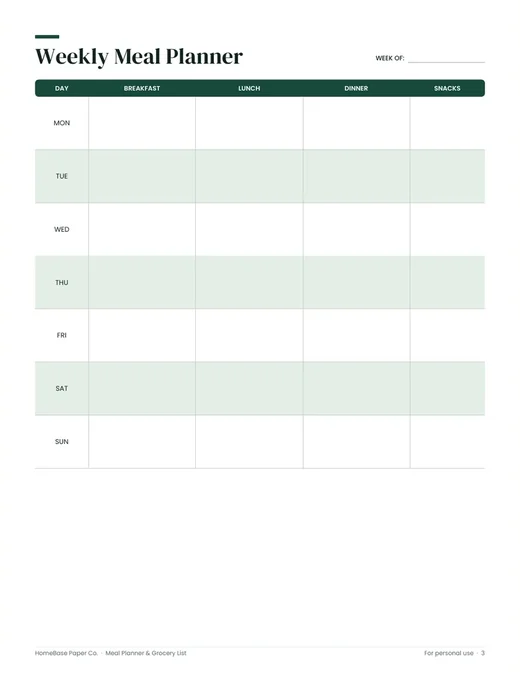
Pair this with easy dinner ideas or meal planning on a budget.
More pasta dinners you'll love
Frequently asked questions
What is pasta primavera? Pasta primavera is pasta tossed with lightly cooked spring and garden vegetables in a simple garlic, olive oil and Parmesan sauce or a light cream sauce. Primavera means spring in Italian, but the dish became famous in New York in the 1970s.
What vegetables go in pasta primavera? Pasta primavera usually includes broccoli, zucchini, bell peppers, asparagus, peas, carrots and cherry tomatoes. Use 4 to 6 cups of chopped vegetables per pound of pasta, and cut them the same size so they cook evenly.
Is pasta primavera creamy? Pasta primavera can be creamy or light. The best-known restaurant version uses butter, cream and Parmesan. A lighter home version uses olive oil, garlic, lemon, pasta water and Parmesan for a glossy sauce without cream.
What pasta shape is best for pasta primavera? Penne, farfalle, fusilli and rotini hold chopped vegetables best in pasta primavera. Spaghetti and linguine work for the cream version. Use 1 pound of dry pasta for 4 to 6 servings.
How do you keep pasta primavera vegetables from getting mushy? Keep pasta primavera vegetables crisp by cooking them in stages: firm vegetables like carrots and broccoli first, then zucchini and peppers, then peas and tomatoes for the last minute. Stop when they are bright and crisp-tender.
Can I add chicken or shrimp to pasta primavera? Yes, you can add chicken or shrimp to pasta primavera. Cook chicken to 165°F and shrimp until opaque, then toss them in at the end. Leftover rotisserie chicken works well on a busy night.
Is pasta primavera vegetarian? Pasta primavera is vegetarian when you use vegetable broth and a vegetarian Parmesan-style cheese, since traditional Parmigiano-Reggiano uses animal rennet. Skip the cheese and cream and add nutritional yeast for a vegan version.
How long does pasta primavera last in the fridge? Pasta primavera lasts about 3 to 4 days in the fridge. Refrigerate within 2 hours of cooking and reheat until steaming with a splash of water or broth to loosen the sauce.
Can you freeze pasta primavera? Pasta primavera does not freeze well. The vegetables turn soft and cream sauces can separate. Freeze cooked vegetables and sauce separately for up to 2 months and cook fresh pasta when you serve it.
Where can I save my pasta primavera recipe? The Family Recipe Binder ($6.99) from HomeBase Paper Co. has fillable recipe pages so your vegetable mix, sauce style and add-ins stay with your other family pasta recipes.
Newsletter
Get the HomeBase email
Fresh tips three times a week, Mon/Wed/Fri, with our deals and new products, from printables, spreadsheets and bundles to paperback planners and apparel, plus simple home, money and planning tips.
Sources
- FDA: Selecting and serving produce safely fda.gov
- FoodSafety.gov: Safe minimum internal temperatures foodsafety.gov
- USDA FSIS: Leftovers and food safety fsis.usda.gov
- Inspired Taste's primavera method inspiredtaste.net
Made this? Tell us how it went
Your notes help the next cook: what you changed, how long it took, how it turned out.