

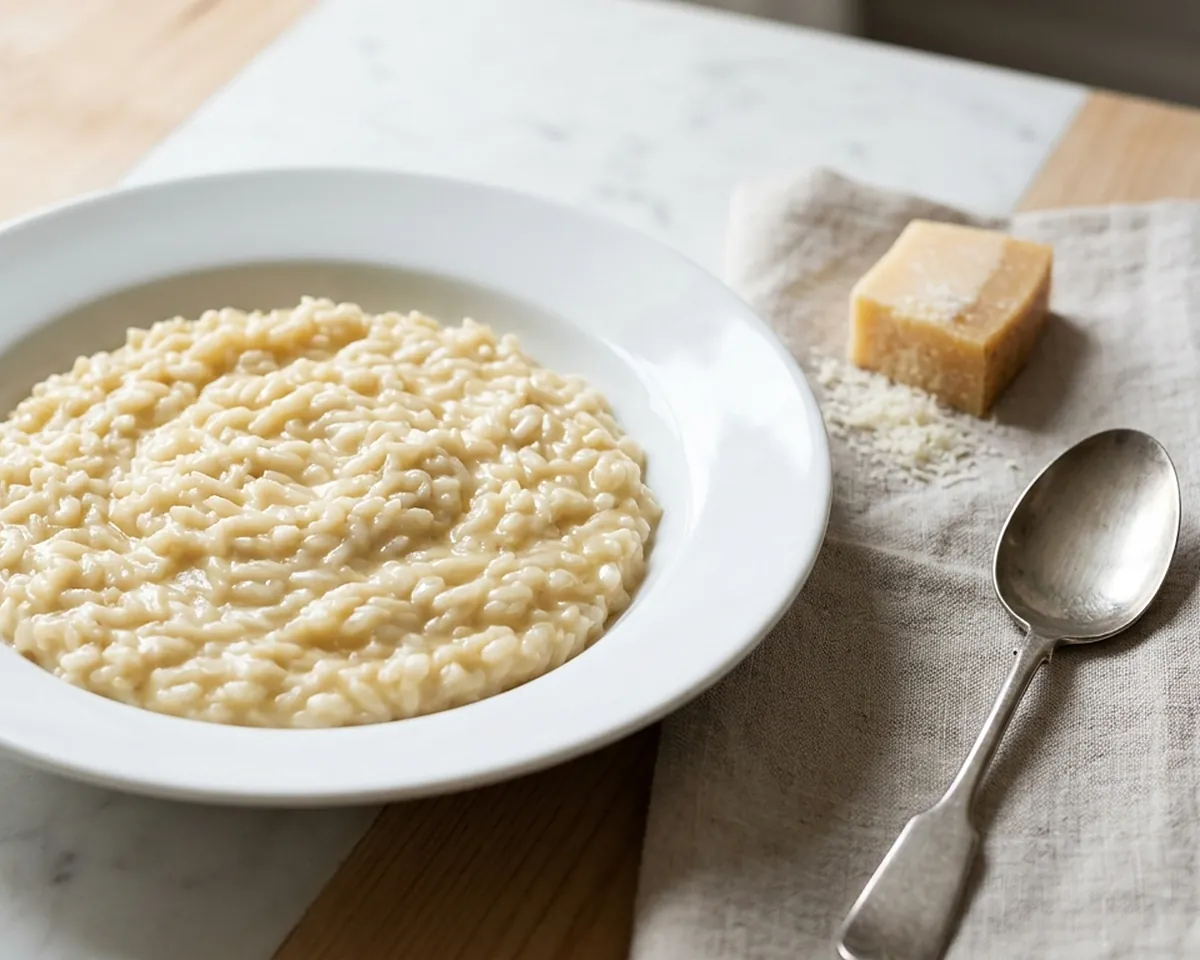
The short answer: this risotto recipe toasts arborio rice, then stirs in warm broth until creamy and al dente in about 25 minutes, finished with butter and Parmesan.
- Key numbers: 1½ cups arborio · 5-6 cups warm broth · ½ cup Parmesan · 18-22 min stir · feeds 4
- Top moves: warm the broth, toast rice, ladle gradually, finish off heat
Prep time: 20 minCook time: 29 minTotal time: 49 minServings: 4 servings
Amounts and methods for this risotto recipe were checked November 6, 2026. The sections below cover ingredients, the stirring method, add-ins, sides, storage and planning.
Risotto ingredients
| Ingredient | Amount | Notes |
|---|---|---|
| Arborio rice | 1½ cups | Do not rinse |
| Chicken or vegetable broth | 5 to 6 cups | Keep warm on a burner |
| Yellow onion or shallot | 1 small, minced | |
| Garlic | 2 cloves, minced | Optional |
| Olive oil or butter | 2 tablespoons | For toasting rice |
| Dry white wine | ½ cup | Optional |
| Parmesan | ½ cup finely grated | Plus more for serving |
| Butter | 1 tablespoon | Finish |
| Salt and black pepper | To taste | |
| Lemon zest | Optional | Bright finish |
| Peas or sautéed mushrooms | 1 cup | Optional add-ins |
Serves 4 as a main, 6 as a side.
How to make stovetop risotto
- Warm the broth. Keep broth at a bare simmer in a saucepan. Cold broth shocks the rice and slows cooking.
- Sweat the onion. In a wide, heavy pot, warm oil or butter over medium heat. Cook onion with a pinch of salt 4 to 5 minutes until soft. Stir in garlic 30 seconds.
- Toast the rice. Add arborio and stir 1 to 2 minutes until edges look translucent.
- Add wine (optional). Pour in wine and stir until mostly absorbed.
- Ladle and stir. Add about 1 cup warm broth. Stir often until nearly absorbed. Continue ladle by ladle for 18 to 22 minutes until rice is creamy with a slight bite in the center. You may not need every cup of broth.
- Finish. Take off heat. Stir in butter, Parmesan, pepper and optional lemon zest or add-ins. Rest 1 minute. The risotto should slowly settle on the plate, not stand stiff.
Nutrition (per serving, estimated)
Serving size: 1 serving.
| Calories | 430 |
|---|---|
| Total fat | 14 g |
| Saturated fat | 5 g |
| Cholesterol | 25 mg |
| Total carbohydrate | 63 g |
| Dietary fiber | 1 g |
| Total sugars | 2 g |
| Protein | 11 g |
Excludes ingredients listed without an amount (to taste, for serving, for the pan). Excludes optional ingredients and garnishes. Sodium is not shown because salt or salty items are added to taste.
This is an estimate calculated from USDA FoodData Central data for the listed ingredients and amounts. Actual values vary with brands, portions and substitutions.
If you fold in cooked chicken or shrimp, cook those proteins to the safe minimum internal temperatures on FoodSafety.gov before adding.
Affiliate links: we may earn a small commission. As an Amazon Associate we earn from qualifying purchases. Details.
A food thermometer such as the Alpha Grillers instant-read thermometer makes that check quick and exact.
Money-saving tip: arborio and a carton of broth make a restaurant-style side cheaper than takeout; leftover risotto also presses into next-day arancini-style cakes if you want a second meal.
Rate this recipe
Risotto tips that keep it creamy, not gluey
| Problem | Likely cause | Fix |
|---|---|---|
| Gluey / porridge | Overcooked or boiling hard | Medium heat; pull at al dente |
| Crunchy center | Not enough broth/time | Keep ladling; taste at 18 minutes |
| Scorched bottom | Too little stirring / high heat | Wide pot; stir every 30-60 seconds |
| Bland | Under-salted or weak broth | Season broth or use a richer vegetable stock made from scratch; finish with Parmesan |
| Stiff mound | Sat too long / too little liquid | Loosen with hot broth before serving |
For other comforting bowls, try cooked rice basics, mac and cheese or a braise like beef stew on a colder night.
Choose the broth before seasoning the rice
Broth is added repeatedly and concentrated as the rice cooks. Taste it warm before starting: a strongly salted broth plus the finishing Parmesan can leave little room to adjust. RecipeTin Eats' risotto notes specifically call for low-sodium stock because cheese adds seasoning at the end.
| Broth choice | Practical adjustment |
|---|---|
| Low-sodium chicken or vegetable broth | Use it as written and make the final salt adjustment after the Parmesan |
| Regular salted broth | Taste first; dilute with water if it is already too salty to sip, keeping the measured liquid supply warm |
| Concentrate or bouillon | Prepare it to its package dilution before measuring; do not add undiluted concentrate with every ladle |
| Delicate vegetable broth | Let the rice and cheese remain prominent rather than compensating with more salt early |
The 5 to 6 cups above are a supply to draw from, not an instruction to force every drop into the pot. If the grains are still firm when that supply runs low, have warm water ready rather than letting the bottom dry out. If the rice is tender before the supply is used, stop adding liquid except to loosen the texture for serving. Taste the finished rice after butter and cheese go in; that is the useful moment to decide whether it needs salt, pepper or lemon.
What to serve with risotto
- Simple green salad with lemon
- Garlic green beans or roasted vegetables
- Seared chicken or shrimp cooked separately
- Garlic bread if you want something to swipe the bowl
Risotto fits a relaxed Sunday dinner and pairs with other easy dinner ideas when you want stove-top comfort without a long braise.
Storing, reheating and freezing
Refrigerate leftovers within 2 hours. USDA guidance says cooked leftovers keep 3 to 4 days in the refrigerator. Reheat in a saucepan with splashes of broth, stirring until hot and creamy again.
Airtight glass containers with lids keep leftovers fresh and can go from the fridge to the microwave.
For freezing, FoodSafety.gov's cold food storage charts list cooked leftovers at about 2 to 3 months for best quality. Texture softens after freezing, so many cooks prefer refrigerating shorter batches. If you freeze, flat portions reheat more evenly beside other freezer meals.
What to make next
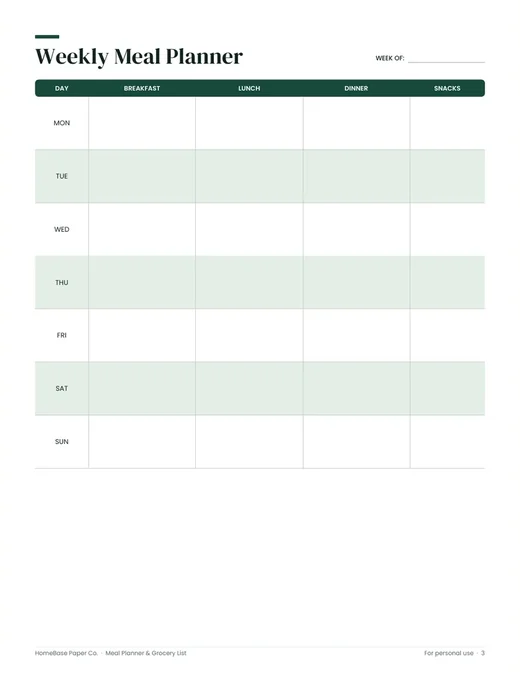
Pair risotto night with meal planning on a budget when you want the shopping list locked early.
More dinner recipes you'll love


Frequently asked questions
What is risotto? Risotto is an Italian rice dish made by stirring warm broth into short-grain rice (usually arborio) until the grains turn creamy while staying slightly firm in the center (al dente). Butter and Parmesan finish most weeknight versions.
How do you make risotto? Toast arborio rice in fat, add wine if using, then ladle in warm broth one scoop at a time while stirring until the rice is creamy and tender with a slight bite, about 18 to 22 minutes. Finish with butter and Parmesan off heat.
What rice is best for risotto? Arborio is the widely available choice. Carnaroli and vialone nano are excellent if you find them. Do not rinse the rice; you want the surface starch for creaminess. Long-grain rice will not give the same texture.
Do I have to stir risotto constantly? You need regular stirring, not nonstop whisking. Stir every 30 to 60 seconds while the broth absorbs so grains cook evenly and release starch. Walking away for several minutes risks scorching.
Can I make risotto without wine? Yes, you can make risotto without wine. Skip the wine and use a splash of extra broth plus a squeeze of lemon at the end for brightness.
Why is my risotto gummy or dry? Gummy usually means too much stirring at a hard boil or overcooked rice. Dry means not enough broth or it sat too long before serving. Risotto should slowly flow on the plate (all'onda), not stand in a stiff mound.
What can I add to risotto? Sautéed mushrooms, peas, roasted squash, lemon zest, shrimp or shredded chicken all work. Cook proteins separately to a safe temperature, then fold in at the end.
What temperature should added chicken or shrimp reach? Cook poultry to 165°F and shrimp until opaque and firm, following FoodSafety.gov safe minimum internal temperatures when you add protein to risotto.
How long do leftovers last? USDA guidance says cooked leftovers keep about 3 to 4 days in the refrigerator. Reheat gently with broth until hot and creamy again.
Can you freeze risotto? You can, but texture softens. For best quality within about 2 to 3 months per FoodSafety.gov cold storage charts, freeze in flat portions, thaw in the fridge and loosen with broth while reheating.
Where can I save my family's risotto recipe? The Family Recipe Binder ($6.99) from HomeBase Paper Co. has fillable recipe pages and dividers, so your broth amount and add-in notes stay with your other family dinners. It prints at home on US Letter paper.
Newsletter
Get the HomeBase email
Fresh tips three times a week, Mon/Wed/Fri, with our deals and new products, from printables, spreadsheets and bundles to paperback planners and apparel, plus simple home, money and planning tips.
Sources
- FoodSafety.gov: Safe minimum internal temperatures foodsafety.gov
- USDA FSIS: Leftovers and food safety fsis.usda.gov
- FoodSafety.gov: Cold food storage charts foodsafety.gov
- RecipeTin Eats' risotto notes recipetineats.com
Made this? Tell us how it went
Your notes help the next cook: what you changed, how long it took, how it turned out.