

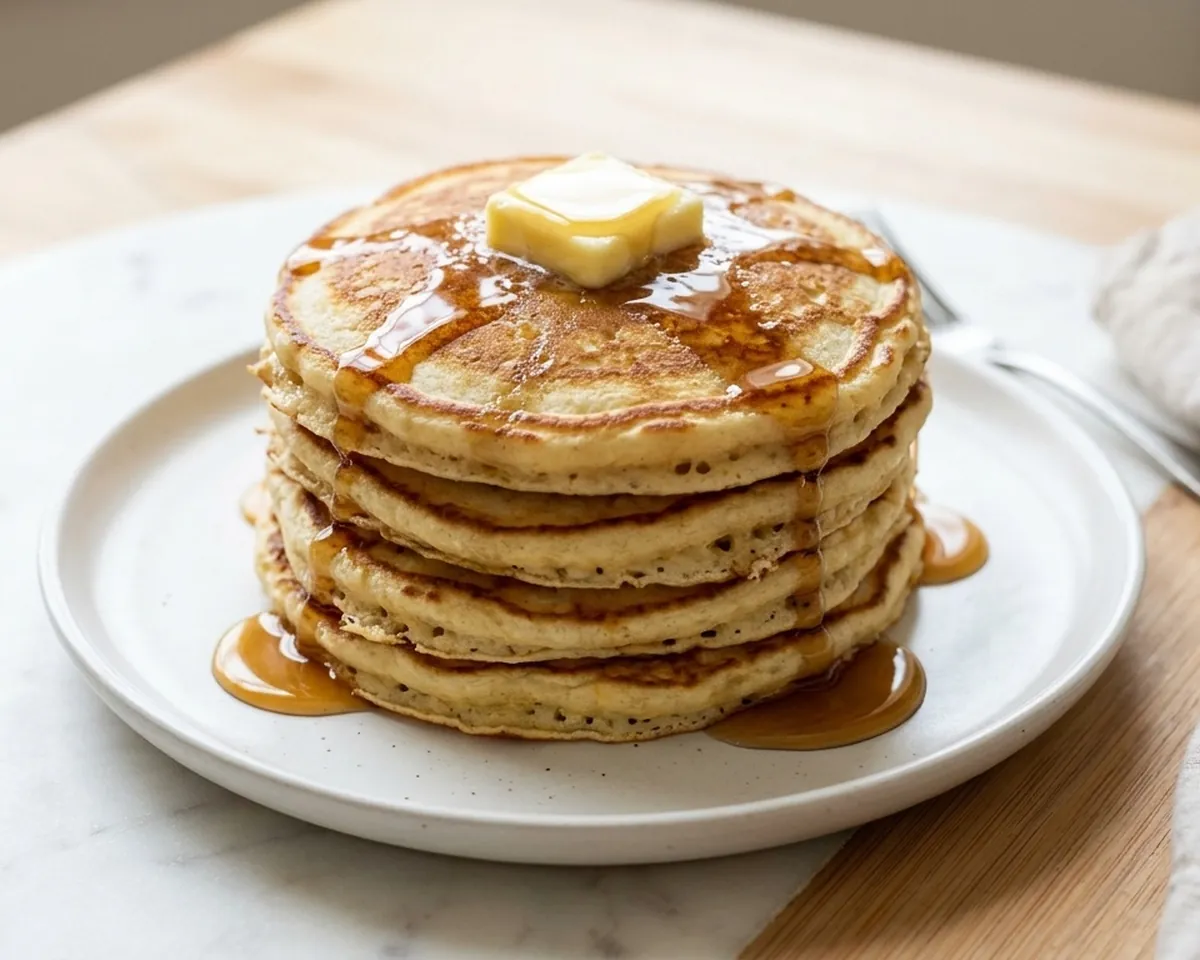
The short answer: this pancake recipe makes about 10 fluffy pancakes from 1½ cups of flour, 1 tablespoon of baking powder, 1¼ cups of milk, 1 egg and 3 tablespoons of melted butter. Cook ¼-cup scoops at 375°F and flip when the bubbles pop.
- Key numbers: about 20 minutes · 10 pancakes per batch · about 15 cents a pancake from scratch
- Crowd math: plan on 3 pancakes a person, so 3 batches feed 10 people, 7½ batches feed 25 and 15 batches feed 50
Prep time: 10 minCook time: 10 minTotal time: 20 minServings: 10 pancakes (3 to 4 people)
Pancake recipe amounts, crowd scaling and prices were checked November 4, 2026.
This pancake recipe makes about 10 tall, fluffy pancakes from pantry staples in about 20 minutes. Whisk flour, sugar, baking powder and salt, stir in milk, one egg and melted butter until just combined, rest the batter 5 minutes, then cook ¼-cup scoops on a medium-hot buttered griddle and flip when bubbles pop. Below you'll find exact amounts, griddle heat, when to flip, buttermilk and dairy-free swaps, and how to freeze extras for busy mornings.
This is the classic good old-fashioned pancake ratio. Saturday pancakes are an easy weekend tradition. Mix the dry ingredients the night before so breakfast is quick, even with sleepy kids underfoot.
Pancake ingredients
| Ingredient | Amount | Notes |
|---|---|---|
| All-purpose flour | 1½ cups | Spoon and level for accurate measuring |
| Sugar | 2 tablespoons | Light sweetness and browning |
| Baking powder | 1 tablespoon | Make sure it's fresh |
| Salt | ½ teaspoon | Brings out the flavor |
| Milk | 1¼ cups | Whole or 2% for the richest flavor |
| Large egg | 1 | Structure and tenderness |
| Unsalted butter, melted | 3 tablespoons | Plus extra for the griddle |
| Vanilla extract | 1 teaspoon | Optional but lovely |
Makes about 10 four-inch pancakes, enough for 3 to 4 people.
What a batch of pancakes costs
| Ingredient | Amount | Walmart price, Nov 4, 2026 | Cost |
|---|---|---|---|
| Great Value all-purpose flour | 1½ cups | $1.97 for 5 lb | $0.16 |
| Great Value granulated sugar | 2 tablespoons | $2.97 for 4 lb | $0.04 |
| Great Value baking powder | 1 tablespoon | $2.08 for 8.1 oz | $0.11 |
| Great Value iodized salt | ½ teaspoon | $0.94 for 26 oz | under 1 cent |
| Great Value 2% milk | 1¼ cups | $3.72 a gallon | $0.29 |
| Great Value large eggs | 1 | $1.67 a dozen | $0.14 |
| Great Value unsalted butter | 4 tablespoons (3 in the batter, 1 for the griddle) | $2.96 a pound | $0.37 |
| Great Value pure vanilla extract | 1 teaspoon | $5.12 for 2 fl oz | $0.43 |
| Batch of 10 pancakes | $1.53, or about 15 cents a pancake |
Leave out the vanilla and the batch drops to $1.11, or 11 cents a pancake. Flour is the cheapest part. The BLS average price data put white flour at about 55 cents a pound nationally in September 2026, and the 5-pound store bag above works out to about 39 cents a pound.
How to make pancakes, step by step
- Whisk the dry ingredients. In a large bowl, whisk the flour, sugar, baking powder and salt.
- Whisk the wet ingredients. In a second bowl, whisk the milk, egg, melted butter and vanilla.
- Combine gently. Pour the wet mixture into the dry and stir with a spatula until you can't see dry flour. Small lumps are good.
- Rest the batter. Let it sit 5 to 10 minutes while the griddle heats. It will thicken and puff slightly.
- Heat the griddle. Heat a griddle or large skillet over medium heat, or set an electric griddle to about 375°F. Brush it lightly with butter.
- Pour and cook. Scoop ¼ cup of batter per pancake. Cook 2 to 3 minutes, until bubbles pop and the edges look set.
- Flip once. Flip and cook 1 to 2 minutes more, until golden. Keep finished pancakes on a rack in a 200°F oven.
Nutrition (per serving, estimated)
Serving size: 1 pancake.
| Calories | 280 |
|---|---|
| Total fat | 11 g |
| Saturated fat | 6 g |
| Cholesterol | 65 mg |
| Sodium | 500 mg |
| Total carbohydrate | 37 g |
| Dietary fiber | 1 g |
| Total sugars | 8 g |
| Protein | 7 g |
Excludes ingredients listed without an amount (to taste, for serving, for the pan). Excludes optional ingredients and garnishes.
This is an estimate calculated from USDA FoodData Central data for the listed ingredients and amounts. Actual values vary with brands, portions and substitutions.
Skip tasting the raw batter. The FDA notes that raw flour isn't safe to eat until it's cooked.
Rate this recipe
Pancake swaps and variations
| Version | What to change | Result |
|---|---|---|
| Buttermilk pancakes | 1½ cups buttermilk, 2 tsp baking powder, ½ tsp baking soda | Tangy and extra tender |
| Dairy-free | Oat or almond milk; oil instead of butter | Nearly identical texture |
| Egg-free | Skip the egg, add 3 tbsp applesauce | Softer, more delicate |
| Blueberry | Drop berries onto each pancake on the griddle | Juicy pockets, no purple batter |
| Chocolate chip | Sprinkle chips on after pouring | A weekend treat |
| Cinnamon | Add 1 tsp cinnamon to the dry mix | Warm, cozy flavor |
| Whole wheat | Swap half the flour for whole wheat | Nuttier and heartier |
Pumpkin pancake recipe
Pumpkin pancakes use the base batter above with canned pumpkin purée and fall spice added. Make the base recipe, then change these four things:
| Change | Amount | Why |
|---|---|---|
| Add canned pumpkin purée | ½ cup | Plain 100% pumpkin, not pumpkin pie filling |
| Cut the milk | from 1¼ cups to 1 cup | The purée adds moisture, so the batter stays pourable |
| Add pumpkin pie spice | 1 teaspoon | Or ½ teaspoon cinnamon plus a pinch each of nutmeg and ginger |
| Lower the heat slightly | medium-low | The purée browns faster than plain batter |
Whisk the purée into the wet ingredients, combine with the dry mix until just mixed, and rest 5 minutes. Scoop ¼ cup per pancake and cook until the edges look set and bubbles pop, then flip once. These pancakes are a little softer than plain ones, so use a thin spatula. Serve with maple syrup or a spoonful of yogurt, and put the rest of the can into a pumpkin pie.
Pancake Day 2026 and 2027
Pancake Day is the UK name for Shrove Tuesday, the day before Ash Wednesday. In the US the same day is Mardi Gras or Fat Tuesday. Pancake Day 2026 was Tuesday, February 17, and Pancake Day 2027 is Tuesday, February 9. The Easter 2027 dates page lists Mardi Gras and Lent for 2027.
Pancakes are traditional that day because they use up eggs, milk and butter before Lent. The recipe above works as it is, and the crowd batter scales for a school or church pancake supper.
Tips for perfect fluffy pancakes
- Don't overmix. Lumpy batter makes fluffy pancakes. Smooth batter makes flat, chewy ones.
- Test your baking powder. A spoonful in hot water should fizz right away.
- Get the heat right. Medium heat browns the outside while the middle cooks. Too hot and the centers stay raw.
- Make the first one a test. The first pancake tells you if the pan is ready. Adjust the heat after it.
- Use a measuring cup. Scooping with a ¼ cup keeps the pancakes even, so they finish at the same time.
- Wipe the pan between batches. Brown butter bits will burn and spot the next pancakes.
Pancake troubleshooting: flat, rubbery, pale or raw in the middle
Top-ranking pancake guides treat these four problems as the ones that ruin a batch. Match what you see to the likely cause:
| What you see | Likely cause | Fix next batch |
|---|---|---|
| Flat, dense pancakes | Old baking powder, or batter too thin | Run the fizz test from the tips above and replace the baking powder if it does not bubble |
| Tough, rubbery pancakes | Batter mixed until smooth, which builds gluten | Stir only until the dry flour disappears and leave the lumps |
| Burnt outside, raw inside | Griddle too hot | Lower to medium heat and let the first pancake set the temperature |
| Pale and greasy | Griddle too cool, or too much fat in the pan | Wait until a few drops of water dance and sizzle, then wipe the pan between batches |
| Uneven batch | Pan crowded, or cold milk and eggs | Leave space between pancakes and let the milk and eggs sit out briefly before mixing |
If the batter has already been overmixed, adding a splash of milk and cooking thinner pancakes is better than adding more flour.
Pancakes for a crowd: batter for 10, 25 and 50 people
Plan on 3 four-inch pancakes a person for a brunch with sides, or 4 if pancakes are the whole meal. This table uses 3 a person.
| Ingredient | 10 people (3 batches, 30 pancakes) | 25 people (7½ batches, 75 pancakes) | 50 people (15 batches, 150 pancakes) |
|---|---|---|---|
| All-purpose flour | 4½ cups (about 1¼ lb) | 11¼ cups (about 3 lb) | 22½ cups (about 6 lb) |
| Sugar | 6 tablespoons | 15 tablespoons (1 cup minus 1 tablespoon) | 1¾ cups plus 2 tablespoons |
| Baking powder | 3 tablespoons | 7½ tablespoons | 15 tablespoons (1 cup minus 1 tablespoon) |
| Salt | 1½ teaspoons | 3¾ teaspoons | 2½ tablespoons |
| Milk | 3¾ cups | 9⅓ cups (about 2⅓ quarts) | 18¾ cups (about 1⅙ gallons) |
| Large eggs | 3 | 8 | 15 |
| Melted butter | 9 tablespoons | 22 tablespoons (2¾ sticks) | 45 tablespoons (5⅝ sticks) |
| Vanilla | 1 tablespoon | 2½ tablespoons | 5 tablespoons |
| Syrup (¼ cup a person) | 2½ cups | 6¼ cups | 12½ cups |
| Cost from scratch, with syrup | $6.64 | $16.59 | $33.18 |
Tips for cooking pancakes for a crowd:
- Mix the dry ingredients ahead. Measure each batch of dry mix into its own labeled bag or jar the night before.
- Mix wet batter in rounds. Stir up 2 or 3 batches at a time so the batter doesn't sit for an hour and lose its lift.
- Use two pans or an electric griddle. A large griddle at 375°F cooks 8 pancakes at a time.
- Try sheet pan pancakes. Pour a double batch into a buttered, parchment-lined 18-by-13-inch sheet pan and bake at 425°F for about 15 to 20 minutes, until the top springs back. Cut it into 24 squares.
- Keep the food out of the danger zone. USDA's leftovers guidance says to refrigerate food within 2 hours, so put the milk, eggs and butter back in the fridge between rounds.
From scratch vs. pancake mix: cost per plate
| From scratch | Great Value complete mix | |
|---|---|---|
| What you add | Milk, egg, butter, vanilla | Water only |
| Price used | Batch table above | $4.98 for a 5-lb box |
| Cost per pancake | About 15 cents (11 cents without vanilla) | About 4 cents |
| Plate of 3 pancakes plus ¼ cup syrup | $0.66 | $0.32 |
| 50-person breakfast with syrup | $33.18 | $16.21 |
The mix cost uses the box directions (1 cup of mix with ¾ cup of water makes 5 to 7 pancakes; we used 6) and the box's ½-cup serving of 55 grams. Syrup is Great Value original pancake syrup at $2.44 for 24 fluid ounces, about 20 cents a person. Pure maple syrup was $8.27 for 12.5 ounces, about $1.32 a person. A crowd of 50 would need eight of those bottles, or about four and a half 24-ounce bottles of pancake syrup.
So which should you pick? Mix is cheaper and faster for a big group. From scratch tastes richer, and you can make it with what's already in the pantry. To keep brunch costs down, write the price per pound of flour, milk and syrup in a grocery price book, and see meal planning on a budget and how to grocery shop on a budget. For more weekday mornings, try these quick breakfast ideas.
Toppings and what to serve with pancakes
Classic toppings are butter and warm maple syrup. For something different, try fresh berries, sliced bananas, peanut butter, a spoonful of yogurt, or homemade whipped cream. Serve pancakes with scrambled eggs, bacon or sausage and fruit for a full brunch. Cook bacon until crisp and sausage to the safe minimum internal temperature of 160°F for ground pork.
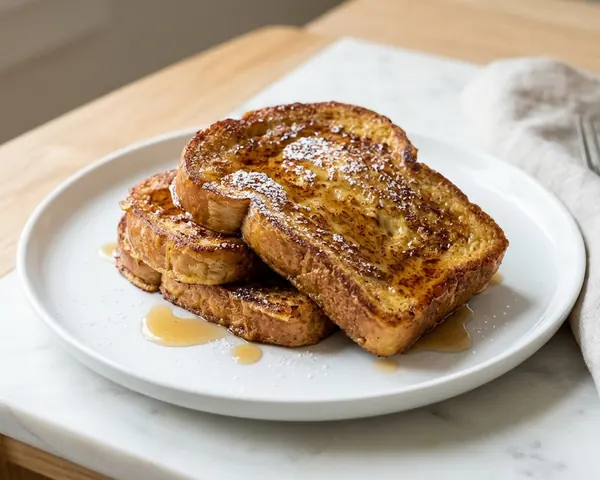
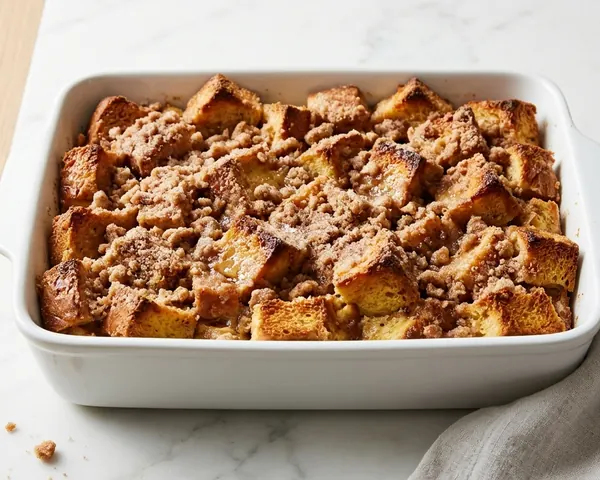
Hosting a holiday brunch? Pair pancakes with our french toast casserole or a Christmas breakfast casserole, and see more Christmas breakfast ideas.
Storing, freezing and reheating pancakes
Refrigerate leftover pancakes within 2 hours in an airtight container, and eat them within 3 to 4 days. The USDA's leftovers guidance recommends reheating leftovers to 165°F.
To freeze, cool pancakes on a rack, flash-freeze them on a sheet pan, then bag them with parchment between layers for up to about 3 months. Reheat straight from frozen in a toaster, or in a 350°F oven for about 10 minutes. They make a fast school-morning breakfast, and our freezer-friendly meals list has more ideas.
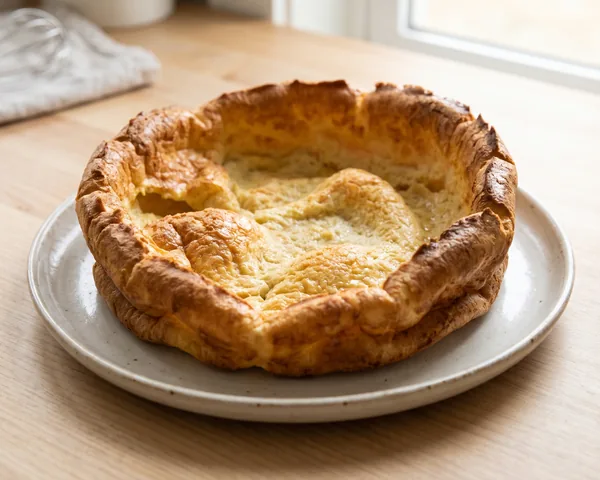
For an oven variation, try a puffy Dutch baby pancake baked in a hot skillet.
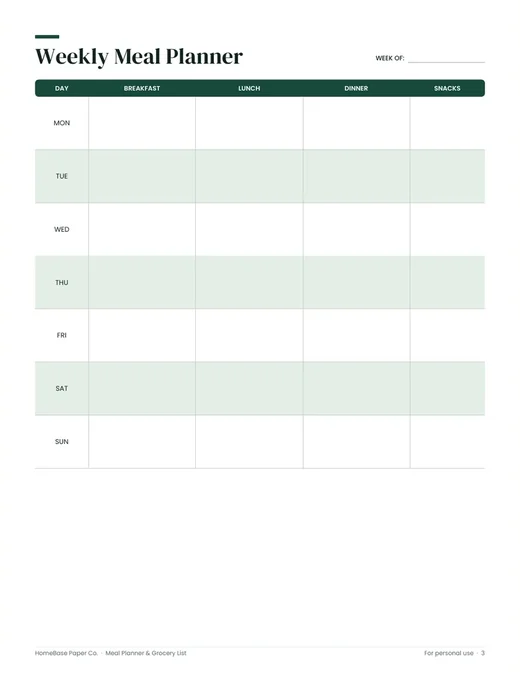
Plan your breakfasts for the week
Pancake mornings go smoother when the milk, eggs and syrup are already on the grocery list.
Find more printables in the Home shop.
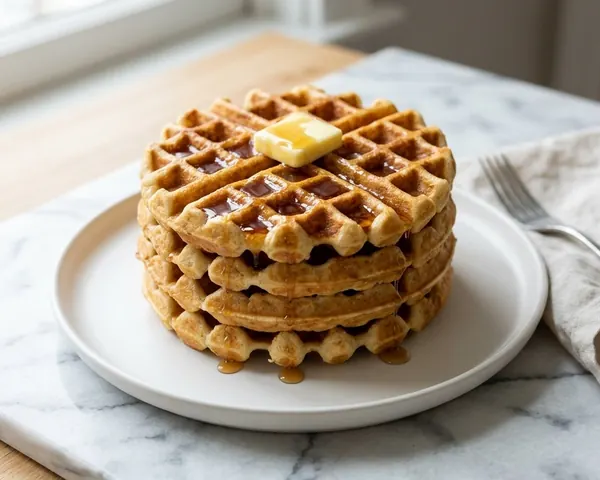
Have a waffle iron? Our easy waffle recipe uses the same pantry basics and comes out crisp outside and fluffy inside.
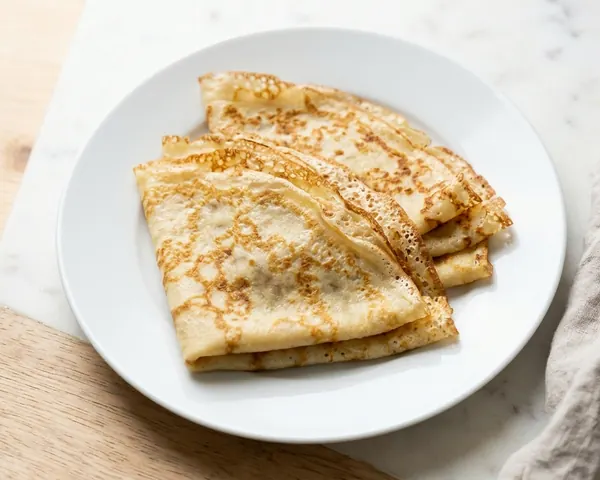
Want something thinner and more delicate? Our crepe recipe uses a 5-ingredient blender batter with no baking powder. For a quieter morning, cook a pot of oatmeal recipe toppings the night before. More skillet and make-ahead options live in our easy breakfast ideas roundup.
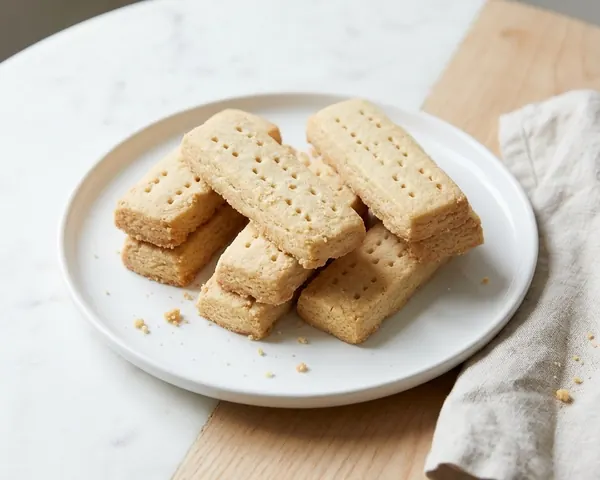
More pancakes, waffles and French toast
Frequently asked questions
How do you make pancakes from scratch? To make pancakes from scratch, whisk 1½ cups of flour, 2 tablespoons of sugar, 1 tablespoon of baking powder and ½ teaspoon of salt in one bowl. In another bowl whisk 1¼ cups of milk, 1 egg, 3 tablespoons of melted butter and vanilla. Stir the wet into the dry until just combined, rest the batter 5 minutes, then cook ¼-cup scoops on a buttered medium-hot griddle, flipping when bubbles pop and the edges look set.
How do you make pancakes fluffy? Fluffy pancakes come from fresh baking powder, a thick batter and gentle mixing. Stir only until the flour disappears and leave some small lumps, because overmixing develops gluten and makes pancakes flat and chewy. Letting the batter rest for 5 to 10 minutes also helps the baking powder start working and gives you taller pancakes.
When should you flip a pancake? Flip a pancake when bubbles form across the surface and some of them pop and stay open, and when the edges look dry and set. That usually takes 2 to 3 minutes on a medium-hot griddle. The second side cooks faster, about 1 to 2 minutes, until it's golden brown.
What temperature should a griddle be for pancakes? An electric griddle set to about 375°F works well for pancakes. On a stovetop, use medium to medium-low heat and test with a drop of water, which should sizzle and dance across the pan. If the outside browns before the middle cooks, turn the heat down a little.
Can I make pancakes without milk? Yes, you can make pancakes without milk. Use the same amount of water, oat milk, almond milk or another plant-based milk. Water makes slightly thinner, less rich pancakes, so adding an extra tablespoon of melted butter or oil helps. Plant milks work almost exactly like dairy milk in this recipe.
Can I make pancakes without eggs? You can make pancakes without eggs by leaving the egg out and adding 2 to 3 tablespoons of extra milk, or by using 3 tablespoons of unsweetened applesauce or mashed banana. Egg-free pancakes are a little more tender and less springy, so cook them slightly lower and slower and flip them carefully.
How do I make buttermilk pancakes with this recipe? To make buttermilk pancakes, replace the milk with 1½ cups of buttermilk, cut the baking powder to 2 teaspoons and add ½ teaspoon of baking soda. The acid in buttermilk reacts with the baking soda for a tangy, extra-tender pancake. If you don't have buttermilk, stir 1 tablespoon of lemon juice or vinegar into regular milk and let it sit 5 minutes.
Why are my pancakes flat? Pancakes are usually flat because the baking powder is old, the batter was overmixed, or the batter is too thin. Test baking powder by dropping a spoonful in hot water; it should bubble right away. Fold the batter gently, and if it pours like cream instead of slowly spreading, stir in a tablespoon or two of flour.
Why are my pancakes raw in the middle? Pancakes stay raw in the middle when the griddle is too hot, so the outside browns before the center can cook. Lower the heat to medium-low, use about ¼ cup of batter per pancake, and wait for bubbles to pop across the surface before flipping. Thick batter with add-ins may need an extra minute.
Can I make pancake batter ahead of time? You can mix the dry ingredients days ahead and store them in a jar, then add the wet ingredients in the morning. Mixed batter can be refrigerated, covered, for a few hours or overnight, but the baking powder loses some lift, so the pancakes may be a little flatter. Stir gently before cooking and add a splash of milk if it's too thick.
How do you keep pancakes warm for a crowd? To keep pancakes warm, place them in a single layer on a wire rack set over a sheet pan in a 200°F oven as you cook. The rack keeps the bottoms from getting soggy. Avoid stacking them tightly on a plate, which traps steam. They'll stay warm and soft for about 20 to 30 minutes.
Can you freeze pancakes? Yes, pancakes freeze very well. Cool them completely on a rack, freeze them in a single layer on a sheet pan for about an hour, then move them to a freezer bag with parchment between them. They keep their best quality for about 2 to 3 months. Reheat in a toaster, a 350°F oven or the microwave.
How long do leftover pancakes last in the fridge? Leftover pancakes keep in the refrigerator for about 3 to 4 days in an airtight container or bag. Refrigerate them within 2 hours of cooking. Reheat them in a toaster or a warm oven until hot all the way through, and reheat leftovers to 165°F if you're serving them to young kids or older relatives.
What can I add to pancakes? Popular pancake add-ins include blueberries, sliced bananas, chocolate chips, chopped pecans and a pinch of cinnamon. Drop the add-ins onto each pancake right after you pour the batter on the griddle, instead of stirring them into the bowl. That keeps the batter from turning purple and helps everything cook evenly.
How much pancake batter do I need for 25 people? Plan on 3 four-inch pancakes per person, or 75 pancakes for 25 people. That is 7½ batches of this recipe: about 11¼ cups of flour, 15 tablespoons of sugar, 7½ tablespoons of baking powder, 3¾ teaspoons of salt, about 9⅓ cups of milk, 8 eggs and 22 tablespoons of melted butter.
Is pancake mix cheaper than pancakes from scratch? At Walmart prices checked November 4, 2026, yes. Pancakes from scratch cost about 15 cents each with vanilla and 11 cents without it. Great Value complete mix made with water costs about 4 cents a pancake, though scratch pancakes are richer because they use milk, egg and butter.
Where can I keep my family's pancake recipe? The Family Recipe Binder ($6.99) from HomeBase Paper Co. has fillable recipe pages, dividers and recipe cards. You can write the scaled batch amounts for your crowd size right on the card.
Newsletter
Get the HomeBase email
Fresh tips three times a week, Mon/Wed/Fri, with our deals and new products, from printables, spreadsheets and bundles to paperback planners and apparel, plus simple home, money and planning tips.
Sources
- FoodSafety.gov: Safe minimum internal temperatures foodsafety.gov
- FDA: Handling flour safely fda.gov
- USDA FSIS: Leftovers and food safety fsis.usda.gov
- BLS: Average price, flour, white, all purpose, per lb data.bls.gov
Made this? Tell us how it went
Your notes help the next cook: what you changed, how long it took, how it turned out.