The short answer: the safest leather cleaner for most finished leather is a pH-neutral cleaner made for leather, or a few drops of mild, unscented soap in distilled water. Wipe it on with a damp (never wet) microfiber cloth, wipe again with clean water, and buff dry.
- By item: couches, car seats and bags get the mild soap or leather cleaner method, then conditioner · shoes and boots get a brush, saddle soap and polish · jackets get a damp cloth, with stains left to a pro · suede and nubuck get a dry brush only
- Never use: bleach, ammonia, all-purpose sprays, melamine sponges, soaking-wet cloths or direct heat
- Free kit: get the free deep cleaning checklist (we email it to you). Want a full routine? The Cleaning Schedule is $4.49, or the Home Management Bundle is $16.99 (
$32.94when bought separately).
Care guidance checked November 14, 2026 against university extension guides and maker care pages. Below: a cleaner-by-item chart, how to tell your leather type, a patch test, step-by-step methods, homemade vs store-bought, stain fixes and what never to use.
Choosing a leather cleaner is mostly about the leather, not the brand. A protected leather couch can handle a damp cloth and mild soap. A buttery aniline chair, a suede jacket or perforated car seats need a gentler touch. Start with the chart, then use the section for your item.
Which leather cleaner to use: a quick chart by item
| Item | Usual leather type | Cleaner to use | Condition after? | Avoid |
|---|---|---|---|---|
| Leather couch or recliner | Protected (pigmented), sometimes semi-aniline | Maker's recommended cleaner, or mild soap in distilled water | Yes, if the maker recommends it | All-purpose sprays, saddle soap on furniture, soaking |
| Leather car seats | Protected, often perforated | Leather cleaner on a cloth, not sprayed on the seat | Yes, per the owner's manual | Liquid in the holes, interior "protectant" sprays meant for plastic |
| Smooth leather shoes and boots | Smooth, finished | Soft brush, then saddle soap or mild soap | Yes, then polish or wax | Soaking, drying by a heater |
| Leather jacket | Smooth or suede | Damp cloth only | Rarely, and only with a product made for garments | Spot-cleaning stains at home, plastic bags |
| Leather bag or purse | Protected or semi-aniline | Mild soap or leather cleaner on a damp cloth | Yes, especially handles | Alcohol wipes, hand sanitizer |
| Suede or nubuck (any item) | Napped, unfinished | Suede brush and suede eraser | No, use a suede protector instead | Water, soap, oils, conditioner |
First, identify your leather type
The same leather cleaner can be perfect on one couch and ruin another. Check the care tag, the maker's website or your owner's manual first. If there is no tag, these clues help:
- Protected (pigmented) leather: a uniform color with a slight sheen. A drop of water beads up and sits on top. This is the most common leather on family couches and car seats, and the easiest to clean.
- Semi-aniline leather: natural grain shows through a thin protective coat. Water beads at first, then slowly darkens the spot.
- Aniline leather: soft, natural-looking and very absorbent. A drop of water soaks in and darkens it right away. Use only a cleaner made for aniline leather, or call a pro.
- Suede and nubuck: a velvety nap you can brush in two directions. No water-based cleaners at all.
- Bonded or faux leather: often labeled "PU" or "bonded." Clean it with mild soap and water like vinyl, and skip leather conditioner, which it can't absorb.
Do the water test on a hidden spot, like under a cushion or on the back of a seat. If a single drop soaks in fast, treat the piece as aniline.
Patch test any leather cleaner first
Extension guides and furniture makers agree on one thing: test first. Here is a simple way to do it.
- Pick a hidden spot about the size of a coin, like the back of the couch skirt or under a car seat headrest.
- Put a little cleaner on a white microfiber cloth, not on the leather.
- Wipe the spot gently, then blot with a clean white cloth.
- Wait until it is fully dry, at least an hour.
- Look for color on the cloth, dark rings, stiffness or a dull patch. If you see any of those, stop and try something gentler.
Cleaning a leather couch: vacuum, wipe, dry, condition
- Vacuum first. Use the soft brush attachment and the crevice tool along seams and under cushions. Grit left on the surface acts like sandpaper when you wipe.
- Mix the cleaner. Add a few drops of mild, unscented soap to a bowl of distilled water, or use a leather cleaner your couch maker recommends.
- Wipe in sections. Dampen a microfiber cloth, wring it until it barely feels wet, and wipe one cushion at a time from top to bottom.
- Rinse. Go over the same section with a second cloth dampened with plain distilled water to lift any soap film.
- Buff dry. Use a dry cloth right away so no water sits on the leather.
- Condition. Once fully dry, rub in a thin layer of leather conditioner, let it soak in, and buff off the extra.
Check the maker first: care advice differs. La-Z-Boy's UK site, for example, says household soap and water are not recommended for its leathers and sells its own pH-neutral cleaner. If your maker says the same, use what it recommends.
Keep leather furniture out of direct sun and away from heaters, which dry it out and cause fading and cracks. For the rest of the room, our deep cleaning checklist guide covers vacuuming under furniture and spot-cleaning upholstery.
Cleaning leather car seats without drying them out
Car seats take more wear than any couch: sun, heat, jeans, spills and grit from shoes.
- Vacuum with a soft brush, working into the seams and where the seat back meets the cushion.
- Spray the cloth, not the seat. This matters most on perforated or ventilated seats, where liquid can seep into the holes and the foam.
- Work one panel at a time and buff each panel dry before you move on.
- Condition if your owner's manual says to. Many modern seats have a tough topcoat that needs only cleaning. Your owner's manual has the final word.
- Park in the shade or use a sunshade to slow fading and cracking.
Add interior cleaning to your car routine alongside the jobs in our car maintenance schedule.
Cleaning leather shoes and boots
- Brush off dirt with a soft shoe brush. Let caked mud dry first so it brushes off instead of smearing.
- Clean. For sturdy smooth leather, work saddle soap into a light lather with a damp cloth. For dress shoes, a drop of mild soap in water is gentler.
- Wipe clean with a damp cloth and stuff the shoes with paper to hold their shape.
- Dry at room temperature, never by a heater or in direct sun.
- Condition and polish. University of Missouri Extension recommends a good wax dressing to protect shoes and luggage and help keep moisture out.
Salt stain tip: a cloth dipped in a 1:1 mix of white vinegar and water lifts winter salt lines from finished boots. Patch test first, then wipe with plain water and condition once dry.
If shoes get soaked, the Alabama Cooperative Extension System says to dry leather away from heat, stuff it with paper, clean it with saddle soap, then use a leather oil. Its guide warns the oil may darken leather, so test it first.
Cleaning a leather jacket
Garments are the one place to be cautious. Iowa State University Extension advises wiping smooth leather with a damp cloth and brushing suede often with a soft brush. If staining occurs, it says to take the garment to a professional leather cleaner as soon as possible and not to try spot removal at home.
- Let a wet jacket air dry on a wide hanger, away from heat.
- Store it in a cool, ventilated closet, never a plastic bag.
- Protect the collar from body oils with a scarf.
- Have matching pieces cleaned together so colors stay even.
Cleaning a leather bag or purse
Bags pick up hand lotion, body oils and ink. Empty the bag, shake out crumbs and vacuum the lining. Wipe the outside with the same mild soap method as a couch, paying extra attention to handles and corners. Buff dry, condition, and stuff it with paper while it dries so it keeps its shape.
Skip hand sanitizer and alcohol wipes. They can strip the finish and leave pale spots, especially on light colors.
Homemade leather cleaner vs store-bought
| Homemade (mild soap + distilled water) | Store-bought leather cleaner | |
|---|---|---|
| Best for | Light, everyday dirt on protected leather | Regular care, light colors, semi-aniline and aniline leather (if labeled for it) |
| Strengths | Cheap, gentle, made from things you already have | pH balanced, made for leather, often sold with a matching conditioner |
| Watch out for | Soap film if you skip the rinse cloth | Products labeled only for certain leather types |
| Conditions leather? | No, condition separately | Some do; check the label |
About oil and vinegar recipes: popular DIY mixes of olive oil and vinegar can darken leather, and food oils can leave a sticky film. If you try one, use a tiny amount on protected leather only, after a patch test. A conditioner made for leather is the safer choice.
Safety: use cleaners in a ventilated room, keep them in labeled bottles, and never mix bleach and ammonia products.
Removing common stains from leather
- Fresh spills: blot right away with a dry cloth. Don't rub, which spreads the liquid.
- Grease or oil: blot, then leave it alone for a day. On protected leather it often fades as it spreads out. For oil on fabrics, see our oil stains guide.
- Ink: on protected leather only, dab, don't rub, with a cotton swab barely dampened with rubbing alcohol, after a patch test. On aniline leather or garments, call a pro. Ink on fabric is a different job; see how to get ink out of clothes.
- Water spots: dampen the whole panel evenly with a lightly damp cloth, then let it dry naturally so there is no ring.
- Mildew: University of Missouri Extension says to wipe it with a cloth dampened in equal parts rubbing alcohol and water and dry it in moving air. If mildew remains, wash with thick suds of mild soap or saddle soap, wipe with a damp cloth and dry in an airy place.
- Sticky residue: test a little mild soap first; our guide on how to remove sticky residue lists what is too harsh for delicate surfaces.
What not to use on leather
- Bleach, ammonia and all-purpose or glass cleaners
- Melamine sponges, scouring pads and stiff brushes
- Soaking-wet cloths, or spraying cleaner straight onto the leather
- Hair dryers, heaters and direct sun to speed up drying
- Baby wipes, sanitizer or makeup remover as a regular cleaner
- Leather conditioner on suede, nubuck or bonded leather
- Saddle soap on furniture unless the maker allows it (it is made for sturdy, smooth leather like boots and saddles)
How often to clean and condition leather
Cleaning the floor under leather furniture? Spills there need a different product, so see our floor cleaner guide for what is safe on each floor type.
| Task | Couch and chairs | Car seats | Shoes and boots | Bags and jackets |
|---|---|---|---|---|
| Dust or brush | Weekly | Weekly | After wear | As needed |
| Wipe clean | Every 1 to 3 months | Monthly | When dirty | Every few months |
| Condition | 1 to 2 times a year | 2 to 4 times a year, if the manual allows | After cleaning | Once a year, if labeled for it |
Follow the maker's guide when it differs from this chart.
Put leather care on your cleaning schedule
Leather lasts for decades when someone remembers it. The easiest fix is to give it a slot. Add "wipe the couch and car seats" to your monthly list and "condition leather" to your seasonal deep clean.
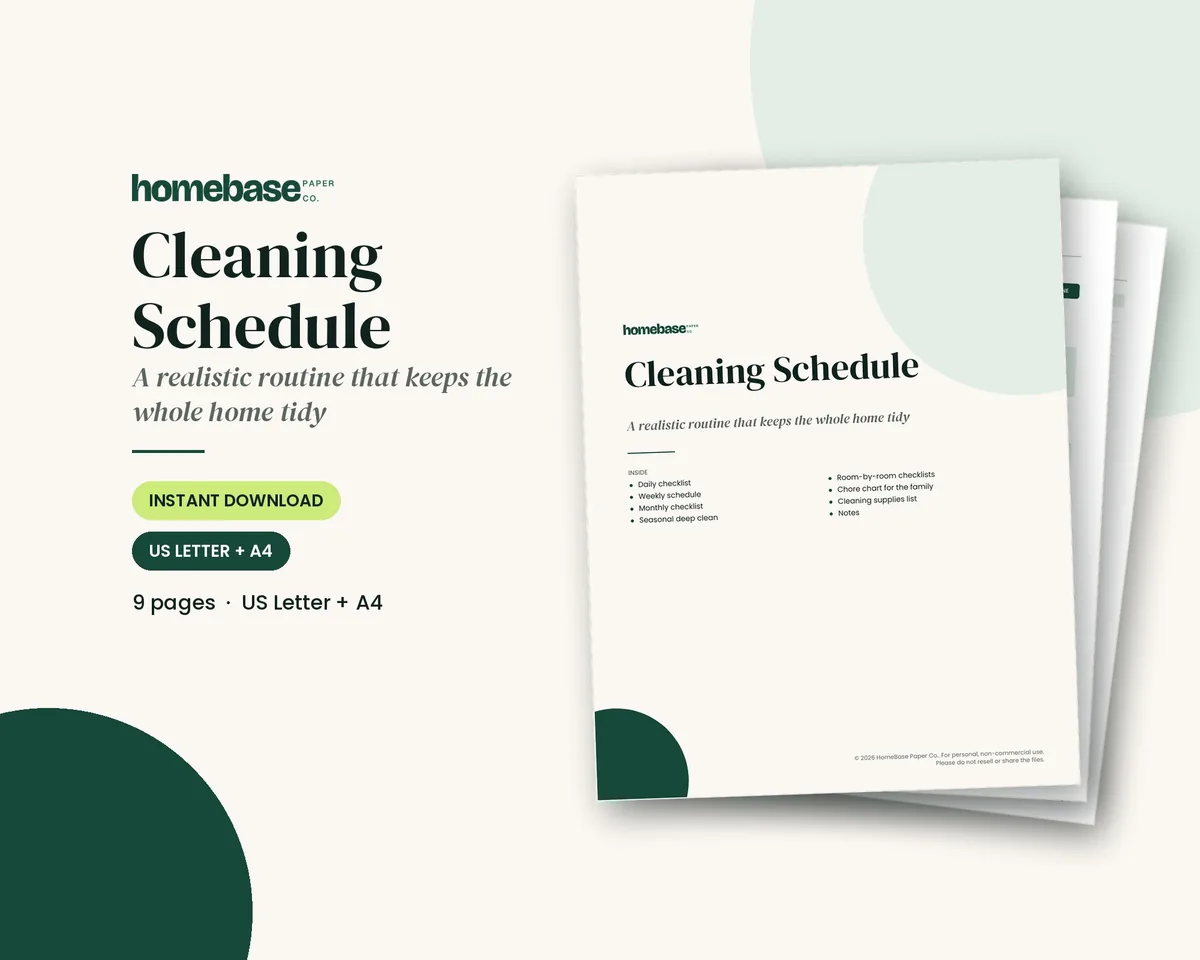
- Cleaning Schedule, $4.49: daily, weekly, monthly and seasonal deep clean lists, room-by-room checklists, a family chore chart and a cleaning supplies list.
- Household Binder, $6.99: a home manual with a cleaning routine, calendars and family information. Keep your furniture care tags in it.
Need a routine first? Start with how to start a cleaning routine or the daily, weekly and monthly cleaning schedule template. Browse every planner on the Printables page, or save with the Bundles.
Frequently asked questions
What is the best leather cleaner? The best leather cleaner is the gentlest one that works on your type of leather. For most finished leather couches, car seats and bags, that is a pH-neutral cleaner made for leather or a few drops of mild, fragrance-free soap in distilled water. Always follow the maker's care guide first, because some makers say household soap can damage their finish.
What can I use to clean leather at home? You can clean most finished leather at home with a few drops of mild, unscented soap in a bowl of distilled water. Dip a microfiber cloth, wring it until it is just damp, wipe a small section, then wipe with a clean damp cloth and buff dry. Patch test it in a hidden spot first.
Is vinegar safe to use on leather? Vinegar is acidic, so use it only diluted, only on finished leather and only after a patch test. A 1:1 mix of white vinegar and water is a common spot treatment for salt marks on boots. Do not use vinegar on suede, nubuck or aniline leather, and wipe it off with a damp cloth afterward.
Can I use baby wipes on leather? Baby wipes are fine for a quick wipe of finished leather in a pinch, but they are not a leather cleaner. Many contain fragrance, alcohol or lotion that can leave residue or dry the finish over time. Test one in a hidden spot, and follow with a dry cloth.
Can I use dish soap on leather? A drop or two of mild dish soap in a bowl of water is gentle enough for most finished leather. Skip degreasing or antibacterial formulas, and never apply soap straight to the leather. Rinse with a clean damp cloth so no soap film is left behind.
What should you never use on leather? Never use bleach, ammonia, all-purpose or glass cleaners, abrasive pads, melamine sponges, or a soaking-wet cloth on leather. Heat from a hair dryer or heater can also crack it. On suede and nubuck, skip liquids altogether and use a suede brush.
How do you clean leather car seats? Vacuum the seats with a soft brush, then wipe with a leather cleaner or mild soap solution on a damp cloth, one panel at a time. On perforated seats, put the cleaner on the cloth, not the seat, so liquid doesn't go into the holes. Buff dry and condition if your owner's manual recommends it.
How do you clean a leather jacket? Wipe a smooth leather jacket with a damp cloth and let it air dry away from heat. Iowa State University Extension advises taking stained leather garments to a professional leather cleaner instead of trying to remove spots at home. Store the jacket in a cool, ventilated closet, not a plastic bag.
How do you get mildew off leather? Wipe mildew off leather with a cloth dampened in equal parts rubbing alcohol and water, then dry it in moving air, per University of Missouri Extension. If marks remain, wash with thick suds of mild soap or saddle soap, wipe with a damp cloth and dry in an airy place. Test for color loss first.
How often should you clean and condition leather? Dust leather weekly, wipe it clean every one to three months, and condition it about once or twice a year, or as often as the maker suggests. Pieces in sun, heat or heavy use, like car seats and favorite chairs, need care more often.
What is the easiest way to remember leather care? The Cleaning Schedule ($4.49) gives every job a slot: daily resets, weekly rooms, monthly tasks and a seasonal deep clean list. Put a leather wipe-down on the monthly page and conditioning on the seasonal page, and the couch and car seats stop getting forgotten.
Where can I keep care instructions for my furniture? The Household Binder ($6.99) is a printable home manual with family information, calendars, a cleaning routine and more, so care tags and instructions can live in one tab. Tuck the leather care card from your couch or car in the binder so the right cleaner is always on hand.
Is homemade or store-bought leather cleaner better? Homemade leather cleaner is fine for light, everyday dirt on finished leather, and it costs very little. Store-bought cleaners made for leather are pH balanced and often paired with a conditioner, which makes them the safer pick for expensive, light-colored or aniline pieces. Either way, patch test first.
Newsletter
Get the HomeBase email
Fresh tips three times a week, Mon/Wed/Fri, with our deals and new products, from printables, spreadsheets and bundles to paperback planners and apparel, plus simple home, money and planning tips.

Sources
- Leather Care Tips (Iowa State University Extension and Outreach, AnswerLine) blogs.extension.iastate.edu
- How to Prevent and Remove Mildew: Home Methods (University of Missouri Extension) extension.missouri.edu
- Salvaging Clothing (Alabama Cooperative Extension System) aces.edu