The short answer: the best floor cleaner is the one made for your floor's surface. For most sealed floors, that means a pH-neutral cleaner, a damp (not wet) microfiber mop and a quick spot test first. Hardwood and natural stone are the fussiest. Vinyl, laminate and tile forgive more.
- Quick match: hardwood → pH-neutral wood floor cleaner, no vinegar or steam · laminate → laminate cleaner or 1/2 cup white vinegar per gallon of warm water · vinyl/LVP → pH-neutral vinyl cleaner, no wax or oil soap · tile → pH-neutral tile cleaner · stone → stone-safe neutral cleaner, never vinegar or lemon · linoleum → neutral cleaner, no ammonia
- Safety rule: never mix bleach with ammonia, vinegar or any other cleaner. One product plus water at a time.
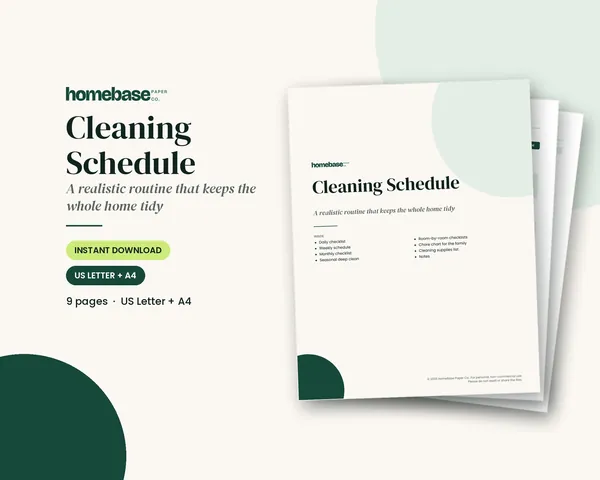
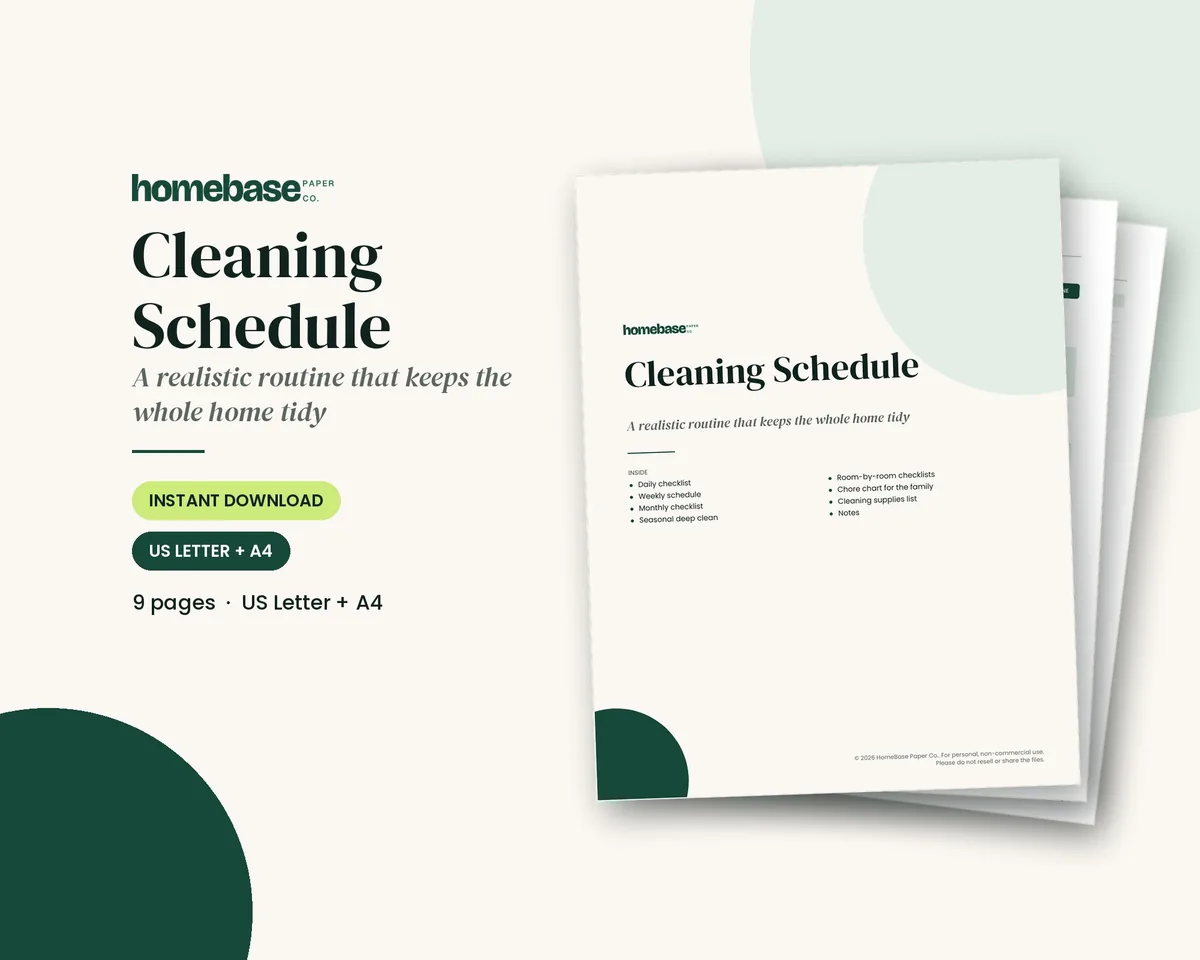
- Free and paid next step: get the free deep cleaning checklist (we email it to you), then give floors a set day with the Cleaning Schedule ($4.49), which has a cleaning supplies page for your floor-by-floor list.
Care guidance checked November 14, 2026 against Consumer Reports, a university extension, a state health department, the EPA and the flooring and stone trade groups. Below: a floor cleaner chart for every floor, how to mop, homemade vs store-bought, the safety rules and what damages each floor.
Floor cleaner chart: what to use on every floor
Start here. Find your floor, then use the cleaner in the second column. When you're not sure, choose the gentler option.
| Floor | Best everyday floor cleaner | Homemade option | Avoid |
|---|---|---|---|
| Hardwood (sealed) | pH-neutral hardwood floor cleaner | None needed; a cleaner made for your finish is safest | Vinegar, ammonia, bleach, wax, steam, wet mops |
| Laminate | Laminate or multisurface cleaner that lists laminate | 1/2 cup white vinegar + 1 gallon warm water, misted on | Puddles, wax, polish, steam unless the maker allows it |
| Vinyl and LVP | pH-neutral cleaner that lists vinyl | A few drops of mild dish soap in warm water | Wax, oil soaps, "mop and shine" products, flooding seams |
| Ceramic and porcelain tile | pH-neutral tile cleaner | A few drops of dish soap in warm water | Leaving soapy residue in grout lines |
| Natural stone | Neutral stone cleaner or stone soap | Mild dish detergent in warm water, rinsed | Vinegar, lemon, bathroom acids, scouring powder |
| Linoleum | Neutral (pH 7 or close) floor cleaner | Very mild soap in water, rinsed | Ammonia, washing soda, harsh alkaline cleaners |
Two rules apply to every row. Sweep or vacuum before you mop, because grit scratches every finish. And read your floor maker's care guide, because some warranties name the cleaners they allow.
Identify your floor type and finish before you buy a cleaner
You can't pick the right floor cleaner until you know the floor. If you rent or bought a house without the paperwork, use these clues:
- Real wood has grain that doesn't repeat, and you'll often see slight gaps between boards in winter.
- Laminate has a printed wood look, a hard plastic-feeling top and a slightly hollow sound underfoot.
- Vinyl and LVP feel softer and a little warmer, and they flex slightly at the edge of a plank.
- Ceramic and porcelain are hard, cold and uniform, with grout lines between tiles.
- Natural stone has veins, pits or color shifts that differ from tile to tile. Marble, limestone and travertine are the acid-sensitive ones.
- Linoleum is a sheet or tile made from linseed oil and natural fillers. It is often sold as Marmoleum.
Still unsure? Consumer Reports suggests a spot test for any new floor cleaner. Put a few drops in a hidden spot, wait about an hour, wipe it with a wet paper towel and check the dry spot with a flashlight at different angles. If the gloss looks different from the rest of the floor, don't use that product.
Best floor cleaner for hardwood floors
Hardwood is where the wrong cleaner does the most lasting damage. Consumer Reports says to use a pH-neutral hardwood floor cleaner and a damp, not wet, mop. It also says to avoid cleaners with bleach, ammonia or wax, and acidic ones like white vinegar. Products made for vinyl or tile can dull a wood finish and make it slippery.
The National Wood Flooring Association (NWFA) gives the same advice. It recommends sweeping, dust mopping or vacuuming on the bare-floor setting, wiping spills with a dry or slightly damp cloth and never using wet mops or steam mops. The best cleaner is one made for the finish on your floor.
- Use: a hardwood floor cleaner sprayed lightly on the floor or the mop pad
- Mop: flat microfiber, wrung until it's barely damp
- Dull floors: a dull finish usually needs a recoat from a pro, not a stronger cleaner
For the full method, stain fixes and finish types, see our step-by-step guide on how to clean hardwood floors.
Laminate floor cleaner
Laminate has a tough top layer, but its core can swell if water gets into the seams. So the key with a laminate floor cleaner is how little liquid you use.
The University of Arkansas Cooperative Extension lists a homemade laminate floor cleaner of 1/2 cup white vinegar in 1 gallon of warm water. Mist it on with a spray bottle rather than pouring it, and use a microfiber mop. Pergo's own US care page lists a slightly stronger mix, 1 cup of vinegar per gallon of warm water, for its laminate floors. Other brands may say something else, so check yours.
- Use: a laminate cleaner or a multisurface cleaner that lists laminate on the label
- Don't: wax, polish or let puddles sit near the seams
- Spills: wipe them up right away, then dry the spot
Vinyl and LVP floor cleaner
Vinyl sheet, vinyl tile and luxury vinyl plank (LVP) handle water better than laminate. They still have a wear layer that can dull or get a hazy film from the wrong products.
- Best floor cleaner for LVP: a pH-neutral cleaner that lists vinyl or LVP on the label
- Simple option: a few drops of mild dish soap in a gallon of warm water, then a quick pass with clean water
- Skip: paste wax, "mop and shine" products, oil soaps and solvent cleaners unless your floor's maker approves them
- Check your guide: several LVP makers' care sheets say no vinegar and no steam, and some warranties depend on following them
Because vinyl is softer than tile, grit does the real damage. Consumer Reports notes that vinyl and laminate have a plastic surface, so regular sweeping or vacuuming keeps hard dirt from scratching them.
Tile floor cleaner for ceramic and porcelain
Ceramic and porcelain are the easiest floors to clean. Consumer Reports notes that their hard surfaces stand up to any broom, and that most stains on today's floors come off with plain water.
- Everyday tile floor cleaner: pH-neutral and labeled for tile, mixed at the label rate
- Greasy kitchen tile: a cleaner labeled for tile and grease, then a clean-water pass so no film is left behind
- Steam: usually fine on glazed ceramic and porcelain, but check the tile and grout maker's advice
Grout is the weak spot, not the tile. It's porous, it holds onto dirt and it can stain. For grout recipes, brushes and sealing, use our guide on how to clean grout.
Natural stone floor cleaner
Marble, travertine, limestone, slate and granite need the gentlest floor cleaner in the house. The Natural Stone Institute says to clean stone with a neutral cleaner, stone soap or mild dish detergent and warm water, then rinse well and dry with a soft cloth.
Its warnings are the important part:
- No acids on calcareous stone. Lemon, vinegar and other acids can dull or etch marble, limestone and travertine.
- No scouring powders or creams, which can scratch some stones.
- No rust removers. Many contain traces of hydrofluoric acid, which can attack every stone, even granite.
- Dust mop often with a clean, untreated dry mop, because sand and grit are abrasive.
Sealing helps stone resist stains, but the Institute is clear that it doesn't make stone stain-proof. Our stone countertop guide covers the same stones on counters.
Linoleum floor cleaner
Real linoleum is not vinyl, even though the two get mixed up. It's made from linseed oil, so harsh alkaline cleaners are the problem. Forbo, the maker of Marmoleum, recommends a neutral floor cleaner and tells owners not to use ammonia, soda or other highly alkaline products.
- Use: a neutral floor cleaner in lukewarm water, with a well-wrung mop
- Then: go over it with clean water and let it dry fully
- Avoid: ammonia, washing soda, degreasers and anything that leaves the floor wet for long
Homemade vs store-bought floor cleaner
Both work when they match the floor. The bigger risk is a homemade mix that's too strong or the wrong pH for the surface.
| Homemade floor cleaner | Store-bought floor cleaner | |
|---|---|---|
| Best for | Laminate, vinyl, tile and other sealed, forgiving floors | Hardwood, stone, linoleum and any floor with a warranty to protect |
| Strength | Easy to make too strong or too wet | Measured for the surface named on the label |
| Residue | Soap mixes need a clean-water pass | "No-rinse" formulas are made to dry clear |
| Safety | You must label it and never mix it with other products | Follow the label; still never mix products |
What to look for on a store-bought label:
- Your floor type listed by name (wood, laminate, vinyl, tile, stone)
- "pH-neutral" for wood, stone, vinyl and linoleum
- "No-rinse" or "residue-free" if you hate a clean-water pass
- The EPA Safer Choice label, which marks products the EPA has reviewed for safer ingredients. The program has its own floor cleaner category you can search.
Homemade rules from the extension: the University of Arkansas Cooperative Extension says not to mix more than you'll use, to label mixed solutions, to keep them away from food and out of reach of children, and never to store them in food containers.
Using floor cleaner: the mopping routine that works
The same routine works on almost every hard floor. Only the cleaner changes.
- Clear and dry clean first. Pick up rugs and chairs, then sweep with a soft broom or vacuum on the bare-floor setting.
- Mix or measure. Use the label rate for store-bought cleaner, or the recipe above. More cleaner doesn't clean better. It leaves a film.
- Spot test new products with the few-drops, one-hour test above.
- Damp-mop in sections. Wring the mop until it's barely damp, and work from the far corner toward the door.
- Change the water when it looks cloudy, so you don't spread dirt back onto the floor.
- Go over it with clean water if your product isn't no-rinse, or if you used soap.
- Dry wood, stone and laminate with a dry microfiber pad or soft cloth.
Do the floors last when you clean a room. Our cleaning checklist uses the same top-to-bottom order for every room.
Floor cleaner safety rules
Floor cleaners are safe when you use one at a time and read the label. Trouble starts when products get mixed, sometimes by accident in the mop bucket.
The Washington State Department of Health explains why you should never mix bleach with other cleaners:
- Bleach + ammonia makes toxic chloramine gases that can cause coughing, shortness of breath, chest pain and fluid in the lungs. Ammonia also hides in some glass cleaners.
- Bleach + acids such as vinegar, some toilet bowl cleaners and rust removers gives off chlorine gas.
- Bleach also reacts with hydrogen peroxide and some oven cleaners.
More floor cleaner safety habits:
- Rinse the floor with plain water before you switch to a different product.
- Open a window or run a fan while you mop.
- Wear gloves for strong cleaners, and keep kids and pets off wet floors.
- Store every cleaner in its original container, away from food.
- Wet floors are slippery, so mop toward the exit and let the floor dry before people walk on it.
What damages each floor
Most floor damage comes from the wrong product, too much water or grit, not from too little cleaning.
| Floor | What damages it |
|---|---|
| Hardwood | Standing water, steam, vinegar, ammonia, wax over a modern finish, vinyl or tile products |
| Laminate | Water in the seams, wet mops, wax and polish |
| Vinyl and LVP | Wax, oil soaps, solvents, rubber-backed mats on some floors, dragging furniture |
| Ceramic and porcelain tile | Soap film left in grout, harsh scrubbing of grout, skipping a grout seal |
| Natural stone | Vinegar, lemon, acidic bathroom cleaners, rust removers, scouring powders, grit |
| Linoleum | Ammonia, washing soda, harsh degreasers, floors left wet |
Prevention costs less than repair. Put mats at every outside door, felt pads under chair legs and lift furniture instead of dragging it.
Put floors on your cleaning schedule
The right floor cleaner works best on a steady routine. Leather furniture standing on the floor needs its own products, so see our leather cleaner guide for those. Sweep or vacuum busy floors often, mop them about once a week, and give quieter rooms a lighter rhythm.
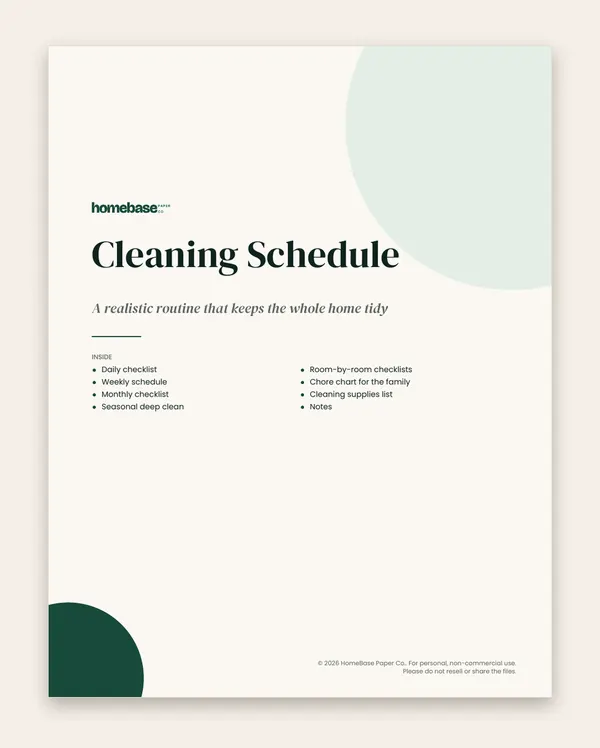
- Cleaning Schedule ($4.49): daily, weekly, monthly and seasonal lists, room-by-room checklists, a family chore chart and a cleaning supplies page where you can write which cleaner goes on which floor.
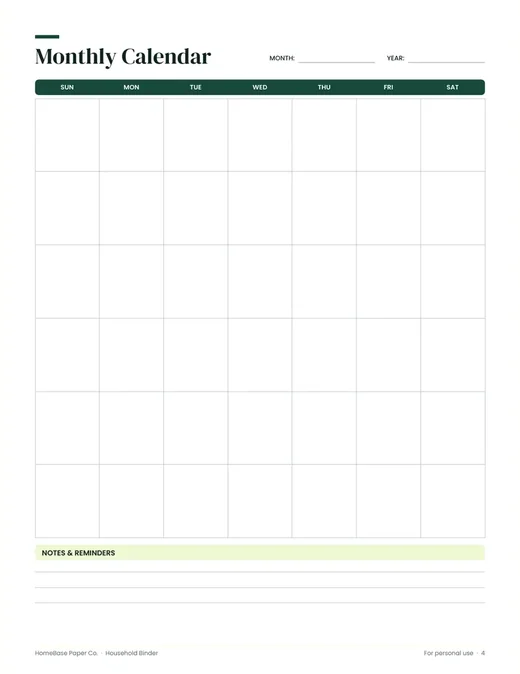
- Household Binder ($6.99): family info, calendars, meals, groceries and a weekly cleaning page in one binder.
Browse every printable or the bundles, or see all Home & Organizing planners. For a free start, get the free deep cleaning checklist (we email it to you).
Building a routine from scratch? Start with how to start a cleaning routine, then copy a daily, weekly and monthly cleaning schedule. For the whole house, our guide on how to clean a house puts floors last, where they belong, and the deep cleaning checklist covers baseboards and the corners a mop misses. The bathroom cleaning guide and kitchen cleaning checklist cover the two floors that need mopping most.
Frequently asked questions
What is the best floor cleaner? The best floor cleaner is the one made for your floor's surface. For most sealed floors that means a pH-neutral cleaner labeled for that material, used with a damp microfiber mop. Hardwood needs a wood floor cleaner, natural stone needs a stone-safe neutral cleaner, and vinyl, laminate and tile need a cleaner that lists them on the label. Spot test any new product first.
What floor cleaner is safe for all floors? No single floor cleaner is safe for every floor. A pH-neutral multisurface cleaner covers most sealed vinyl, laminate, tile and finished wood, but only if the label lists your floor type. Natural stone, unsealed wood and real linoleum have stricter rules, so check the maker's care guide before you use a one-bottle product on them.
Can I use vinegar to clean floors? You can use diluted vinegar on some floors, but not all of them. The University of Arkansas extension lists 1/2 cup of white vinegar in a gallon of warm water for laminate, and Pergo's care page lists 1 cup per gallon for its laminate. Consumer Reports says to keep vinegar off hardwood, and the Natural Stone Institute warns that vinegar and lemon can etch marble, limestone and travertine.
What is the best homemade floor cleaner? The simplest homemade floor cleaner is warm water with a small amount of one mild cleaner. For laminate, 1/2 cup of white vinegar per gallon of warm water is a common extension recipe. For stone, the Natural Stone Institute lists mild dish detergent in warm water, rinsed well. Mix only what you will use, label the bottle and never add bleach.
Can you use dish soap to clean floors? Yes, a small amount of mild dish soap in warm water cleans most sealed floors. Use only a few drops, because too much soap leaves a film that looks streaky and feels sticky. Go over the floor with clean water afterward, change the rinse water often and dry stone or wood floors with a soft cloth.
Is it safe to mix two floor cleaners together? No, it is not safe to mix floor cleaners. The Washington State Department of Health warns that bleach mixed with ammonia makes toxic chloramine gases, and bleach mixed with acids such as vinegar releases chlorine gas. Use one product at a time, rinse the floor between products and keep the room ventilated.
What floor cleaner should I use on luxury vinyl plank? Use a pH-neutral floor cleaner that lists vinyl or LVP on the label. Damp-mop, don't flood the seams, and skip wax, polishes and oil soaps unless your floor's maker says they are fine. Some vinyl makers also say no vinegar, so read your care guide or warranty before you mix a homemade cleaner.
What is the best floor cleaner for tile? A pH-neutral tile floor cleaner is the best everyday choice for ceramic and porcelain tile. For greasy kitchen tile, use a cleaner labeled for tile and grease and go over it with clean water so no film is left in the grout lines. Natural stone tile is different and needs a stone-safe cleaner with no acids.
Can you use a steam mop on laminate or vinyl floors? Only if the floor's maker says you can. Steam pushes heat and moisture into seams, so many laminate and vinyl care guides tell you not to steam at all, and some allow it only on certain water-resistant lines. NWFA and Consumer Reports both say no steam mops on hardwood.
Why are my floors sticky after mopping? Floors feel sticky after mopping when too much cleaner is left behind. Measure the cleaner instead of pouring it, change your mop water when it looks cloudy and go over the floor with plain water. The Natural Stone Institute notes that too much cleaner or soap leaves a film and streaks.
How often should you mop floors? Mop busy floors such as kitchens, entries and bathrooms about once a week, and quieter rooms less often. Sweep or vacuum high-traffic floors more often than you mop, because grit scratches the finish. Wipe spills as soon as they happen so you don't need extra mopping.
What's the easiest way to remember to clean the floors? The Cleaning Schedule ($4.49) gives floors a set day. It has daily, weekly, monthly and seasonal lists, room-by-room checklists, a family chore chart and a cleaning supplies page, so you can note which cleaner goes on which floor and who mops which room.
Is there a free cleaning checklist I can print? Yes, the free deep cleaning checklist covers the whole house one room at a time. Enter your email on the HomeBase page and we email it to you. It works top to bottom and dry to wet, so the floors come last and you only clean them once.
Newsletter
Get the HomeBase email
Fresh tips three times a week, Mon/Wed/Fri, with our deals and new products, from printables, spreadsheets and bundles to paperback planners and apparel, plus simple home, money and planning tips.