

The short answer: the cheapest landscaping ideas reuse what you have: refresh mulch to 2 to 4 inches, define bed edges, replace low-use lawn with groundcover or grasses, and stop water waste. Below are 15 projects for the front and back yard, with the facts from extension and EPA sources.
- Mulch depth: Penn State Extension says 2 to 4 inches of organic mulch, and no more
- Water: the EPA says outdoor use is more than 30 percent of household water on average
- Pace it: do one zone per season; the Sinking Funds Tracker ($4.99) keeps a fund per project
Our picks for landscaping ideas
Printables
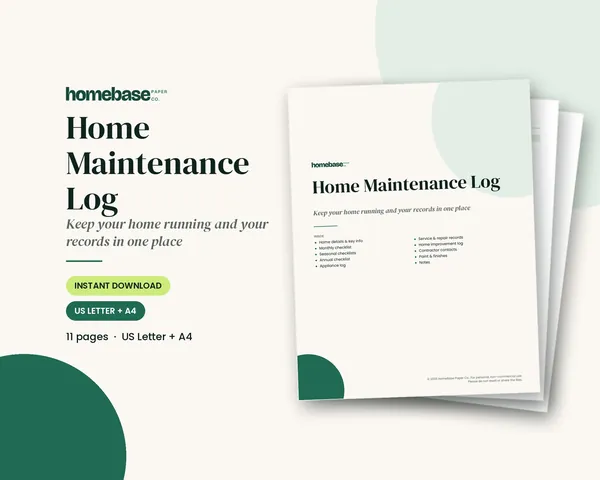
Home Maintenance Log
Monthly, seasonal and annual checklists plus a record of every appliance and repair.
 Save 48%
Bundles
Home Management Bundle
Household binder, maintenance log, moving planner, cleaning schedule, home inventory and password log.
Facts checked November 14, 2026 against Penn State Extension, University of Maryland Extension and the EPA. We list no plant or material prices, because they vary by region and season. Get local quotes before you buy. Plant choices depend on your region and sun, so confirm them with your local extension office.
Front yard landscaping ideas (7)
The front yard sets the first impression, so small changes go far here.
1. Refresh mulch in your beds
Mulch is a low-cost way to make beds look finished. Penn State Extension recommends a 2- to 4-inch layer of organic mulch and no more, with less on poorly drained soil and 1 to 2 inches of finely textured or double-shredded mulch. Mulch also helps soil hold moisture, per the University of Maryland Extension.
2. Define bed edges
A clean line between lawn and bed makes a yard look cared for. Cut a crisp edge with a spade, or set a border. This needs time more than money.
3. Replace low-use lawn with groundcover
Pick a patch you never walk on. The University of Maryland Extension says groundcovers need "no mowing and little maintenance," but plan to weed and mulch until they establish.
4. Plant an ornamental grass border
The same source lists ornamental grasses as drought resistant, seldom needing fertilizer. Cut them back at least once a year, ideally in early spring.
5. Add a perennial flower bed
Perennials come back each year. Plan by light, soil and winter hardiness with our guide to perennial flowers.
6. Group containers by the door
A few pots at the entry give color without digging. Group them and water them regularly, since containers dry quickly.
7. Choose native trees, shrubs and perennials
Natives suit your local climate. Ask your extension office for a regional list. Establishment takes weeding and watering at first.
Backyard landscaping ideas (8)
8. Try low-mow fine fescue
The University of Maryland Extension says fine fescues need less frequent mowing than tall fescue, and should not be mowed during hot, droughty summer conditions.
9. Leave a no-mow zone
Leaving an area unmowed can save time and money, per the same source. Mark the edge so it looks intentional.
10. Plant sedges
Sedges, the extension says, don't require frequent mowing. They suit areas where grass struggles.
11. Let a meadow patch grow
A meadow needs occasional mowing and weeding while it establishes. Start small.
12. Use moss in damp shade
Moss takes in moisture through its leaves and stems from rain, dew or surface water, according to the extension, which makes it an option under trees where grass fails.
13. Mulch under trees correctly
Keep mulch off the trunk. Penn State Extension calls piling mulch against the trunk (volcano mulching) "never recommended," and warns it can suffocate roots, kill inner bark, invite disease and shelter rodents. When correcting, it advises pulling mulch 3 to 5 inches away from young trees and 8 to 10 inches from mature trees.
14. Tune up your irrigation
The EPA says outdoor water use is more than 30 percent of household water on average, about 60 percent in arid regions, and as much as 50 percent of it can be lost to wind, evaporation and runoff. A household with an improperly maintained automatic system can waste up to 25,000 gallons a year. Check for leaks, broken heads and spray hitting pavement.
15. Plan in phases with a separate fund per project
Pick the highest-impact project first and finish it before the next. Save for each phase with the Sinking Funds Tracker, $4.99.
Which idea first
| Goal | Start with |
|---|---|
| Quick curb appeal | Ideas 1, 2 and 6 |
| Less mowing | Ideas 3, 8, 9 and 10 |
| Lower water use | Ideas 4, 7 and 14 |
| Shady trouble spots | Ideas 12 and 13 |
Landscaping mistakes to avoid
- Mulch that is too deep. Penn State Extension warns that more than the 2- to 4-inch range can cause problems for roots, and it notes that thick, wet mulch can reach about 140°F, enough to kill the inner bark of young trees.
- Mulch piled on trunks. It invites rot, pests and cankers. Keep the root flare visible.
- Planting groundcover and walking away. The University of Maryland Extension says you must weed and mulch until it is established.
- Ignoring the water bill. An irrigation system with a leak or a bad spray pattern wastes water all season, the EPA says up to 25,000 gallons a year in a poorly maintained system.
- Doing everything at once. A whole-yard project is expensive and hard to maintain. One zone at a time lets you learn what grows in your sun and soil.
A yearly yard checklist
| When | Task | Source or basis |
|---|---|---|
| Early spring | Cut back ornamental grasses | University of Maryland Extension |
| Spring | Check irrigation for leaks and broken heads | EPA WaterSense |
| Spring or fall | Top up mulch to a 2- to 4-inch layer | Penn State Extension |
| Summer | Skip mowing fine fescue during hot, droughty weather | University of Maryland Extension |
| Any season | Pull mulch back from trunks | Penn State Extension |
Front yard or back yard first
Start with the front if curb appeal or resale is the goal, since ideas 1, 2 and 6 are fast and visible. Start with the back if you use the space daily or want to cut mowing, since ideas 8 to 12 change your weekly chores. Whichever you choose, finish one project before the next.
Many yard jobs repeat every year, so pair this list with our home maintenance checklist and keep the gutters, fence and beds on one calendar.
When the leaves come down, follow our gutter cleaning steps before the first freeze.
Keep the yard on schedule
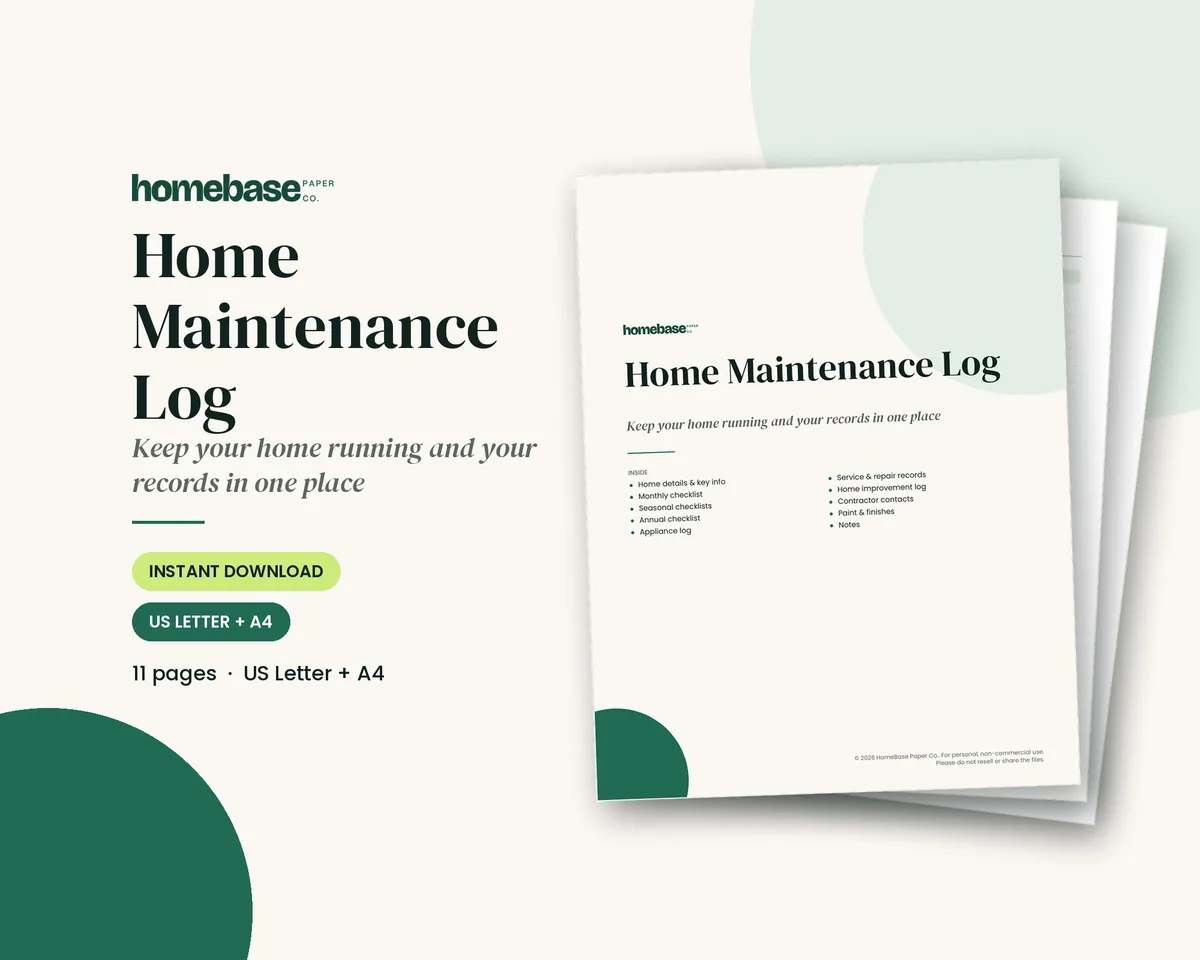
Landscaping is a yearly routine of mulching, trimming and watering checks. Log the dates in the Home Maintenance Log ($5.99). Pair it with the Home Management Bundle ($16.99, $32.94) for the rest of the house.
More home projects: home decor ideas, the home inspection checklist, garage organization and gifts for new homeowners. Browse the Spreadsheets page for more tools.
Frequently asked questions
What are the best cheap landscaping ideas? The cheapest landscaping ideas change what you already have instead of buying a lot of new plants: refresh mulch, edge your beds, shrink the lawn in low-use areas, and fix watering waste. Penn State Extension recommends a 2- to 4-inch layer of organic mulch, which is a low-cost project that improves the look of a bed right away.
How can I landscape my front yard on a budget? Start with the parts people see first: clean bed edges, fresh mulch, a planted border and a couple of containers by the door. Then replace small lawn areas with groundcover or ornamental grass over time. Do one zone per season so the cost spreads out.
What is low maintenance landscaping? Low maintenance landscaping uses plants and layouts that need little mowing, watering and fertilizing. The University of Maryland Extension lists lawn alternatives such as groundcovers, sedges, ornamental grasses and low-mow fine fescue that need less mowing than a conventional lawn.
How deep should mulch be? Penn State Extension recommends a 2- to 4-inch layer of organic mulch, and no more, with less on poorly drained soil and 1 to 2 inches for finely textured or double-shredded mulch. Keep mulch away from the trunk; piling it against the trunk, called volcano mulching, is never recommended.
How much water does a yard use? The EPA says outdoor water use accounts for more than 30 percent of total household water use on average, and can reach about 60 percent in arid regions. As much as 50 percent of outdoor water is lost to wind, evaporation and runoff from inefficient irrigation.
How do I replace part of my lawn? Pick a low-use area, then plant groundcover, ornamental grasses, a garden bed or a low-mow fescue. The University of Maryland Extension notes that you will need to weed and mulch groundcover until it is established. Choose plants suited to your region and sun.
What can I plant in a shady backyard? The University of Maryland Extension lists moss as a lawn alternative that takes in moisture through its leaves and stems from rain, dew or surface water, which suits damp shade. Shade-tolerant groundcovers and sedges are other options on its list. Check your local extension office for plants that fit your area.
How do I plan a landscaping budget? List each project, rank them by impact, and do them in phases. Save for each phase in its own fund so you pay in cash. The Sinking Funds Tracker keeps separate goals for each project.
Newsletter
Get the HomeBase email
Fresh tips three times a week, Mon/Wed/Fri, with our deals and new products, from printables, spreadsheets and bundles to paperback planners and apparel, plus simple home, money and planning tips.
Sources
- Mulching Landscape Trees (Penn State Extension) extension.psu.edu
- Lawn Alternatives (University of Maryland Extension) extension.umd.edu
- Statistics and Facts (EPA WaterSense) epa.gov