

The short answer: a cast iron skillet cooks best when you preheat it slowly on medium heat, add a little oil, then cook. After every use, wash it, dry it completely and rub in a very thin coat of oil. Re-season it in a 450°F to 500°F oven for one hour only when it rusts, turns sticky or looks dull.
- Use it: preheat gradually on a burner about the size of the pan, keep the heat at medium or below, and grab a mitt, because the handle gets hot.
- Season it: wash, dry, wipe on a thin layer of oil inside and out, bake upside down for one hour, then let it cool in the oven.
- Avoid: soaking, the dishwasher, air drying, thick oil coats and long simmers of tomato sauce in a new pan.
- Next step: The Family Recipe Binder is $6.99.
Facts checked November 15, 2026, against Lodge Cast Iron's published use, seasoning and troubleshooting guides, University of Maine Cooperative Extension, the USDA Food Safety and Inspection Service (FSIS), the USDA Agricultural Research Service and MedlinePlus. Below: the cast iron rules that matter, how to cook in it, which heat sources work, how to season it, a fix-it table, acidic foods and iron, sizes, storage and myths. This is a use and care guide, not a shopping list.
For a complete pan-seared steak method, follow the cooking temperatures, resting time and slicing guidance alongside your pan-care routine.
Cast iron skillet rules: the 10 that matter most
- New pans are usually ready to cook. Lodge seasons its cookware at the foundry. Rinse, hand dry and start cooking.
- Preheat slowly. Warm the pan gradually on a burner close to its size.
- Stay at medium or below. Lodge says cast iron holds heat, so a higher setting isn't needed.
- Oil goes in after the preheat, then the food. For butter, start with oil and add the butter just before the food.
- The handle gets hot. Use a handle mitt or oven mitt every time.
- Clean it while it's warm. Food that dries in the pan takes seasoning with it when you scrub it off.
- Never soak it or run it through the dishwasher. Both strip seasoning and invite rust.
- Dry it fully, then oil it lightly. The oil should not run or drip when you tilt the pan.
- Keep long, acidic simmers for later. Build seasoning first, then keep acidic dishes under 45 minutes.
- Rust and dull spots are fixable. Scrub, oil and re-season. The pan is not ruined.
For the full wash routine, salt scrubs and stuck-on food, see our guide on how to clean a cast iron skillet. This page focuses on cooking, seasoning and long-term care.
What a cast iron skillet is good at
Cast iron is heavy, it holds heat, and it builds a natural easy-release surface the more you cook in it. Lodge describes seasoning as oil baked onto the iron until it changes from a liquid into a slick, hardened layer bonded to the metal. That layer is what makes the pan release food and resist rust.
| Job | Why cast iron works | Try it |
|---|---|---|
| Searing meat | Stored heat helps build a brown crust. | Pan seared chicken breast |
| Shallow frying | A heavy pan helps the oil hold its temperature. | Fried pork chops |
| High-heat vegetables and fajitas | Peppers and onions blister instead of steaming. | Chicken fajitas |
| Baking | It goes from stovetop to oven, so edges get crisp. | Skillet cornbread |
| Breakfast | Eggs, hash and pancakes on a well-seasoned surface. | Fried eggs, hash browns, pancakes |
| Grill and campfire cooking | Lodge says it works on any heat source except the microwave. | Burgers, potatoes, skillet desserts |
Budget tip: one skillet that sears, fries and bakes can stand in for several pans. Plan two or three skillet dinners a week with our meal planning on a budget system.
How to use a cast iron skillet: step by step
- Rinse and dry a new pan. A factory-seasoned pan needs only a quick rinse and a hand dry.
- Pick the right burner. Use one about the size of the pan's base, so the heat spreads evenly.
- Preheat gradually. Start low and step up to medium. Lodge says a gradual preheat gives even heating.
- Add a little oil or fat and swirl it over the bottom.
- Add the food and give it time to brown before you flip it.
- Check doneness with a thermometer. Color is not a safety test. Use the USDA chart below.
- Move the pan with a mitt. Cast iron stays hot well after the burner is off.
- Clean up while it's warm, then dry and oil it.
Safe internal temperatures for skillet cooking
The USDA Food Safety and Inspection Service says to cook food to safe minimum internal temperatures, measured with a food thermometer, before you take it off the heat.
| Food | Safe minimum internal temperature |
|---|---|
| Beef, pork, veal and lamb steaks, chops and roasts | 145°F, then rest at least 3 minutes |
| Ground meats | 160°F |
| All poultry, including ground poultry | 165°F |
| Eggs | 160°F |
| Fish and shellfish | 145°F |
| Leftovers and casseroles | 165°F |
Thermometer tip: check the thickest part of the food, away from bone.
Which heat sources work with cast iron
Lodge's myth-busting guide says its cast iron works on any heat source, indoors or outside, except the microwave.
| Heat source | Works? | What to know |
|---|---|---|
| Gas burner | Yes | Match the flame to the pan's base and preheat gradually. |
| Electric coil | Yes | Match the coil to the pan and preheat gradually. |
| Glass-top or ceramic | Yes | Lift the pan; never slide it. Take it off the burner after cooking. |
| Induction | Yes | For double-burner pieces, Lodge says the cooktop needs a bridge element. |
| Oven | Yes | Great for finishing thick cuts and baking. |
| Grill or campfire | Yes | Use long mitts and set the pan on a stable surface. |
| Microwave | No | Never put cast iron in a microwave. |
How to season a cast iron skillet
Seasoning a cast iron skillet means baking a very thin layer of oil onto the iron. Most new pans come pre-seasoned, and every time you cook with oil or fat you add to that layer. Lodge calls regular cooking the best and easiest way to keep the seasoning strong. Oven seasoning is for a pan that rusted, looks dull and gray, or has sticky or patchy spots.
Oven seasoning steps
- Wash the pan in warm, soapy water.
- Dry it completely with a paper towel or lint-free cloth. A few minutes on a low burner chases out the last of the moisture.
- Wipe on a very thin layer of oil, inside and out, then wipe again. Excess oil turns sticky.
- Line the lower rack with foil to catch drips.
- Bake the pan upside down on the center or top rack, so oil can't pool in the cooking surface.
- Bake for one hour at 450°F to 500°F, per Lodge.
- Turn the oven off and let the pan cool inside it. Lodge says this helps the seasoning adhere.
- Repeat if needed. University of Maine Cooperative Extension says most pans need three to five rounds to build a solid, shiny coat.
Oven seasoning at a glance
| Step | Lodge | University of Maine Extension |
|---|---|---|
| Oven temperature | 450°F to 500°F | About 450°F |
| Time | 1 hour | 1 hour |
| Pan position | Upside down, foil below | Upside down, foil or a baking sheet below |
| Cooling | Cool in the oven | Remove and let it cool |
| Rounds | As needed | Usually 3 to 5 |
Best oil for seasoning cast iron
Lodge recommends an oil with a high smoke point and names vegetable oil, melted shortening and canola oil. UMaine also points to neutral, high smoke point oils like vegetable or canola. Lodge seasons its own pans with a refined, soy-based vegetable oil. If you avoid soy, pick another high smoke point oil you're comfortable with.
Thin-coat rule: the amount matters more than the brand. If the oil runs when you tilt the pan, you used too much.
Seasoning on the stovetop between oven sessions
After each wash, dry the pan over low heat, add a few drops of oil and rub it over the surface with a paper towel. UMaine says leaving a little cooking oil in the pan after a wipe-out also helps build seasoning. Sautéing vegetables is another easy way to darken a dull pan, according to Lodge.
Cast iron skillet care: the everyday routine
Everyday care takes three steps: wash, dry and oil.
- Wash: warm water, a stiff brush or scrub pad, and a little dish soap if you want it. Lodge says today's dish soap isn't strong enough to remove seasoning.
- Dry: right away, with a towel. Never let it air dry.
- Oil: a thin coat over the whole surface, wiped until it no longer looks wet.
Skip the soak, the dishwasher and cold water on a hot pan. UMaine warns that the sudden temperature change can warp or crack the iron. Our cast iron cleaning guide walks through salt scrubs, stuck-on food and the soap question in detail.
Cast iron troubleshooting: what's wrong and how to fix it
Every fix below comes from Lodge's troubleshooting and seasoning pages.
| What you see | What it usually means | Fix |
|---|---|---|
| Orange or red rust | The pan soaked, went through the dishwasher, air dried or sat somewhere damp. | Scrub the rust off with steel wool, wash, dry and oil. For heavy rust, re-season in the oven. |
| Sticky or gummy surface | Too much oil built up. | Bake upside down at 450°F to 500°F for one hour. Use thinner coats after that. |
| Black flakes | Seasoning layers that didn't fully bond. They are carbonized oil and not harmful. | Scrub with a nylon brush or salt, rinse, dry and oil. Re-season if it keeps happening. |
| Dull or patchy color | Normal variation, or an acidic dish thinned the seasoning. | Keep cooking with oil, or re-season. |
| Dark residue on the towel | Normal after acidic foods, very high heat or a brand-new pan. | Keep cooking; it fades with use. |
| Brown spot on a new pan's edge | Oil that didn't fully carbonize at the foundry. It isn't rust. | Cook and care as usual; it fades. |
| Lingering fish smell | Strong foods left an odor. | Wash well. If it lingers, leave table salt on it overnight or bake it at 400°F for 15 minutes. |
| Rough surface | Normal sand-cast texture. | It smooths out as seasoning builds. |
Acidic foods, iron and your health
Can you cook tomatoes in cast iron?
Yes, once the seasoning is established. Lodge says acidic recipes like tomato sauce or lemon juice aren't the best choice for a new pan because they can break down seasoning. After the seasoning builds up, Lodge says acidic dishes with cook times under 45 minutes are fine. For a long-simmered sauce, use stainless steel or enameled cookware.
Does cooking in cast iron add iron to food?
A little. MedlinePlus says cooking in cast iron pots may increase the iron in your diet, but that most of the time it is a very small source of dietary iron. A USDA Agricultural Research Service and Cornell study found cabbage dishes cooked in iron pots had more available iron than the same dishes cooked in aluminum. Acidic foods like vinegar and sauerkraut appeared to pull more iron from the pot.
Health note: if your doctor has told you to limit iron, or you're treating low iron, ask them whether cast iron cooking matters for you. Don't count on a skillet in place of medical advice.
What size cast iron skillet do you need?
| Size | Good for | Notes |
|---|---|---|
| 6 to 8 inches | One or two eggs, a small side, individual desserts | Light and quick to heat. |
| 10 to 10.25 inches | Everyday cooking for one to three people | Serious Eats calls this size right for most people. |
| 12 inches | Family dinners, whole chicken pieces, big batches of vegetables | America's Test Kitchen says a 12-inch pan can cook for up to six. Expect a heavy pan. |
Weight check: Wirecutter lists a classic 12-inch Lodge at about 8½ pounds. If lifting is hard, use a two-handled pan or a smaller size.
How to store a cast iron skillet
- Store it dry with a thin coat of oil, in a dry cabinet, on the stovetop or on a sturdy rack.
- Keep it away from damp spots. Lodge lists moisture-prone storage as a common cause of rust.
- Layer a paper towel between stacked pans to protect the surface and wick moisture.
- Don't leave food sitting in it. Move leftovers to a storage container and clean the pan while it's warm.
Cast iron myths vs facts
| Myth | Fact, per Lodge |
|---|---|
| You can never use soap. | Mild dish soap is fine. The seasoning can handle soap, water and a brush. |
| Rust means the pan is ruined. | Scrub it off and re-season. |
| Metal utensils are off-limits. | Silicone, wood and metal utensils are all fine. |
| It can't go on a glass-top stove. | It can. Lift it instead of sliding it. |
| It won't work on induction. | It works on any heat source except the microwave. |
| A new pan must be seasoned first. | Lodge pans are seasoned at the foundry. |
| Pre-seasoned means no care. | Wash, dry and oil after every use. |
| It's unbreakable. | Cast iron breaks before it bends. Don't drop it. |
| The black finish is a chemical coating. | It is baked-on vegetable oil, a carbon layer. |
Keep your skillet recipes and care in one place
Write down which oil and oven temperature worked for your pan, plus the skillet dishes everyone asks for.
- Family Recipe Binder, $6.99: section dividers, four recipe page layouts with room for the family story, 4x6 and 3x5 recipe cards and a conversion chart. Keep a "Skillet favorites" section for the cornbread, chops and fajitas you make most.
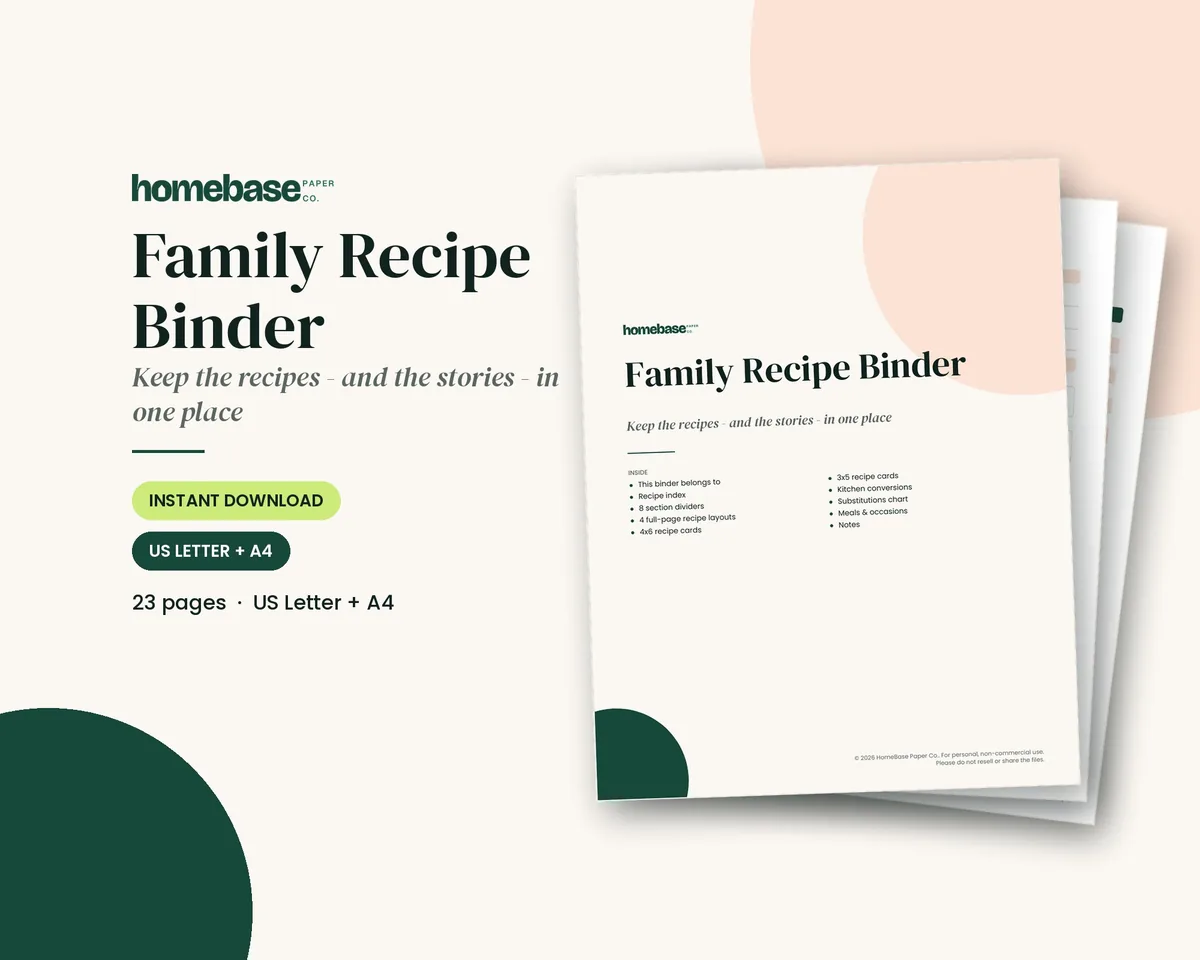
Browse more kitchen and home printables on the Home & Organizing shop page and the full Printables line.
Try pan-seared salmon when you want to practice preheating the skillet and releasing fish from the cooking surface.
Frequently asked questions
How do you use a cast iron skillet? To use a cast iron skillet, preheat it gradually on a burner about the size of the pan, keeping the heat at medium or below. Add a little oil, then the food. Use a mitt on the hot handle, and wash, dry and lightly oil the pan after cooking.
How do you season a cast iron skillet? To season a cast iron skillet, wash and dry it completely, wipe a very thin layer of oil over it inside and out, then bake it upside down at 450°F to 500°F for one hour with foil on the rack below. Lodge says to let it cool in the oven. Repeat for a stronger coat.
What is the best oil for seasoning cast iron? The best oil for seasoning cast iron is one with a high smoke point. Lodge recommends vegetable oil, melted shortening or canola oil, and University of Maine Extension also suggests neutral oils like vegetable or canola. Using a very thin coat matters more than the brand.
How often should you season a cast iron skillet? You only need to oven-season a cast iron skillet when it rusts, turns sticky or looks dull and patchy. Everyday cooking with oil or fat keeps building the seasoning, and Lodge calls regular use the easiest way to maintain it. A light oil coat after each wash helps too.
Do you need to season a new cast iron skillet? Usually not. Most new cast iron skillets, including Lodge pans, are seasoned at the factory and ready to cook. Give a new pan a quick rinse and a thorough dry, then start cooking. Your first few meals with oil or fat will add to the factory seasoning.
How do you take care of a cast iron skillet after cooking? Wash it while it's still warm with hot water and a brush, dry it completely right away, then rub in a very thin coat of oil. Never soak it, put it in the dishwasher or let it air dry. Our cast iron cleaning guide covers salt scrubs and stuck-on food.
Can you cook tomatoes or other acidic foods in cast iron? Yes, once the pan is well seasoned. Lodge says acidic dishes like tomato sauce can break down the seasoning on a new pan, but a seasoned pan can handle acidic recipes cooked for under 45 minutes. Use stainless steel or enameled cookware for long simmers.
Can you use a cast iron skillet on a glass-top or induction stove? Yes. Lodge says its cast iron works on glass-top and induction cooktops and on any heat source except the microwave. On glass, lift the pan instead of sliding it, and take it off the burner when you finish cooking.
Can you use metal utensils on a cast iron skillet? Yes. Lodge says silicone, wooden and metal utensils are all fine on its cast iron. Seasoning that does flake off is carbonized oil, which Lodge says is not harmful. Keep cooking with oil or fat and the surface will rebuild.
Why is my cast iron skillet sticky? A sticky or gummy cast iron skillet usually has too much oil built up on it. Lodge's fix is to bake the pan upside down at 450°F to 500°F for one hour. After that, use much thinner coats of oil. The oil should not run or drip when you tilt the pan.
Does cooking in a cast iron skillet add iron to food? It can add a small amount. MedlinePlus says cooking in cast iron may increase the iron in your diet, but it is usually a very small source. A USDA Agricultural Research Service study found acidic foods pulled more iron from iron pots. Ask your doctor if you need to watch your iron.
What size cast iron skillet should I get? A 10-inch or 10.25-inch cast iron skillet suits most everyday cooking, and Serious Eats calls it the right size for most people. A 12-inch skillet suits families, and America's Test Kitchen says it can cook for up to six. Bigger pans are heavier to lift.
Where can I keep my favorite cast iron skillet recipes? The Family Recipe Binder ($6.99) from HomeBase Paper Co. is a printable with section dividers, four recipe page layouts, 4x6 and 3x5 recipe cards and a conversion chart. Add a skillet section for cornbread, chops and fajitas, plus notes on the oil and oven temperature your pan likes.
Newsletter
Get the HomeBase email
Fresh tips three times a week, Mon/Wed/Fri, with our deals and new products, from printables, spreadsheets and bundles to paperback planners and apparel, plus simple home, money and planning tips.
Sources
- Cast Iron Basics: How to Clean, Season, and Maintain Your Cast Iron Pan (University of Maine Cooperative Extension) extension.umaine.edu
- Safe Minimum Internal Temperature Chart (USDA Food Safety and Inspection Service) fsis.usda.gov
- Do Iron Pots Enrich the Foods Cooked in Them? (USDA Agricultural Research Service) ars.usda.gov
- Cooking utensils and nutrition (MedlinePlus, U.S. National Library of Medicine) medlineplus.gov