

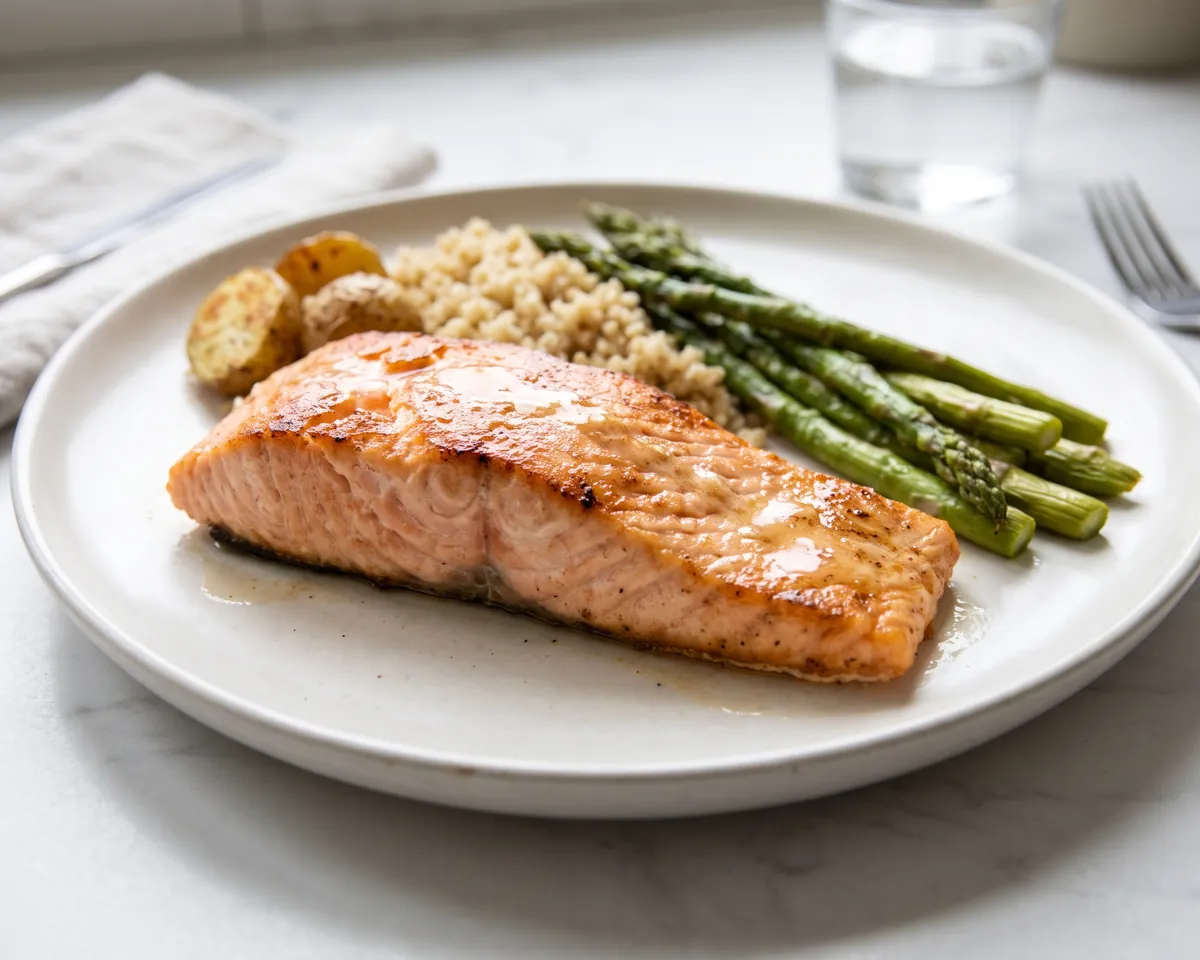
The short answer: to cook salmon, pat the fillets dry, season them and cook until the thickest part reaches 145°F, the USDA safe minimum for fish. A 1-inch fillet takes about 8 to 10 minutes in a hot pan, 12 to 15 minutes in a 400°F oven or 8 to 12 minutes on the grill. Rest 2 minutes before serving.
- Key numbers: 145°F is the food safety line. Many cooks pull salmon at 125 to 135°F for a softer center, which is below the USDA minimum.
- Best method by goal: crisp skin means pan-sear. Easiest for a crowd means bake. Smoky flavor means grill.
Prep time: 10 minCook time: 12 minTotal time: 24 minServings: 4 servingsTotal includes the 2-minute rest in step 7.
Checked November 16, 2026 against the USDA Food Safety and Inspection Service temperature chart and two FDA pages on seafood safety and eating fish. Below: the safe temperature and a doneness chart, how to choose and thaw salmon, times by thickness, the core pan-seared salmon recipe, five more methods, sauces, mistakes to avoid and how to store leftovers.
Salmon doneness chart: USDA safe minimum vs common temperatures
Use a food thermometer and slide it in from the side into the thickest part of the fillet. The USDA's safe minimum temperature chart lists 145°F for fish and shellfish. The other rows are common kitchen targets, not federal guidance.
Affiliate links: we may earn a small commission. As an Amazon Associate we earn from qualifying purchases. Details.
A food thermometer such as the Alpha Grillers instant-read thermometer makes that check quick and exact.
| Doneness | Pull it off the heat at | What it looks like | Label |
|---|---|---|---|
| Medium-rare | 120 to 125°F | Translucent, deep pink, very soft center. | Common cook's target, below USDA minimum. |
| Medium | 130 to 135°F | Slightly translucent center, flakes gently. | Common cook's target, below USDA minimum. |
| USDA safe minimum | 145°F | Opaque, flakes easily with a fork. | USDA FSIS guideline for fish. |
| Well done | 150°F and up | Firm, fully opaque, can turn dry. | Meets USDA minimum. |
Salmon keeps cooking for a minute or two after it leaves the heat, so a fillet pulled at 140°F will often finish near 145°F. If you are cooking for someone pregnant, older, very young or with a weakened immune system, the FDA says to avoid raw or undercooked fish, so use 145°F.
The FDA's seafood safety guide gives a no-thermometer cue too: the flesh is opaque and separates easily with a fork.
How to choose, store and thaw salmon
What to look for: the FDA says fresh fish should smell fresh and mild, not fishy, sour or ammonia-like. Fillets should have firm flesh that springs back when pressed, with no discoloration, darkening or drying at the edges. Color alone is not a freshness test.
Frozen salmon: skip packages that are open, torn or crushed, and ones with frost or ice crystals, which may mean the fish thawed and refroze. The fish should be hard, not bendable.
Storing: put it in the fridge soon after buying and cook it within 2 days, or wrap tightly and freeze it. Keep the fridge at 40°F or below.
Thawing: the FDA recommends thawing in the refrigerator overnight. For a faster thaw, seal it in a bag and submerge it in cold water, or microwave on defrost if you will cook it right away. Don't thaw on the counter.
Types of salmon
| Type | What to know |
|---|---|
| Atlantic (usually farmed) | Mild, higher in fat, forgiving, widely available. |
| Sockeye | Deep red, lean and strongly flavored. Cooks fast, so watch it. |
| Coho | Medium fat, mild flavor, a good all-purpose choice. |
| King (Chinook) | Richest and fattiest, best for grilling and roasting. |
Leaner types dry out faster, so pull them a minute early. Fattier fillets handle more heat. Skin-on fillets are easier to handle on a grill or in a pan.
Airtight glass containers with lids keep leftovers fresh and can go from the fridge to the microwave.
How long to cook salmon by method and thickness
These are approximate times for a 1-inch-thick fillet starting from the fridge. Check the temperature a few minutes early. A common rule is about 10 minutes of total cooking per inch of thickness, so a thinner tail cooks faster than the thick center.
| Method | Heat | Approximate time for 1 inch | Best for |
|---|---|---|---|
| Pan-sear | Medium-high | 5 min skin-side down, 3 to 4 min flipped. | Crisp skin, fast weeknights. |
| Bake | 400°F | 12 to 15 min. | Easiest, several fillets at once. |
| Broil | High, 4 to 6 inches from the element | 8 to 10 min. | Browned top, no flipping. |
| Grill | Medium-high, 400 to 450°F | 8 to 12 min total, flip once. | Smoky flavor, thick fillets. |
| Air fryer | 400°F | 7 to 10 min. | Small batches, quick cleanup. |
| Foil or parchment packet | 400°F | 12 to 15 min. | Steamed, moist, easy cleanup. |
Thin fillet (½ inch): about half the time. Thick center cut (1½ inches): add 3 to 5 minutes, or sear first and finish in the oven.
Pan-seared salmon recipe
This is the core method, and the one to learn first. A heavy cast iron skillet holds heat best, and a stainless steel or nonstick pan also works.
Ingredients
- 4 skin-on salmon fillets, 6 ounces each and about 1 inch thick (1½ pounds total)
- 1 teaspoon kosher salt
- ¼ teaspoon ground black pepper
- 1 tablespoon high-smoke-point oil, such as canola, vegetable or avocado
- 1 tablespoon butter
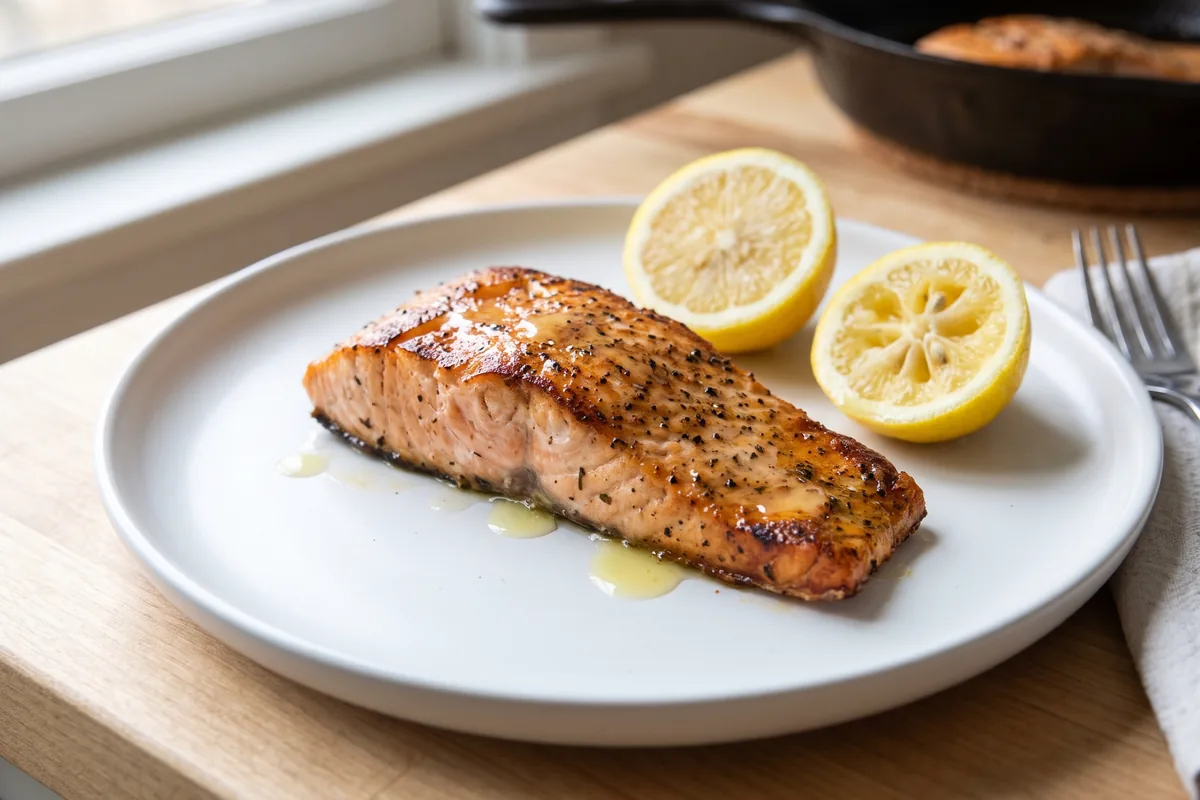
- 1 lemon, cut into wedges
- 1 tablespoon chopped fresh parsley (optional)
Steps
- Dry and season (10 minutes). Take the salmon out of the fridge while you prep. Pat both sides very dry with paper towels, then season the flesh side with the salt and pepper.
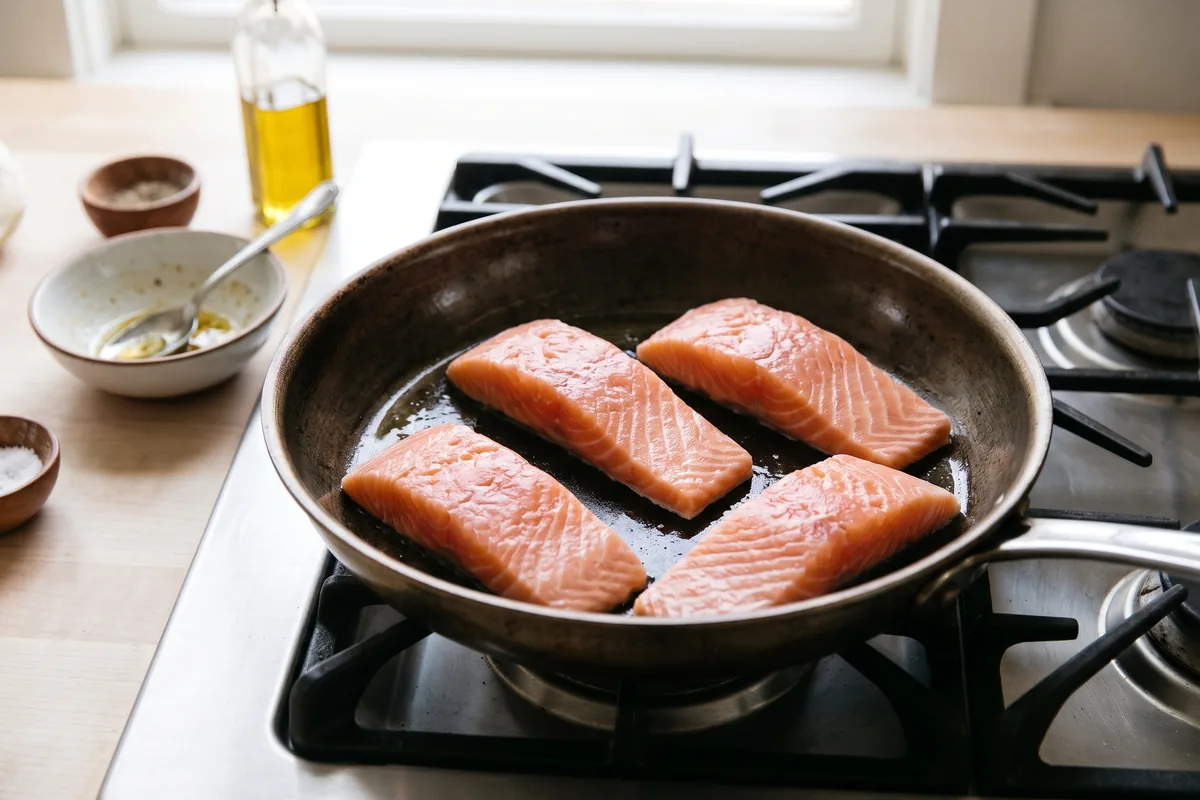
- Heat the pan (about 3 minutes). Set a 12-inch skillet over medium-high heat. Add the oil and swirl until it shimmers.
- Sear skin-side down (5 minutes). Lay the fillets in the pan, skin-side down, and press gently with a spatula for 10 seconds so the skin stays flat. Don't move them until the skin is crisp and the flesh has turned opaque about halfway up the side.
- Flip (3 minutes). Turn the fillets with a wide spatula and cook 3 minutes more.
- Add butter (1 minute). Reduce the heat to medium-low, add the butter and spoon it over the fillets as it melts.
- Check the temperature. Slide a thermometer into the thickest part. Cook to 145°F for the USDA minimum, or pull at 130 to 135°F for medium.
- Rest (2 minutes). Move the fillets to a plate and let them rest 2 minutes. Serve with the lemon wedges and parsley.
Nutrition (per serving, estimated)
Serving size: 1 serving.
| Calories | 420 |
|---|---|
| Total fat | 29 g |
| Saturated fat | 7 g |
| Cholesterol | 100 mg |
| Sodium | 710 mg |
| Total carbohydrate | 2 g |
| Dietary fiber | 1 g |
| Total sugars | 1 g |
| Protein | 35 g |
Excludes optional ingredients and garnishes.
This is an estimate calculated from USDA FoodData Central data for the listed ingredients and amounts. Actual values vary with brands, portions and substitutions.
Baked salmon: the easiest hands-off method
Baking is the hands-off way. For full timing by thickness, see our dedicated baked salmon page.
- Heat the oven to 400°F and line a sheet pan with parchment.
- Pat the fillets dry, rub with 1 tablespoon oil, then season with salt and pepper.
- Set the fillets skin-side down, a little apart.
- Bake 12 to 15 minutes for a 1-inch fillet, until the center reads 145°F.
- Rest 2 minutes, then squeeze lemon over the top.
How to broil salmon
- Set the rack 4 to 6 inches from the broiler and heat it for 5 minutes.
- Put oiled, seasoned fillets skin-side down on a foil-lined pan.
- Broil 8 to 10 minutes for a 1-inch fillet, without flipping, until it reaches 145°F.
- Watch closely in the last 2 minutes because the glaze can burn.
How to grill salmon
- Heat the grill to medium-high, 400 to 450°F, and oil the grates well.
- Season the fillets and brush the flesh with oil.
- Place them skin-side down first. Close the lid and cook about 5 minutes.
- Flip once with a wide spatula, or leave the skin on the grate and cook until done.
- Cook until the center reaches 145°F, usually 8 to 12 minutes total.
Fillets on a plank or on a sheet of foil are easier to turn and keep from sticking. For other grill ideas see our BBQ chicken page, and use a thermometer on everything.
Quick air fryer method
Heat the air fryer to 400°F. Pat fillets dry, brush with oil, season and cook skin-side down for 7 to 10 minutes, until the thickest part reads 145°F. Don't crowd the basket. Our full air fryer salmon page has sauces and frozen-fillet tips.
Newsletter
3 easy dinners a week
Get three emails a week, Mon/Wed/Fri, with easy dinner ideas from HomeBase.
How to cook salmon in a foil or parchment packet
- Heat the oven to 400°F.
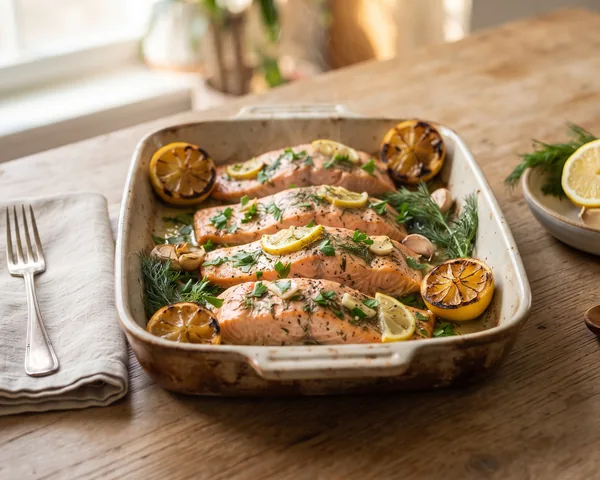
- Place each fillet on a large sheet of parchment or foil, with a pat of butter, a lemon slice and herbs.
- Fold the edges over and crimp them to make a sealed packet.
- Bake on a sheet pan 12 to 15 minutes.
- Open carefully, because the steam is hot, and check for 145°F.
Rate this recipe
Salmon sauces and seasoning blends
Each recipe below makes enough for 4 fillets. Brush on during the last 2 minutes of cooking, or spoon over after.
| Sauce | What to mix |
|---|---|
| Lemon-garlic butter | 2 tablespoons melted butter, 1 tablespoon lemon juice, 2 minced garlic cloves, 1 tablespoon chopped parsley. |
| Honey-garlic | 1 tablespoon honey, 1 tablespoon soy sauce, 1 minced garlic clove, 1 teaspoon lemon juice. |
| Maple-mustard | 2 tablespoons Dijon mustard, 1 tablespoon maple syrup, ½ teaspoon salt. |
| Dill yogurt sauce | ½ cup plain yogurt, 1 tablespoon chopped dill, 1 teaspoon lemon juice, ¼ teaspoon salt. |
| Teriyaki | Brush with our teriyaki sauce in the last 2 minutes. |
Because sauces with sugar burn quickly, add honey and maple glazes near the end of cooking.
What to serve with salmon
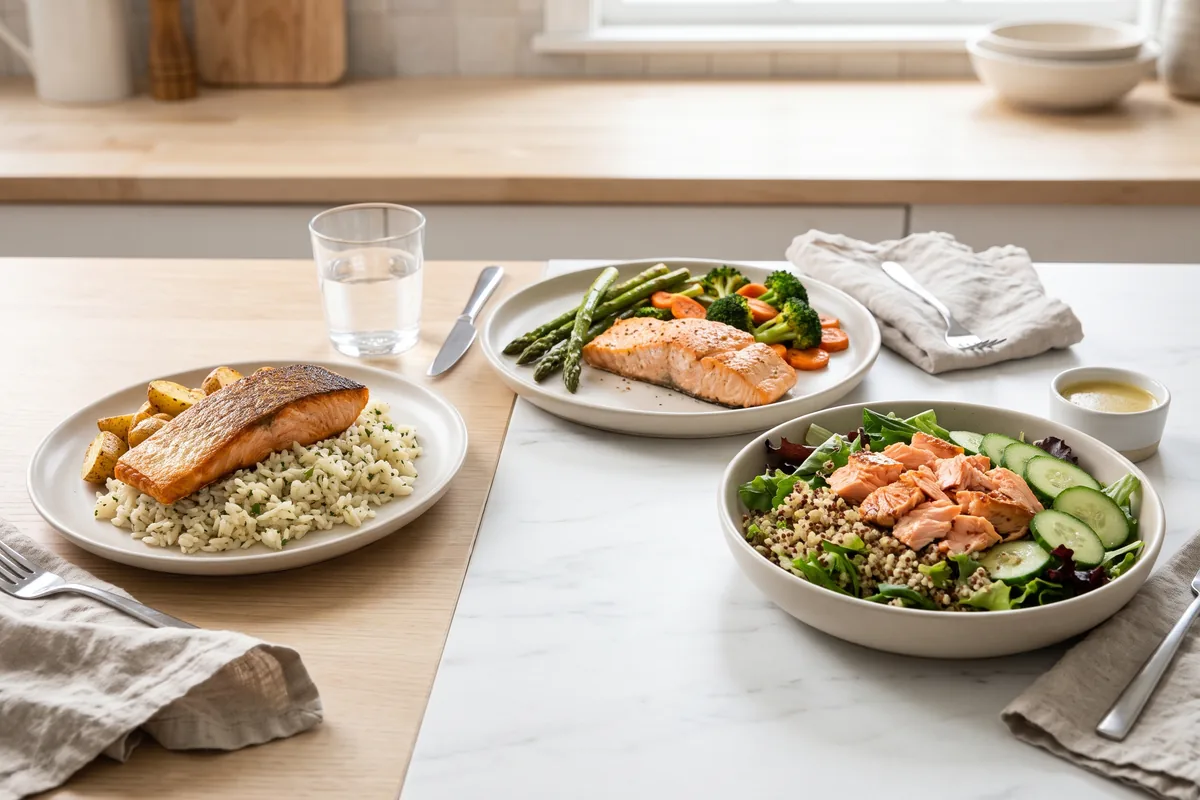
- Starch: rice or mashed potatoes.
- Vegetables: garlic green beans or a simple salad.
- More ideas: our easy side dishes page has plenty more.
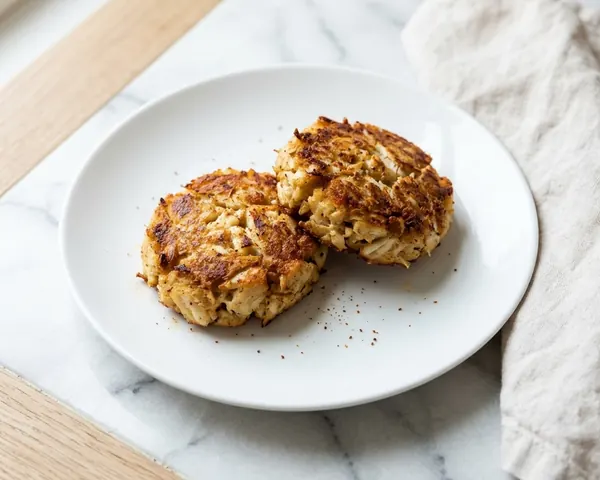
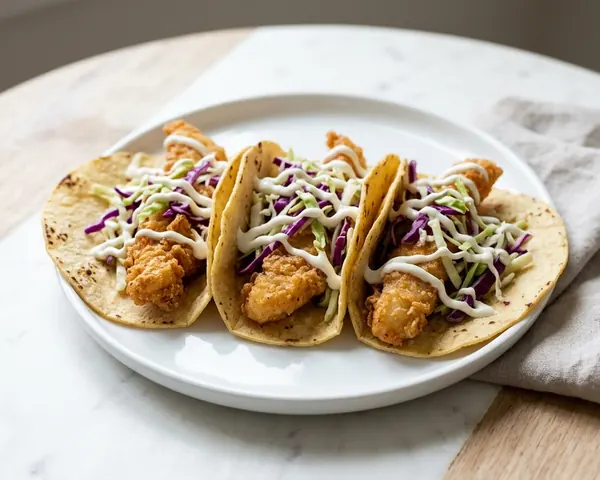
For other dishes that start with salmon, see salmon patties. For fish tacos with a different catch, try fish tacos.
12 common salmon mistakes to avoid
- Cooking it without a thermometer.
- Starting with a wet fillet, which steams instead of browning.
- Using a pan that is not hot enough.
- Crowding the pan or the grill.
- Flipping too early, before the skin releases.
- Flipping more than once.
- Cooking straight from the fridge to a very hot pan with a thick fillet.
- Overcooking, which dries out lean types like sockeye.
- Adding sugary glazes too early.
- Skipping the rest.
- Thawing on the counter.
- Leaving cooked salmon out more than 2 hours.
Is salmon healthy, and how often should you eat it?
The FDA's advice on eating fish lists salmon as a Best Choice for lower mercury. The Dietary Guidelines for Americans recommend at least 8 ounces of seafood a week for a 2,000 calorie diet. Those who are pregnant or breastfeeding should eat 2 to 3 servings a week from the Best Choices list, and a serving is 4 ounces. This is general information, so ask your doctor about your own needs.
Storing and reheating leftover salmon
Refrigerate cooked salmon within 2 hours, or within 1 hour if it is above 90°F. Store it in a shallow covered container and eat it within 3 to 4 days. Reheat gently in a low oven or a covered skillet, and bring it to 165°F, the USDA temperature for leftovers. Cold flaked salmon is good in salads and sandwiches.
How to cook salmon on a budget
Salmon has a reputation for being pricey, so plan around it. Cost per serving is the price per pound times the portion in pounds. For a 6-ounce fillet, that is the price per pound × 0.375.
- Buy a larger side or frozen fillets and portion them yourself.
- Stretch it: flake 1 fillet over rice bowls or a salad for 2 to 3 people.
- Balance the week: pair salmon night with cheaper dinners using our cheap meal ideas. Our guides to meal planning on a budget and the family grocery budget show how to fit it in.
- Track prices: a grocery price book tells you when fillets are actually on sale.
Plan salmon night and keep your recipe
Browse every printable on the Printables page, or see the sets on the Bundles page.
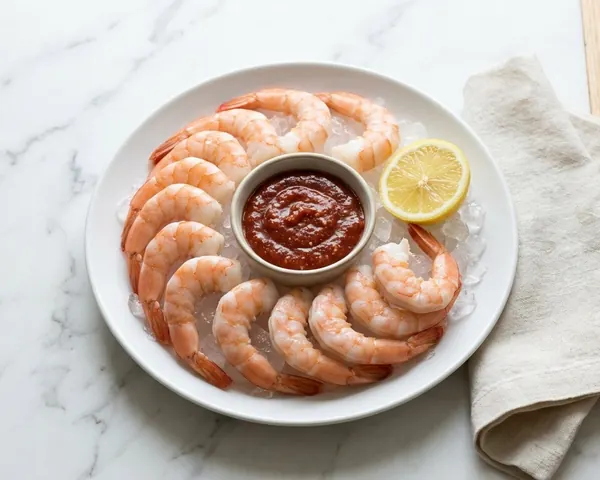
More seafood dinners you'll love
Frequently asked questions
How do you cook salmon? To cook salmon, pat the fillets dry, season them, and cook until the thickest part reaches 145°F. The simplest ways are pan-searing skin-side down for about 5 minutes and flipping for 3, or baking at 400°F for 12 to 15 minutes. Rest 2 minutes before serving.
What temperature should salmon be cooked to? The USDA safe minimum for fish is 145°F, measured with a food thermometer in the thickest part. Many cooks pull salmon a little earlier, around 125 to 135°F, for a softer center, but that is below the USDA minimum. Stay at 145°F for kids, older adults and anyone pregnant.
How do you know when salmon is done? Salmon is done when the flesh turns opaque and flakes easily with a fork, and a thermometer reads 145°F in the thickest part. The FDA says fish is cooked when the flesh separates easily with a fork. If the center looks translucent and glossy, it needs more time.
What is the best way to cook salmon? For most home cooks, pan-searing is the best way to get crisp skin and tender fish in under 15 minutes, and baking is the easiest way to cook several fillets at once with no mess. Grilling is best for a smoky flavor, and the air fryer is a quick option for small batches.
How long does salmon take to cook? A 1-inch fillet usually takes about 10 to 15 minutes, depending on the method. Pan-searing takes about 8 to 10 minutes total, baking at 400°F takes 12 to 15 minutes, and grilling takes about 8 to 12 minutes. Thinner fillets cook faster, so start checking early.
Should you cook salmon skin-side up or down? For pan-searing, start skin-side down to crisp the skin and protect the flesh from direct heat. When baking or grilling, keep it skin-side down as well so the skin acts like a shield. Flip a pan-seared fillet only once, near the end.
What is the white stuff that comes out of salmon? The white stuff is albumin, a protein that is pushed out of the fish as it cooks and sets on the surface. It is harmless. Cooking salmon more gently, and not overcooking it, usually means less of it, and you can scrape it off or ignore it.
Can you cook salmon from frozen? Yes, but thawing gives the most even result. The FDA says to thaw frozen seafood gradually in the refrigerator overnight, or seal it in a bag and submerge it in cold water if you are short on time. If cooking straight from frozen, plan on more time and check the thermometer.
How long can cooked salmon sit out? Cooked salmon should not sit out more than 2 hours, or 1 hour when it is above 90°F, per the FDA. After that, throw it out. Put leftovers in a shallow covered container in the fridge soon after dinner.
How often should I eat salmon? The Dietary Guidelines for Americans recommend at least 8 ounces of seafood a week for a 2,000 calorie diet. The FDA lists salmon as a Best Choice for lower mercury, with 2 to 3 servings a week for people who are pregnant or breastfeeding. Ask your doctor about your own needs.
Do you need to remove the skin before cooking salmon? No, you can cook salmon with the skin on and remove it after, which helps hold the fillet together and protects it from the pan. If you do not like the skin, slide a spatula between the skin and flesh after cooking. Crisp skin is also good to eat.
What seasonings go with salmon? Salt, black pepper and lemon work with almost any method. Garlic, dill, parsley, mustard, honey, soy sauce and brown sugar are popular. Season right before cooking, and add acidic sauces such as lemon juice at the end so the surface stays crisp.
Where can I keep my favorite salmon recipe? The Family Recipe Binder ($6.99) has recipe page layouts, 4x6 and 3x5 recipe cards and a conversion chart, so your go-to salmon method and glaze stay in one place. You can print it or type into the fillable version.
Made this? Tell us how it went
Your notes help the next cook: what you changed, how long it took, how it turned out.