The short answer: this baby feeding chart follows CDC and American Academy of Pediatrics guidance. Newborns take about 1 to 2 ounces every 2 to 3 hours, most babies reach 3 to 4 ounces every 3 to 4 hours by the end of month one, and by 6 months they drink 6 to 8 ounces at 4 or 5 feedings a day. Solids begin around then. Most babies need no more than about 32 ounces of formula a day.
- Daily rule of thumb: about 2 1/2 oz of formula per pound of body weight.
- Breastfed babies: about 8 to 12 feedings in 24 hours, usually every 2 to 4 hours.
- Track every feed: log ounces, times and diapers in the Newborn Baby Tracker ($3.99), or sign up for the weekly HomeBase email.
Our picks for baby feeding chart
Printables
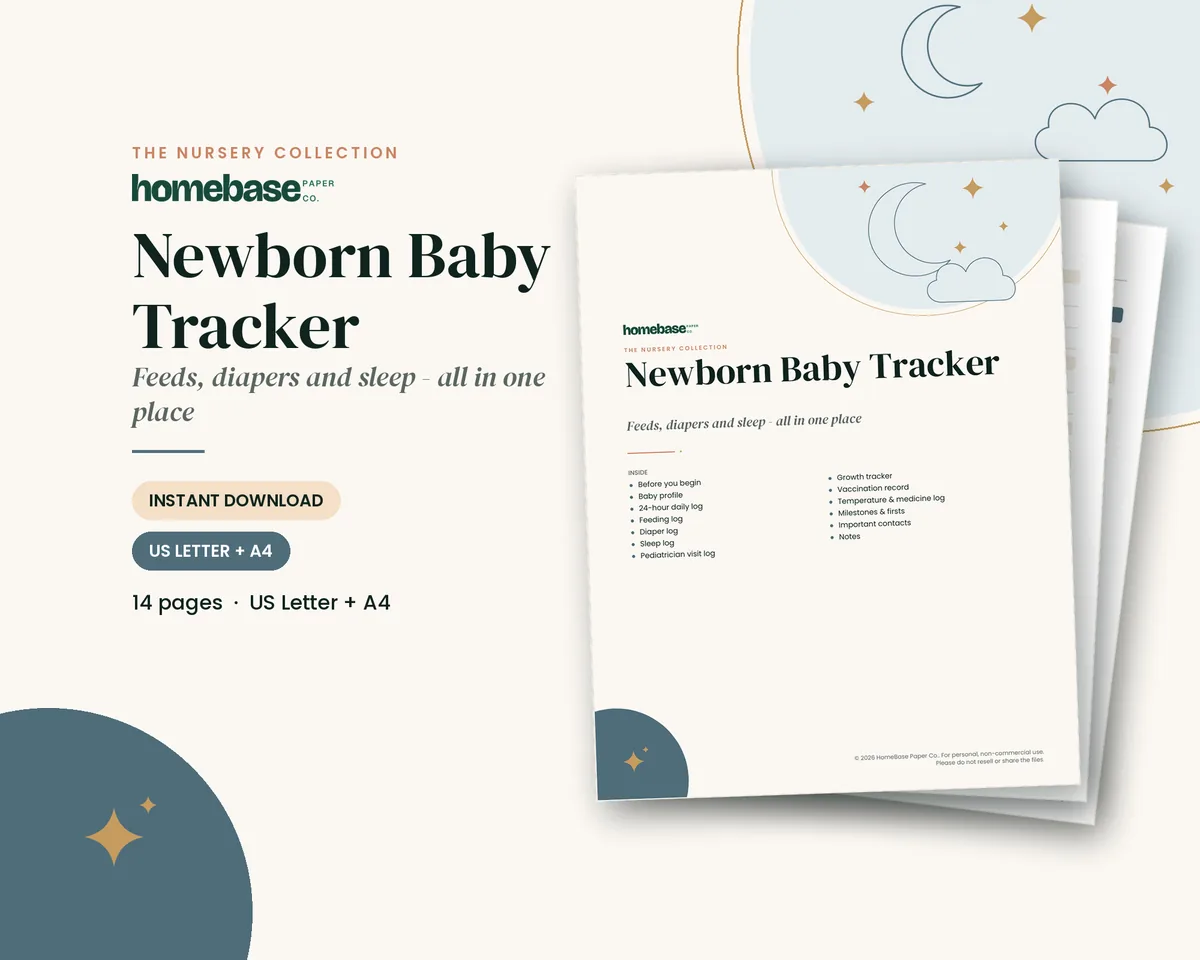
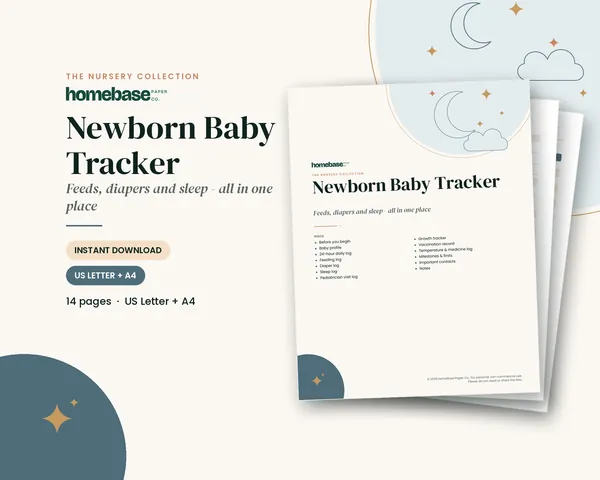
Newborn Baby Tracker
A 24-hour daily log plus feeding, diaper, sleep, growth and pediatrician-visit pages - easy to bring to checkups.
Paperback planners
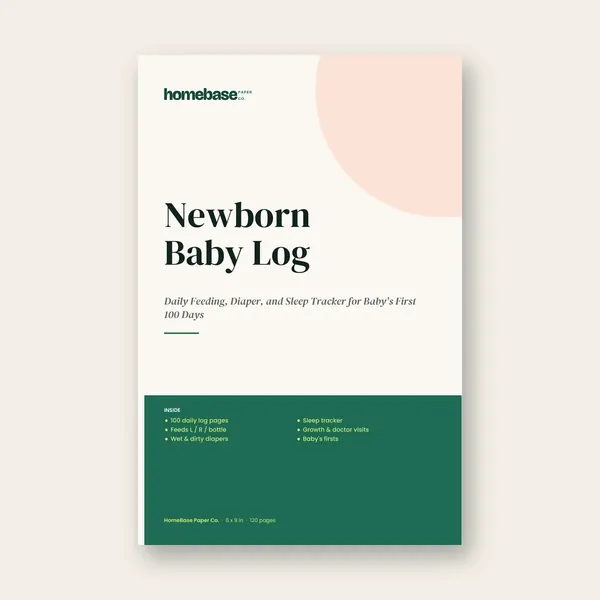
Newborn Baby Log (Paperback)
Daily Feeding, Diaper, and Sleep Tracker for Baby's First 100 Days
 Save 33%
Bundles
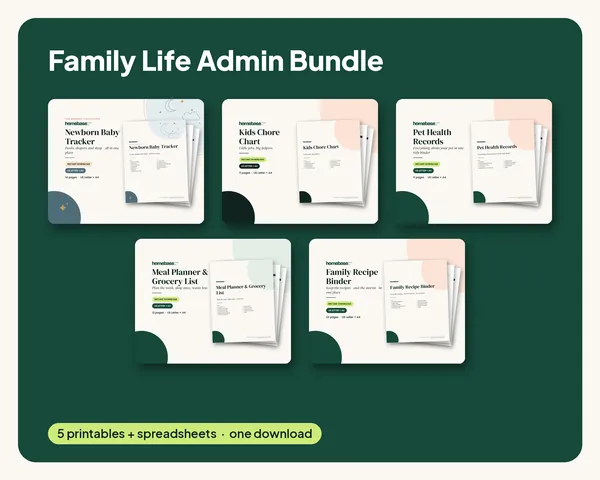
Family Life Admin Bundle
Baby logs, chore charts, pet records, meal plans and family recipes in one tidy set.
This chart is general guidance for healthy, full-term babies, not medical advice. Premature babies and babies with medical needs should follow the schedule from their pediatrician. Below: the chart by age, a weight-based calculator table, breastfeeding notes, hunger and fullness cues and when solids start.
Baby feeding chart by age
| Age | Formula per feeding | Feedings in 24 hours | Breastfed babies |
|---|---|---|---|
| Days 1 to 2 | About 1/2 oz | 8 or more | Every 1 to 3 hours. |
| First week | 1 to 2 oz | 8 to 12 | 8 to 12 feeds, every 1 to 3 hours. |
| End of month 1 | 3 to 4 oz | Every 3 to 4 hours | 8 to 12 feeds, every 2 to 4 hours. |
| 2 to 5 months | Rises slowly; use the weight table | About every 3 to 4 hours | On demand, feeds space out. |
| 6 months | 6 to 8 oz | 4 to 5, plus first solids | On demand, plus first solids. |
| 6 to 12 months | Less as solids increase | Milk or solids 5 to 6 times | Breastfeed before solids. |
| 12 months | Switch to whole milk | Meals plus snacks | On the child's cues. |
Sources: the CDC's formula feeding guide, the CDC's breastfeeding guide and the AAP's How Often and How Much Should Your Baby Eat?
Formula by weight: daily totals
The AAP's formula feeding guide says babies take about 2 1/2 ounces of formula a day for every pound of body weight, and usually no more than about 32 ounces in 24 hours.
| Baby's weight | About this much formula a day | Example split |
|---|---|---|
| 7 lb | 17 1/2 oz | 8 feeds of about 2 oz. |
| 8 lb | 20 oz | 7 feeds of about 3 oz. |
| 9 lb | 22 1/2 oz | 6 feeds of about 3 3/4 oz. |
| 10 lb | 25 oz | 6 feeds of about 4 oz. |
| 11 lb | 27 1/2 oz | 6 feeds of about 4 1/2 oz. |
| 12 lb | 30 oz | 5 feeds of 6 oz. |
| 13 lb and up | 32 oz cap | Talk with your pediatrician if your baby wants more. |
These are averages. Your baby's intake will change day to day, so let their cues lead.
Breastfeeding notes
- Frequency: about 8 to 12 times in 24 hours, the CDC says, sometimes hourly during cluster feeding.
- Amounts: the AAP notes most breastfed babies take about 1 ounce per feeding in the first weeks, slowly rising to about 4 1/2 ounces by a year.
- Vitamin D: babies fed only breast milk, or less than about 32 ounces of formula a day, need vitamin D drops starting shortly after birth, per the CDC.
- Pumping: label bottles with the date and amount so caregivers can follow the same plan.
Hunger and fullness cues
| Hungry | Full |
|---|---|
| Licking lips or sticking tongue out | Turning away from the bottle or breast. |
| Rooting, turning toward the breast | Closing the mouth or pushing the nipple out. |
| Hands to the mouth | Relaxed hands and body. |
| Sucking on anything nearby | Falling asleep, content. |
| Fussing (crying is a late sign) | Slowing down or getting distracted. |
Bottle-fed babies can overfeed more easily, so the AAP suggests offering a little less, since you can always give more.
Is my baby getting enough?
- Wet diapers: 2 to 3 a day in the first few days, then at least 5 to 6 a day after day 4 or 5.
- Stools: at least 4 a day by day four, varying with breast milk or formula.
- Growth: steady progress on the pediatrician's growth chart.
Call your pediatrician if your baby has fewer wet diapers, seems hard to wake for feeds or isn't gaining weight.
Track feeds, diapers and sleep in one place
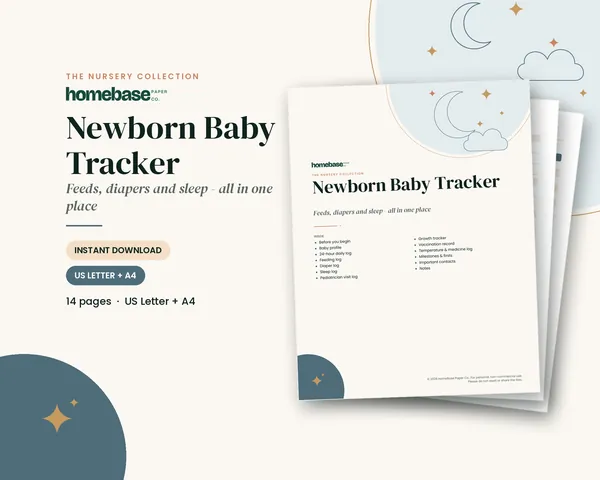
In the newborn weeks it's hard to remember the last feeding. The Newborn Baby Tracker ($3.99) has a 24-hour daily log plus feeding, diaper, sleep and growth pages to bring to checkups. The Newborn Baby Log (Paperback) ($9.99) gives you 100 daily pages for time, breast or bottle, minutes or ounces, and wet and dirty diapers in a 6 x 9 inch book for the diaper bag. The Family Life Admin Bundle includes the tracker for $15.99 ($23.95 when bought separately). See our newborn feeding and diaper log for what to record. The baby registry checklist covers bottles and gear. Our baby budget guide shows what formula costs add up to.
Frequently asked questions
How much should a newborn eat per feeding? In the first day or two, a formula-fed newborn may take only about half an ounce per feeding, then usually 1 to 2 ounces. The CDC suggests offering 1 to 2 ounces every 2 to 3 hours in the first days and more if your baby shows hunger cues.
How many ounces should a 1 month old drink? By the end of the first month, most formula-fed babies take at least 3 to 4 ounces per feeding, about every 3 to 4 hours, according to the American Academy of Pediatrics. Breastfed babies usually take smaller, more frequent feedings.
How much formula does a 6 month old need? By about 6 months, babies may take 6 to 8 ounces at each of 4 or 5 feedings in 24 hours, the AAP says. Solid foods usually start around this age, and formula slowly decreases as solids increase.
How do I calculate how much formula my baby needs by weight? The AAP's rule of thumb is about 2 1/2 ounces of formula per day for every pound of body weight. A 10-pound baby would drink about 25 ounces a day. Babies regulate their own intake, so follow hunger and fullness cues.
What is the most formula a baby should drink in a day? The AAP says babies should usually drink no more than an average of about 32 ounces of formula in 24 hours. If your baby regularly wants more than that, talk with your pediatrician.
How often should a breastfed baby eat? Most breastfed babies feed about 8 to 12 times in 24 hours, the CDC says, usually every 2 to 4 hours in the first weeks and months. Some babies cluster feed, nursing as often as every hour for a stretch.
How much breast milk does a baby drink from a bottle? The AAP notes most breastfed infants take about 1 ounce per feeding in the first few weeks, slowly rising to roughly 4 1/2 ounces by a year. Pumped-milk amounts vary, so watch your baby's cues and diapers.
Should I wake my baby to feed? In the first weeks, yes, if your baby sleeps longer than 4 to 5 hours and starts missing feedings, the AAP says. Between 2 and 4 months, or once a baby weighs more than about 12 pounds, many formula-fed babies drop the middle-of-the-night feeding.
How do I know my baby is eating enough? Watch diapers and growth. After the first 4 to 5 days, a baby should have at least 5 to 6 wet diapers a day, according to the AAP. Your pediatrician also tracks weight on a growth chart at checkups.
When do babies start solid foods? Most babies start solid foods at about 6 months old. The CDC says 6 to 12 month olds usually need formula, breast milk or solid foods about 5 to 6 times in 24 hours, with milk still the main nutrition source.
When can my baby switch from formula to cow's milk? At 12 months, the CDC says you can switch from infant formula to plain, unsweetened, pasteurized whole cow's milk or a fortified unsweetened dairy alternative. Many families replace one feeding at a time.
Does my baby need vitamin D? The CDC says babies fed only breast milk, or less than about 32 ounces of formula a day, need extra vitamin D starting shortly after birth, usually as over-the-counter drops. Ask your baby's doctor which product and dose to use.
Newsletter
Get the HomeBase email
Fresh tips three times a week, Mon/Wed/Fri, with our deals and new products, from printables, spreadsheets and bundles to paperback planners and apparel, plus simple home, money and planning tips.