The short answer: the most reliable eco friendly cleaning products carry the EPA Safer Choice label, which means EPA reviewed every ingredient, plus a plain ingredient list. For light jobs, white vinegar, baking soda and dish soap cover most of the house. Never mix bleach with ammonia or vinegar.
- Best first swaps: all-purpose spray, dish soap, glass cleaner and laundry detergent.
- Check the label: a certification and an ingredient list beat words like "green" or "natural".
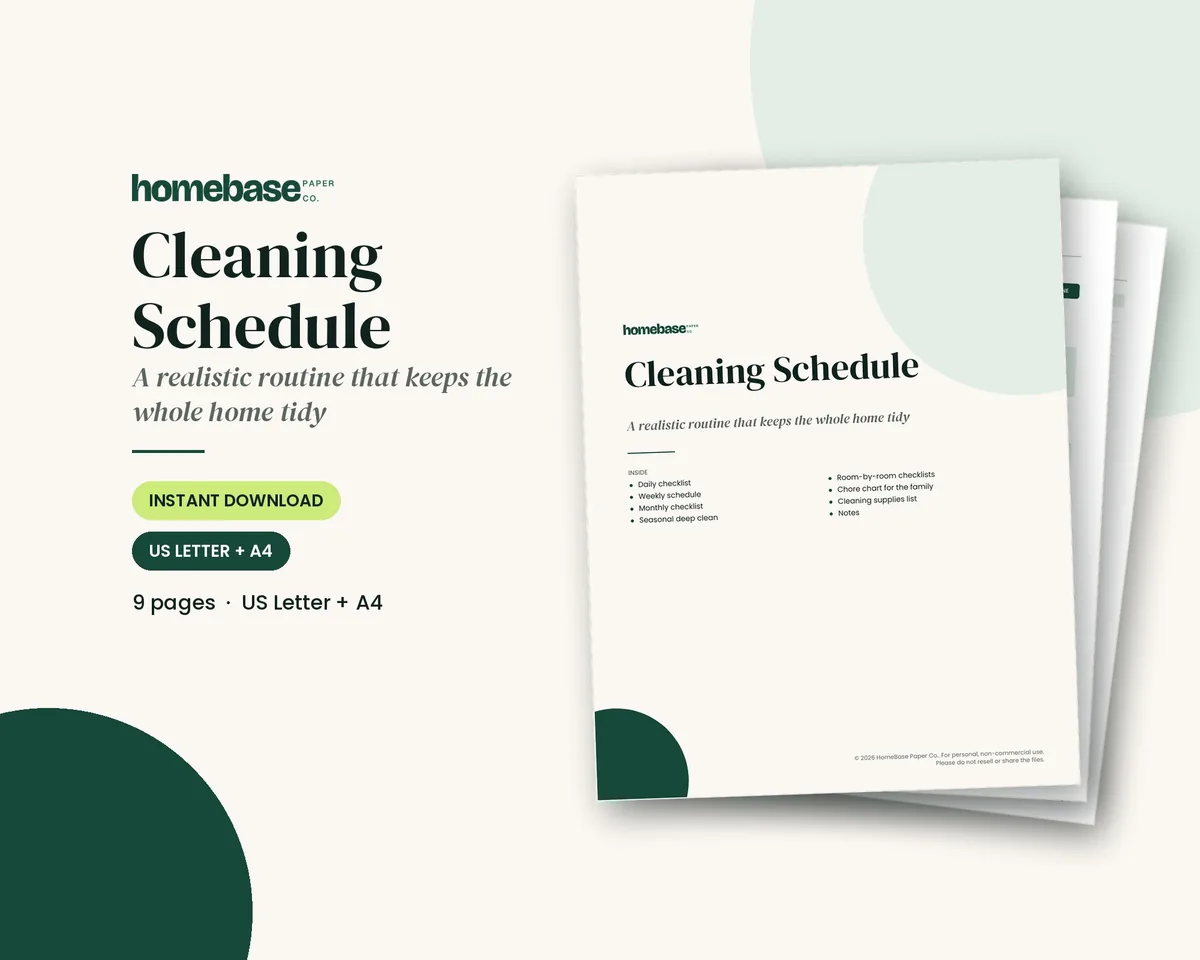
- Keep it on schedule: use the Cleaning Schedule ($4.49) so a lighter routine still gets done.
Our picks for eco friendly cleaning products
Printables
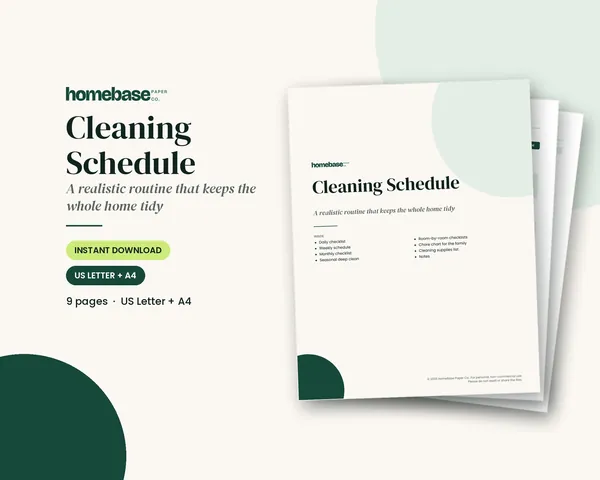
Cleaning Schedule
Daily, weekly, monthly and seasonal lists - plus a family chore chart.
 Save 48%
Bundles
Home Management Bundle
Household binder, maintenance log, moving planner, cleaning schedule, home inventory and password log.
The label facts come from EPA and the safety rules from the Washington State Department of Health, all checked on November 18, 2026. The page covers what the labels mean, a chart of jobs and greener options, DIY recipes, mixing rules and how to switch.
What counts as eco friendly cleaning products
No law defines "eco friendly" for cleaners, so the phrase alone proves little. Three things are worth checking instead: a third-party or government label, a full ingredient list and a specific claim you can verify, such as "plant-based surfactants" or "refill pouch".
EPA's Safer Choice program is the clearest government label. EPA says its scientists evaluate every ingredient in a certified product against human health and environmental criteria. Certified products must also perform well, meet packaging rules and disclose their ingredients. You can search the certified list on EPA's Safer Choice products page, which covers all-purpose, bathroom, kitchen, glass, laundry and dish products.
Greener options by cleaning job
| Job | Greener option | Skip it when |
|---|---|---|
| Counters and all-purpose | Safer Choice all-purpose spray, or dish soap and warm water | Raw meat needs a proper disinfectant |
| Glass and mirrors | 1 part white vinegar to 1 part water | Tinted windows or coated glass, check the maker |
| Sinks and faucet scale | White vinegar soak for 15 to 30 minutes | Natural stone, which acid can etch |
| Light scrubbing | Baking soda paste | Soft finishes that scratch |
| Dishes | Safer Choice dish soap | Dishwashers, use a detergent made for them |
| Laundry | Safer Choice or fragrance-free detergent | Work stains that need a pretreat |
| Floors | A mild floor cleaner made for your floor type | Wood finishes, follow the maker |
For specific problems, see our guides to shower mold, grout, your washing machine and stains.
DIY cleaners you can make
- All-purpose spray: 1 cup of water, 1 cup of white vinegar and a few drops of dish soap in a spray bottle. Label it and keep it away from stone.
- Soft scrub: 1/2 cup of baking soda with enough water to make a paste.
- Glass cleaner: 1 cup of water and 1 cup of white vinegar, wiped with a lint-free cloth.
- Drain refresh: 1/4 cup of baking soda, then 1/2 cup of vinegar, wait 10 minutes and flush with hot water.
These are fine for light cleaning. They do not disinfect on their own, so use a registered disinfectant when you need to kill germs, and follow its label.
Never mix these cleaners
The Washington State Department of Health warns not to mix bleach with ammonia, acids or other cleaners. Bleach with ammonia makes toxic chloramine gases. Bleach with an acid makes chlorine gas, and vinegar counts as an acid. Symptoms include coughing, watery eyes and trouble breathing.
Use one product at a time, rinse the surface between products and ventilate the room. Vinegar and bleach should never meet, even in a drain or a toilet bowl.
Avoiding greenwashing
The FTC Green Guides help marketers avoid misleading environmental claims, which makes them a good checklist for shoppers.
- Vague words: "green", "eco", "natural" and "non-toxic" with nothing behind them.
- No ingredient list: a transparent brand tells you what is inside.
- Pretty packaging: leaf logos are not certifications.
- Single-point claims: "plant-based" can describe one ingredient in a long formula.
Switching without waste
Replace products as they run out and finish what you own first. Buy concentrates or refill packs to cut packaging, and keep one disinfectant for raw meat and sick-day cleanups. Pairing a lighter formula with a regular routine keeps surfaces clean, and the cleaning checklist and how to start a cleaning routine can help you set one.
Keep the routine on track
The Cleaning Schedule ($4.49) lays out daily, weekly and monthly tasks, so gentler cleaners still get used often enough to work. The Home Management Bundle includes it with five more home printables for $16.99 ($32.94 when bought separately).
Frequently asked questions
What are eco friendly cleaning products? Eco friendly cleaning products are cleaners made with ingredients chosen to be safer for people, pets and waterways. There is no single legal definition of the phrase, so look for an independent certification such as the EPA Safer Choice label rather than relying on words on the front of the bottle.
What does the EPA Safer Choice label mean? EPA says it means its scientists reviewed every ingredient in the product against human health and environmental criteria. Certified cleaners must also perform well, meet packaging and VOC requirements and disclose their ingredients on the label or another easy-to-find place.
Are vinegar and baking soda good natural cleaners? Both are low-cost options for light jobs. White vinegar diluted with water cuts mineral deposits on glass and faucets, and baking soda works as a gentle scrub. Neither disinfects reliably, and vinegar can dull natural stone, so keep it off marble and granite.
Are natural cleaning products always safer? No. Natural does not guarantee safe, and a product can be plant-based and still irritate skin or lungs. Read the label for ingredients and warnings, and use the same ventilation and glove habits you would with any cleaner.
What household cleaners should never be mixed? Never mix bleach with ammonia or with any acid, including vinegar. The Washington State Department of Health says bleach with ammonia makes chloramine gas and bleach with an acid makes chlorine gas, and both can cause serious breathing problems.
How can I spot greenwashing on a cleaning label? Be wary of vague claims such as green, eco, natural or non-toxic with no certification and no ingredient list. The FTC's Green Guides exist to keep environmental marketing claims from misleading shoppers, so look for specific, explained claims.
Do eco friendly cleaners work as well as regular ones? For everyday dirt, grease and soap scum, certified cleaners can work well, and EPA requires Safer Choice products to meet performance standards. Heavy mold, rust or disinfecting needs may call for a targeted product, so match the cleaner to the job.
Are eco friendly cleaning products more expensive? Some cost more per bottle, but concentrates and refill packs can bring the cost per use down. A few DIY basics such as white vinegar, baking soda and castile soap cover many jobs for a few dollars.
What is the easiest way to switch to greener cleaning? Swap one product at a time as each runs out, starting with the all-purpose spray and dish soap. Use up what you have, since throwing away half-full bottles creates waste, and never pour old products together to get rid of them.
Newsletter
Get the HomeBase email
Fresh tips three times a week, Mon/Wed/Fri, with our deals and new products, from printables, spreadsheets and bundles to paperback planners and apparel, plus simple home, money and planning tips.