

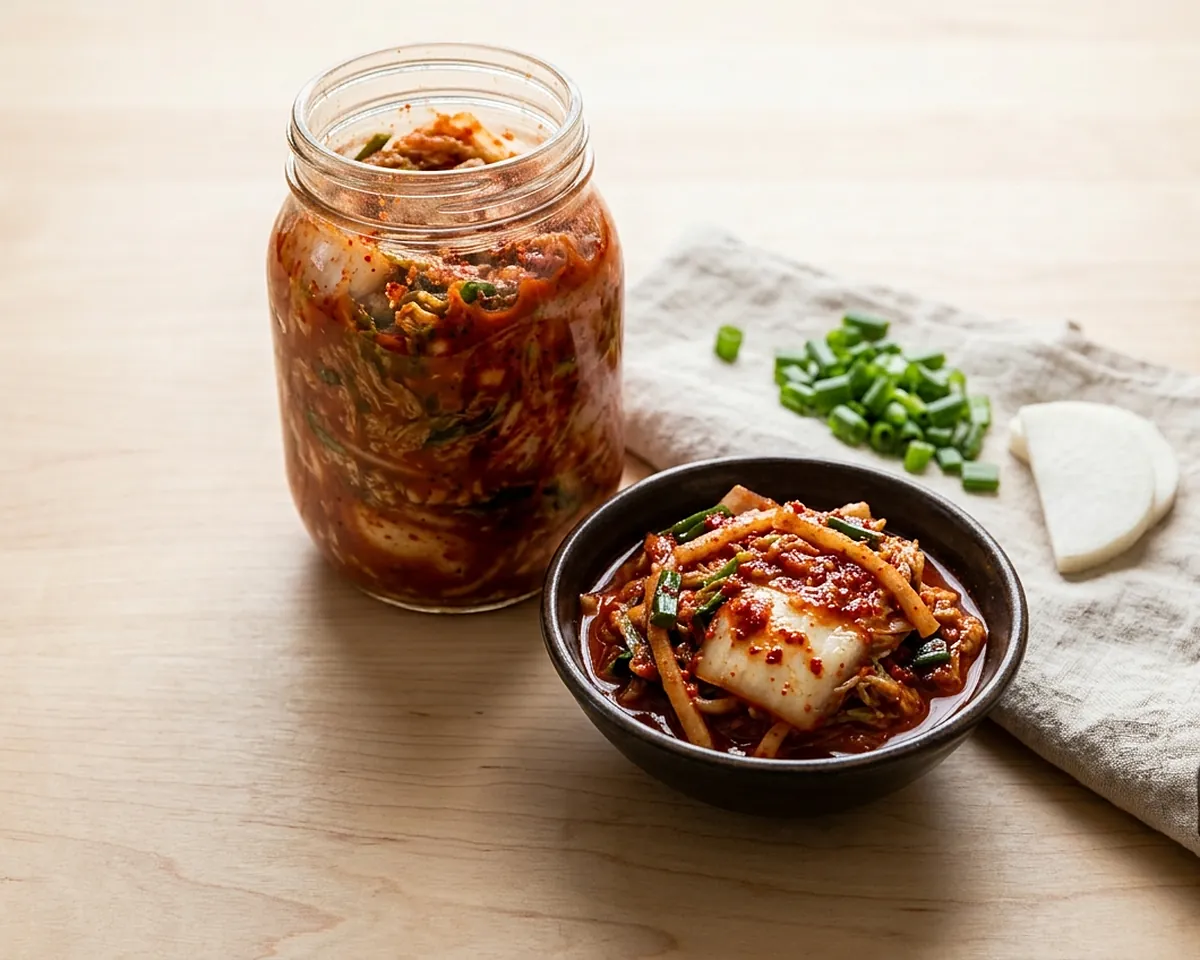
The short answer: how to make kimchi: cut a 2-pound napa cabbage into 2-inch pieces, massage it with 1/4 cup kosher salt, cover it with water for 2 hours, then rinse and drain. Toss it with a paste of garlic, ginger, sugar, fish sauce and 2 to 4 tablespoons gochugaru, plus radish and green onions. Pack a quart jar and ferment 1 to 2 days near 68°F.
- Key numbers: 2 lb napa cabbage · 1/4 cup kosher salt · 8 oz daikon · 4 green onions · 1 to 2 days at about 68°F.
- Safety: non-iodized salt, keep the cabbage under the brine, never above 85°F.
Prep time: 35 minCook time: 0 minTotal time: 50 hr 55 minServings: About 1 quart (8 servings)Total includes 2 hr 20 min of salting and draining plus 2 days of fermenting.
Fermenting guidance was checked November 14, 2026, against Colorado State University Extension and University of Missouri Extension. Below: the kimchi recipe, how fermenting works, safety checks, swaps, fixes, storage and ways to use it.
Kimchi ingredients
| Ingredient | Amount | Notes |
|---|---|---|
| Napa cabbage | 1 medium head, about 2 pounds | Heavy for its size, pale green leaves |
| Kosher salt (non-iodized) | 1/4 cup | No iodine or anti-caking agents |
| Cold water | To cover, about 8 cups | For soaking the salted cabbage |
| Daikon or Korean radish | 8 ounces, peeled, cut into matchsticks | About 1 1/2 cups |
| Green onions | 4, cut into 1-inch pieces | |
| Garlic | 1 tablespoon grated (5 to 6 cloves) | |
| Fresh ginger | 1 teaspoon grated | |
| Sugar | 1 teaspoon | Feeds the fermentation |
| Fish sauce | 2 tablespoons | Or soy sauce for vegan kimchi |
| Gochugaru (Korean red pepper flakes) | 2 to 4 tablespoons | Use 1 for mild, up to 5 for hot |
You also need a large bowl, a plate and a weight, a colander, gloves and a clean 1-quart jar with a lid.
Kimchi recipe directions
- Make the paste (5 minutes). Stir the garlic, ginger, sugar and fish sauce in a large bowl. Stir in the gochugaru.
- Cut the radish and onions (8 minutes). Cut the radish into matchsticks and the green onions into 1-inch pieces. Add them to the paste and refrigerate while you salt the cabbage.
- Cut the cabbage (5 minutes). Quarter the cabbage lengthwise, cut out the core and slice it into 2-inch pieces.
- Salt the cabbage (5 minutes). Put the cabbage in a large bowl, sprinkle it with the salt and massage until the leaves start to soften.
- Soak (2 hours). Cover the cabbage with cold water, set a plate and a weight on top to keep it under, and let it stand 2 hours.
- Rinse (5 minutes). Rinse the cabbage in cold water 3 times to remove extra salt.
- Drain (20 minutes). Drain the cabbage in a colander for 20 minutes, then gently squeeze out the extra water.
- Mix (4 minutes). Wearing gloves, toss the cabbage with the paste and vegetables until every piece is red.
- Pack (3 minutes). Press the kimchi into the jar until brine rises over the vegetables. Leave at least 1 inch of headspace and close the lid.
- Ferment (1 to 2 days). Set the jar on a plate at about 68°F, out of the sun. Press the kimchi down once a day. Taste it after 1 day. When it is pleasantly sour, refrigerate it.
Rate this recipe
How kimchi ferments
Kimchi is a lacto-fermented food, like sauerkraut. University of Missouri Extension explains that bacteria on the vegetables turn sugars into lactic acid and carbon dioxide. That acid preserves the cabbage and gives it its tang. Colorado State University Extension says kimchi ferments in only 1 to 2 days at room temperature, or about 3 to 4 days in the refrigerator.
| Fermenting option | Time | Best for |
|---|---|---|
| Room temperature, about 68°F | 1 to 2 days | Faster, tangier kimchi. |
| Refrigerator | About 3 to 4 days | Hot weather or a milder flavor. |
| Longer in the refrigerator | Weeks | Very sour kimchi for cooking. |
Kimchi safety checks
- Use exact salt: salt keeps harmful bacteria in check while the good bacteria grow, so don't cut it.
- Keep it under the brine: press the vegetables down daily so air and mold can't reach them.
- Watch the temperature: University of Missouri Extension says not to let it go above 85°F.
- Check acidity: CSU Extension says kimchi should reach pH 4.6 or below before eating. pH test strips cost little and take seconds.
- Toss mold: fuzzy spots or a rotten smell mean it's spoiled. Sour and garlicky is normal.
Kimchi swaps and variations
| Swap | How | Result |
|---|---|---|
| Vegan kimchi | 2 tbsp soy sauce or tamari instead of fish sauce | Less funky, still savory. |
| Mild kimchi | 1 tbsp gochugaru | Good for kids and spice-shy eaters. |
| Cucumber kimchi | Swap the cabbage for 2 lb small cucumbers, salted 30 minutes | Crunchy, eat within a few days. |
| Radish kimchi | All daikon, cut into 3/4-inch cubes | Crisp and juicy. |
| Carrot add-in | Add 1 carrot cut into matchsticks | Sweeter and more colorful. |
| Apple or pear | Grate 1/2 apple or Asian pear into the paste | Slightly sweeter, rounder flavor. |
How to fix kimchi problems
| Problem | Likely cause | Fix |
|---|---|---|
| Too salty | Not rinsed enough | Rinse 3 times; add more radish next batch. |
| Not sour after 2 days | Cool room | Give it another day, or move it somewhere warmer. |
| Too sour too fast | Warm room | Refrigerate sooner and ferment in the fridge in summer. |
| Dry on top | Not enough brine | Press down; top with brine of 1 tsp salt in 1 cup water. |
| Mushy | Fermented too warm or too long | Ferment near 68°F and refrigerate once tangy. |
| Fuzzy mold | Air exposure | Throw it out and start fresh. |
What to make with kimchi
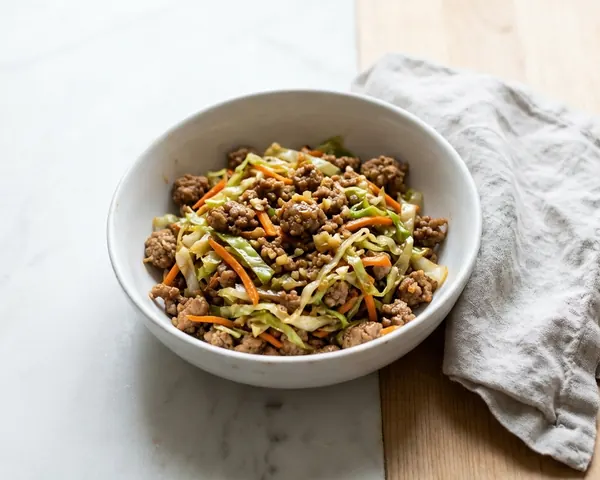
Kimchi is a side dish on its own, and it is also an ingredient. Stir a cup into fried rice or shrimp fried rice. Add it to a stir-fry, an egg roll in a bowl or crispy tofu recipes. Spoon it into egg drop soup for heat. For more ideas, see our guide to Asian food, and try quick pickled red onions when you want a tangy topping today.
How to store kimchi
| Where | How long | Tips |
|---|---|---|
| Refrigerator | Best within 2 weeks, per CSU Extension | Keep the lid on and the cabbage under the brine. |
| Room temperature | Only during the 1 to 2 day ferment | Then refrigerate. |
| Freezer | Not recommended | The cabbage turns soft after thawing. |
Always use a clean spoon, so you don't bring new bacteria into the jar.
Affiliate links: we may earn a small commission. As an Amazon Associate we earn from qualifying purchases. Details.
Airtight glass containers with lids keep leftovers fresh and can go from the fridge to the microwave.
Serve it with a pot of rice; our guide on how to cook rice covers the water ratio, and more how-tos are in the cooking basics hub. Cabbage is cheap, so a big jar fits a budget grocery plan.
More Asian-inspired dinners


Frequently asked questions
How do you make kimchi at home? To make kimchi, cut a 2-pound napa cabbage into 2-inch pieces, massage it with 1/4 cup kosher salt, cover it with water and let it stand 2 hours. Rinse and drain, then mix it with a paste of garlic, ginger, sugar, fish sauce and gochugaru plus radish and green onions. Pack it into a quart jar and ferment 1 to 2 days.
How long does kimchi need to ferment? Kimchi ferments in about 1 to 2 days at a room temperature near 68°F, or 3 to 4 days in the refrigerator, according to Colorado State University Extension. Taste it daily. When it is pleasantly sour, move it to the refrigerator, where it keeps fermenting slowly.
What salt should I use for kimchi? Use kosher salt or another coarse, non-iodized salt without anti-caking agents. Iodized table salt can slow fermentation and cloud the brine. Measure the salt exactly, because University of Missouri Extension notes that proper salting is key to keeping harmful bacteria from growing.
What is gochugaru and can I substitute it? Gochugaru is Korean red pepper flakes, which are bright red, fruity and medium-hot. Look for it at Asian grocery stores or online. Regular crushed red pepper is much hotter and seedier, so if you must swap, use about one-third as much and expect a different flavor and color.
Can I make kimchi without fish sauce? Yes. For vegan kimchi, replace the 2 tablespoons of fish sauce with 2 tablespoons of soy sauce or tamari, or 1 tablespoon of white miso mixed with 1 tablespoon of water. The flavor is less funky but still savory, and it ferments the same way.
How do I know if my kimchi is safe to eat? Safe kimchi smells sour and garlicky, tastes tangy and has no fuzzy mold. Colorado State University Extension says kimchi should reach a pH of 4.6 or lower before eating, which you can check with pH test strips. Throw it out if you see mold or it smells rotten rather than sour.
Why is my kimchi bubbling and leaking? Bubbling is normal. The lactic acid bacteria that sour kimchi also make carbon dioxide gas, which pushes brine up and out of the jar. Leave about 1 inch of headspace, set the jar on a plate and press the cabbage down once a day to release gas and keep it under the brine.
How long does homemade kimchi last? Homemade kimchi keeps for weeks in the refrigerator, but Colorado State University Extension recommends eating it within 2 weeks for the best quality. It gets more sour over time. Older, very sour kimchi is good cooked into fried rice, stew or pancakes.
What temperature should kimchi ferment at? Ferment kimchi at a steady room temperature around 68°F, out of direct sun. University of Missouri Extension says not to let fermentation go above 85°F, because spoilage microorganisms can take over. In a hot kitchen, ferment it in the refrigerator instead.
What can I make with kimchi? Kimchi is a side dish on its own, and it is great in fried rice, scrambled eggs, grilled cheese, tacos, noodle soups and stir-fries. Very sour, older kimchi is best cooked. Start with a cup of chopped kimchi in our fried rice recipe.
Do I need a special jar to make kimchi? No. A clean 1-quart glass jar with a lid works well. Glass or food-grade plastic is best because the brine is salty and acidic. Wash the jar in hot, soapy water first, and leave at least 1 inch of space at the top for the brine to rise.
Newsletter
Get the HomeBase email
Fresh tips three times a week, Mon/Wed/Fri, with our deals and new products, from printables, spreadsheets and bundles to paperback planners and apparel, plus simple home, money and planning tips.
Sources
- Colorado State University Extension: Understanding and Making Kimchi extension.colostate.edu
- University of Missouri Extension: Preserve It Fresh, Preserve It Safe (kimchi) extension.missouri.edu
Made this? Tell us how it went
Your notes help the next cook: what you changed, how long it took, how it turned out.