The short answer: what should I make for dinner? Make the fastest meal that uses the protein you already have and the produce that needs to go first.
- Five questions: time, protein, use-it-up, energy and who's eating
- Formula: one protein, one starch and one or two vegetables
- Chicken under 20 minutes: quesadillas or stir-fry
- 30-dinner fallback list below
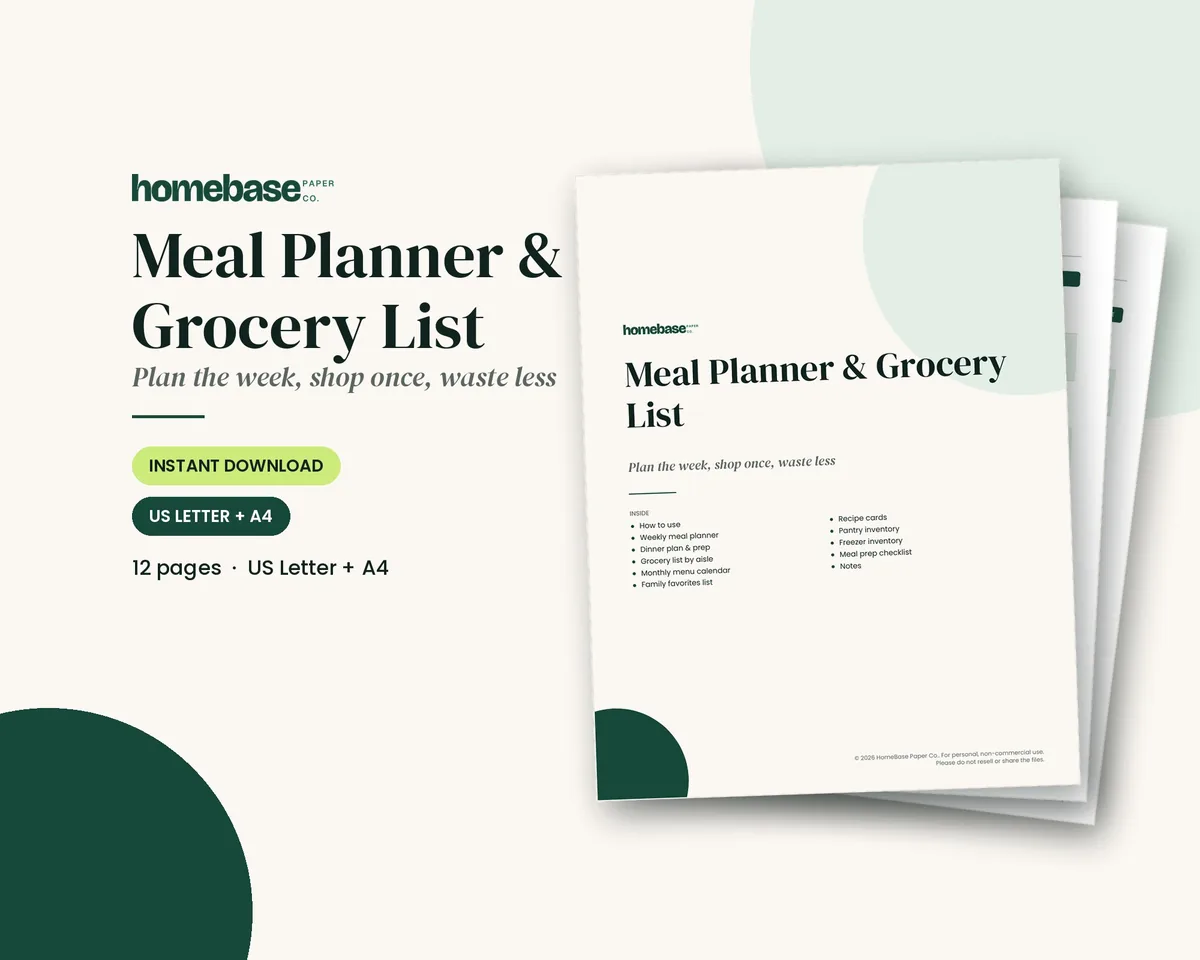
- Next step: Plan it with the Meal Planner & Grocery List ($3.99).
What should I make for dinner? Make the fastest meal that uses the protein you already have and the produce that needs to go first. If you're stuck, answer five quick questions below (time, protein, use-it-up, energy, and who's eating), then pick from the matching row in our dinner matrix.
That's the whole method. It takes about five minutes, and it works on a Tuesday when the fridge looks empty and everyone's already asking. If you want to skip the nightly question entirely, the Meal Planner & Grocery List ($3.99) lets you decide the whole week in one sitting, with a Dinner Plan & Prep page that tells you what to thaw the night before.
Key takeaways
- Decide by constraints, not cravings. Time and what's on hand narrow the choices fast.
- Build dinner in three parts: a protein, a starch and a vegetable.
- Keep a written fallback list of five no-thinking meals for hard nights.
- Forgot to thaw? Cooking from frozen is safe; it just takes about 50% longer.
- Plan five dinners a week and leave two nights for leftovers.
How to decide what to make for dinner in 5 questions
Work through these in order. Each answer cuts your options down, so by question five you usually have one or two dinners left.
- How much time do I have? Under 20 minutes points to eggs, quesadillas, pasta or a stir-fry. Thirty to 45 minutes opens up sheet pan dinners and skillet meals. An hour or more means a roast, a casserole or a soup.
- What protein is on hand? Check the fridge, then the freezer, then the pantry. Eggs, chicken, ground meat, canned beans, canned tuna and tofu all count.
- What needs to be used up? Wilting spinach, half an onion and leftover rice should go in tonight's dinner. This is how you cut food waste without trying hard.
- How much energy do I have? Be honest. A tired cook needs a three-step meal, not a new recipe.
- Who is eating? Picky eaters, a late worker or a crowd changes the format. Build-your-own meals solve most of it.
Write your answers down if you're stuck. Seeing "15 minutes, eggs, spinach, tired, four people" on paper makes the choice obvious: a spinach frittata or scrambled egg tacos.
The what's-for-dinner matrix
Find your protein in the left column, then read across to match your time. Every meal here uses common grocery store ingredients.
| Protein on hand | Under 20 minutes | 30 to 45 minutes | Hands-off (oven or slow cooker) |
|---|---|---|---|
| Eggs | Veggie scramble tacos, egg fried rice | Frittata with leftover vegetables | Breakfast casserole |
| Chicken | Chicken quesadillas, chicken stir-fry | Sheet pan chicken and vegetables | Slow cooker salsa chicken |
| Ground beef or turkey | Tacos, sloppy joes | Spaghetti with meat sauce, stuffed peppers | Chili |
| Canned beans | Black bean quesadillas, bean burritos | Chickpea curry over rice | Ham and bean soup |
| Canned tuna or salmon | Tuna melts, tuna pasta | Salmon patties with a salad | Tuna noodle casserole |
| Shrimp | Garlic butter shrimp with rice | Shrimp fried rice | Sheet pan shrimp fajitas |
| Sausage | Sausage and peppers on rolls | Sausage and potato skillet | Sausage and white bean soup |
| Tofu | Tofu stir-fry | Crispy baked tofu bowls | Tofu curry |
If the protein you have isn't listed, pick the closest match. Chicken thighs work anywhere chicken does. Pork chops can stand in for chicken in most sheet pan meals.
For more depth on one protein, see our chicken dinner ideas and ground beef dinner ideas.
What to make for dinner with what you have
When the fridge looks bare, build dinner in three parts instead of hunting for a recipe.
Part 1: one protein. Eggs, beans, frozen chicken, canned fish, ground meat, cheese or tofu.
Part 2: one starch. Rice, pasta, tortillas, bread, potatoes, couscous or noodles.
Part 3: one or two vegetables. Fresh, frozen or canned. Frozen peas, corn, broccoli and spinach go in almost anything.
Then pick a format that holds them together:
| Format | How it works | Example |
|---|---|---|
| Bowl | Starch on the bottom, protein and vegetables on top, sauce | Rice, black beans, corn, salsa |
| Wrap | Everything in a tortilla, toasted or not | Chicken, cheese, peppers |
| Skillet | Cook it all in one pan | Sausage, potatoes, green beans |
| Pasta toss | Cooked pasta with protein, vegetables, sauce | Tuna, peas, lemon, olive oil |
| Soup | Broth plus everything | Beans, canned tomatoes, pasta, spinach |
| Sheet pan | Chopped and roasted at 425°F | Chicken thighs, potatoes, carrots |
A simple sauce turns leftovers into a new dinner. Soy sauce with garlic, salsa, pesto, marinara, or lemon with olive oil cover most cuisines.
A short pantry inventory list and a freezer inventory list make this step faster. You know what you have before you open a single cabinet.
Dinner by energy level
Your energy matters more than any recipe. Match the meal to the cook you are tonight.
Running on empty (3 steps or fewer)
- Breakfast for dinner: scrambled eggs, toast and fruit
- Quesadillas with cheese, beans and salsa
- Rotisserie chicken with a bagged salad and bread
- Baked potatoes with toppings from the fridge
- A freezer meal you made on a better day
Normal weeknight (about 30 minutes)
- Sheet pan dinners like sausage and vegetables or chicken fajitas
- Stir-fry with frozen vegetables over rice
- Spaghetti with meat sauce and a side salad
- Tacos with ground beef or turkey
Got some energy (an hour, or a slow start)
- A pot of soup from our soup recipes list
- A casserole that doubles as tomorrow's lunch
- A meal from the slow cooker recipes page started at lunch
- Homemade pizza on store-bought dough
What to make for dinner in common situations
Some nights the question isn't about ingredients. It's about who's at the table and what the evening looks like.
| Situation | What usually works | Try |
|---|---|---|
| Picky eaters | Build-your-own plates, sauce on the side | Taco bar, rice bowls, baked potato bar |
| Feeding a crowd | One big pot or pan that holds well | Chili, baked ziti, slow cooker pulled chicken |
| Cooking for one or two | Small portions or planned leftovers | Egg fried rice, a stuffed sweet potato, half a sheet pan |
| Late or staggered schedules | Meals that reheat without drying out | Soup, chili, burrito bowls kept in parts |
| Hot day | Little or no oven time | Chicken salad wraps, cold noodle bowls, quesadillas |
| Cold night | Something warm and slow | Soup, stew, a casserole |
| End of the week | Use-it-up meals | Fried rice, frittata, "fridge clean-out" pasta |
| Friday wind-down | Fun, low-effort food | Homemade pizza, nachos, burgers |
For picky eaters, cook one base and set out the extras separately. Kids and adults can skip the onions or add the hot sauce without you making two meals.
When you're cooking for a crowd, choose a dish that sits well on the stove or in the oven. Chili, baked pasta and slow cooker meals stay hot while people serve themselves.
For staggered schedules, store the parts separately. Rice in one container, protein in another, toppings in a third. Each person reheats a plate when they get home, and nothing turns soggy.
If you need theme ideas for the end of the week, our Friday night dinner ideas and Sunday dinner ideas pages have more.
Forgot to thaw the meat?
This is the most common reason dinner falls apart at 5 p.m. You have three safe options.
- Cook it from frozen. The USDA's guide to safe defrosting says it's safe to cook meat and poultry from frozen, and it takes about 50% longer. Thin cuts, ground meat in a skillet and frozen shrimp handle this best.
- Use the cold water method. Seal the meat in a leak-proof bag and submerge it in cold tap water. Change the water every 30 minutes. A one-pound package may thaw in an hour or less, and you need to cook it right after.
- Thaw it in the microwave. Use the defrost setting and cook the meat immediately, since some parts start to warm up.
Never thaw meat on the counter or in hot water. If none of these fit your timeline, switch to a no-thaw protein like eggs, canned beans or canned tuna.
Tonight's best fix is tomorrow's habit: decide the night before and move one item from the freezer to the fridge. That's exactly what the Prep Ahead column on a dinner plan is for.
Your 30-dinner fallback list
Keep this list somewhere you can see it. On nights when you can't think, pick from it without debating.
Egg and breakfast dinners: veggie frittata, breakfast burritos, egg fried rice, French toast with fruit, shakshuka.
Pasta and noodle dinners: spaghetti with meat sauce, tuna pasta, pasta with jarred pesto and peas, baked ziti, ramen with egg and greens.
Taco and tortilla dinners: ground beef tacos, black bean quesadillas, chicken fajitas, bean and rice burritos, tostadas.
Sheet pan and skillet dinners: sausage and peppers, chicken and potatoes, salmon and green beans, kielbasa and cabbage, shrimp fajitas.
Soup and stew dinners: chili, chicken noodle soup, minestrone, lentil soup, potato soup.
Rice and bowl dinners: teriyaki chicken bowls, burrito bowls, shrimp fried rice, chickpea curry, beans and rice.
Circle the five your household eats without complaint. Those five are your real fallback list. For a bigger menu sorted by speed and cost, see our easy dinner ideas page with 50 cheap weeknight meals.
Cook safely and use the leftovers
A thermometer takes the guessing out of "is it done?" These are the safe minimum internal temperatures from FoodSafety.gov:
| Food | Safe minimum internal temperature |
|---|---|
| Chicken and turkey (whole, pieces, ground) | 165°F |
| Ground beef and pork | 160°F |
| Beef, pork and lamb steaks, chops, roasts | 145°F, then rest 3 minutes |
| Fish and shellfish | 145°F |
| Egg dishes | 160°F |
| Leftovers and casseroles | 165°F |
Leftovers are tomorrow's easy dinner, so store them well. The USDA's leftovers guide says to refrigerate food within two hours of cooking, use it within 3 to 4 days, and reheat it to 165°F. Shallow containers help food cool quickly.
Stop asking "what's for dinner?" every night
The nightly question is tiring because you're making the same decision seven times a week. Make it once instead.
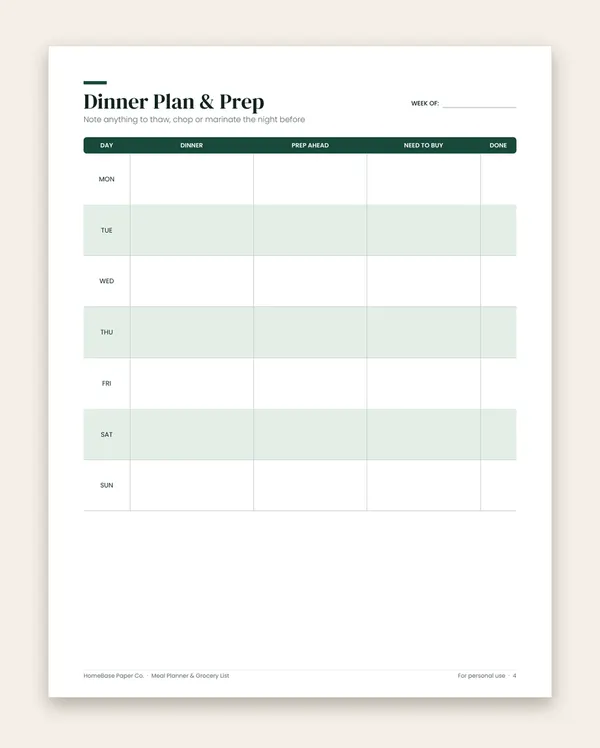
The Meal Planner & Grocery List ($3.99) has a Dinner Plan & Prep page with columns for each night's dinner, what to prep ahead, what you need to buy and a done check. It also includes a Weekly Meal Planner, a Monthly Menu, a Family Favorites page, a grocery list sorted by aisle, and pantry and freezer inventories.
When a dinner becomes a keeper, save it in the Family Recipe Binder ($6.99). Its recipe pages have room for serves, prep time, cook time and notes, and section dividers keep mains, sides and soups apart.
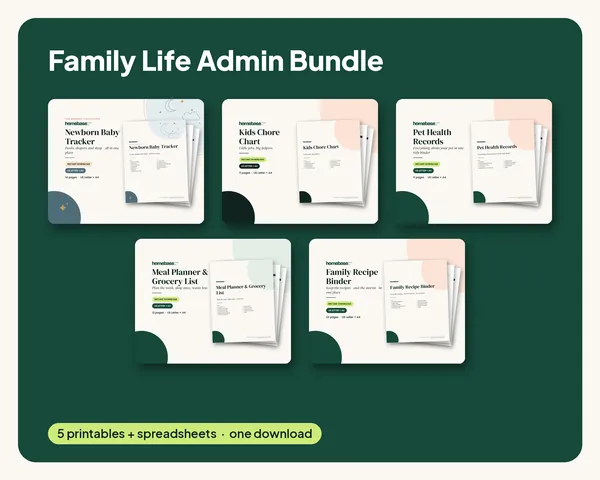
Want both? The Family Life Admin Bundle ($15.99, $23.95 if bought separately) includes the meal planner, the recipe binder and three more family organizers. Browse everything on our Printables and Bundles pages.
Plan this week's dinners in 20 minutes
- Look at the calendar and mark busy nights. Those get fallback meals.
- Check the fridge, freezer and pantry. Write down proteins and produce that need using.
- Pick five dinners from the matrix and the fallback list. Use what needs using first.
- Fill in the Prep Ahead column: what to thaw, chop or marinate the night before.
- Write one grocery list for everything you don't have.
- Leave two nights open for leftovers or takeout.
If you want a deeper walkthrough, read how to meal plan. It covers themes, rotations and shopping in more detail.
Dinner doesn't need to be clever. It needs to be decided. Answer the five questions, pick a row, and get the pan going. Want a full theme list? Start with our family dinner ideas hub. When the only filter is cost, browse our cheap meals list next. When the clock is the only constraint, jump to our quick dinner ideas hub.
Make it easier
Tools for this
 Starter pick
Printables
Meal Planner & Grocery List
Weekly meals, a grocery list sorted by aisle, and pantry and freezer inventories so you shop once and waste less.

Printables
Family Recipe Binder
Section dividers, four recipe page layouts with room for the family story, 4x6 and 3x5 cards and a conversion chart - print it or type into the fillable version.
 Save 33%
Bundles
Family Life Admin Bundle
Baby logs, chore charts, pet records, meal plans and family recipes in one tidy set.
Frequently asked questions
What should I make for dinner tonight? Make the fastest meal that uses a protein you already have and the produce that needs to go first. If you have eggs, make a veggie frittata or fried rice. If you have chicken, make a sheet pan dinner. If you have a box of pasta and a jar of sauce, make pasta with whatever vegetables are in the fridge.
How do I decide what to make for dinner fast? Ask five questions in order: how much time you have, what protein is on hand, what needs using up, how much energy you have, and who is eating. The Dinner Plan & Prep page in our Meal Planner & Grocery List ($3.99) puts those answers on paper so the decision is already made by 5 p.m.
What can I make for dinner with what I have? Start with the protein, then the starch, then the vegetables. Eggs, canned beans, canned tuna, frozen chicken and ground meat each turn into several dinners with rice, pasta, tortillas or bread. Check the fridge for produce that needs using first, and build the meal around that.
What should I make for dinner when I have no energy? Pick a meal with three steps or fewer. Good low-energy dinners include breakfast for dinner, quesadillas, a rotisserie chicken with a bagged salad, baked potatoes with toppings, or a frozen meal you prepped earlier. Keep two of these on your fallback list for hard nights.
What should I make for dinner with chicken? Chicken works in sheet pan dinners, stir-fries, tacos, quesadillas, pasta and soup. Thin cuts and tenders cook fastest. Cook chicken to 165°F, the safe minimum internal temperature listed by FoodSafety.gov, and use a food thermometer rather than guessing by color.
What should I make for dinner with ground beef? Ground beef turns into tacos, sloppy joes, spaghetti with meat sauce, burrito bowls, stuffed peppers or a quick skillet with rice. Brown it once and split it across two meals if you can. Cook ground beef to 160°F.
Can I cook meat from frozen if I forgot to thaw it? Yes, it is safe to cook meat and poultry straight from frozen. The USDA Food Safety and Inspection Service says it takes about 50% longer than cooking thawed meat. For a faster thaw, seal a one-pound package in a leak-proof bag and submerge it in cold water, changing the water every 30 minutes.
What is a good cheap dinner to make? Good cheap dinners to make are bean and rice burritos, egg fried rice, pasta e fagioli, baked potato bars and lentil soup, because each one stretches a small amount of protein. They lean on low-cost staples like eggs, beans, rice, pasta, potatoes and frozen vegetables. For a full list, see our easy dinner ideas page with 50 cheap weeknight meals.
How do I stop stressing about what's for dinner? Decide once a week instead of every night. Our Meal Planner & Grocery List ($3.99) gives you a weekly meal planner, a Dinner Plan & Prep page and a grocery list sorted by aisle, so you shop once and tonight's answer is already written down.
What should I make for dinner for a family with picky eaters? Make build-your-own meals where everyone assembles their own plate. Tacos, rice bowls, baked potato bars, pasta with sauce on the side and sheet pan dinners let each person skip what they do not like while you cook only one meal.
How many dinners should I plan per week? Plan five dinners and leave two nights open for leftovers, takeout or a fallback meal. Five planned meals cover most weeks without wasted food, and the open nights absorb schedule changes.
How long are leftovers good for? Refrigerated leftovers are good for 3 to 4 days, according to the USDA Food Safety and Inspection Service. Refrigerate them within two hours of cooking, store them in shallow containers, and reheat them to 165°F. Frozen leftovers keep their best quality for about 3 to 4 months.
Where should I keep the dinners my family likes? Write the winners down so you never start from zero. The Family Recipe Binder ($6.99) has recipe pages with serves, prep time, cook time and notes, plus section dividers for mains, sides and soups. The Family Favorites page in the Meal Planner & Grocery List works for a quick list.
What should I make for dinner if I only have pantry staples? Pantry-only dinners include pasta aglio e olio, tuna pasta, black bean quesadillas, chickpea curry over rice, minestrone with canned beans and tomatoes, and fried rice with frozen peas and eggs. Keep a short pantry inventory so you know what you have before you start.
More from HomeBase
You may also like
 Thanksgiving Edition
Printables
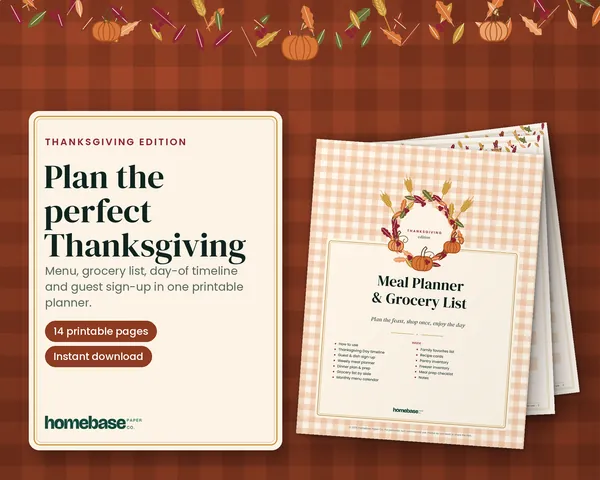
Meal Planner & Grocery List: Thanksgiving Edition
Plan the perfect Thanksgiving: our meal planner in a warm harvest design, with a Thanksgiving Day timeline, a guest & dish sign-up, an aisle-sorted grocery list and pantry and freezer trackers.

Printables
Budget Planner Printable
Twelve undated pages you can print every month: budget, bills, spending, savings and debt.

Printables
Household Binder
Family info, emergency plan, calendars, meals, groceries, cleaning, bills and sitter notes.
 Starter pick
Printables
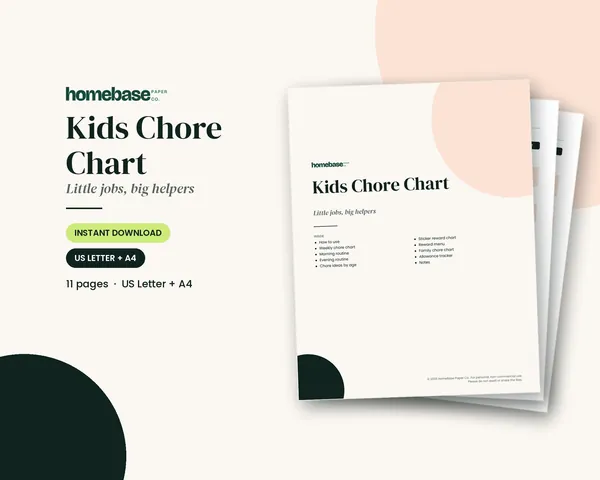
Kids Chore Chart
Weekly chore chart, morning and evening routines, chore ideas by age, a sticker reward chart and an allowance tracker.
 Club
Monthly club
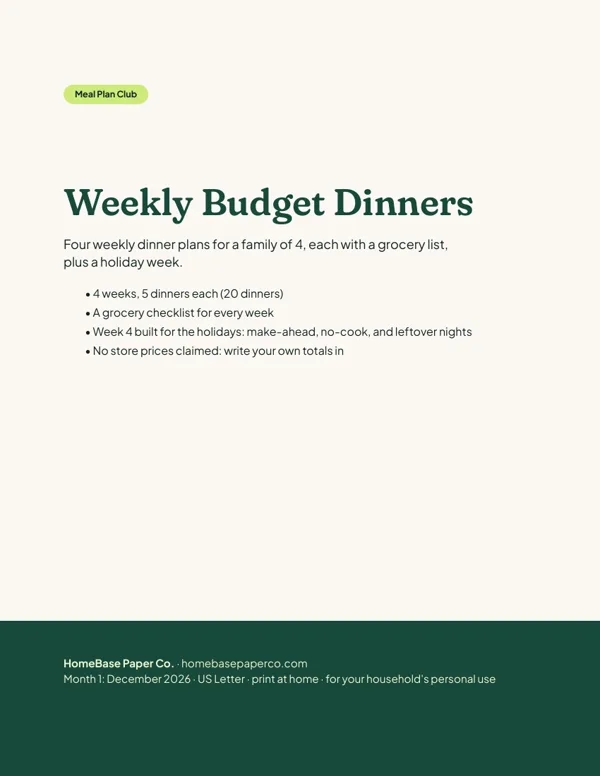
Meal Plan Club
Families who want dinner planned and a grocery list ready every week.
Free printable
Save the family favorites: get the free recipe book pages
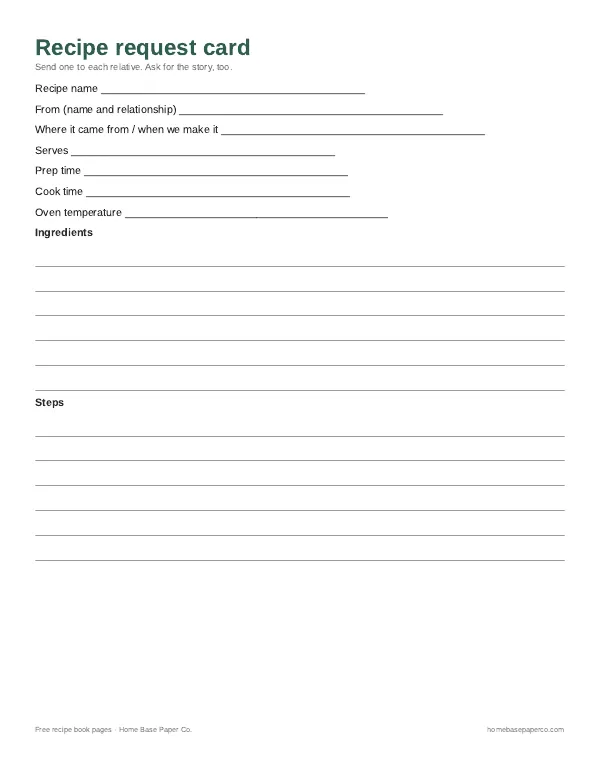
Printable recipe pages and a recipe request card to send to relatives, so the dishes everyone loves end up in one book. You'll also get our weekly HomeBase email with easy meal planning ideas and family recipe tips.