

The short answer: jerk chicken is chicken marinated in a blended paste of Scotch bonnet peppers, allspice, thyme, green onions, garlic and ginger, then grilled over medium indirect heat or baked at 425°F until the thickest piece reads 165°F. This recipe uses 3 pounds of bone-in thighs and legs, marinated in the refrigerator 4 to 24 hours. Serves 4.
- Key numbers: 3 lb bone-in chicken · 2 Scotch bonnets · 1 tbsp ground allspice · 4 to 24 hours in the fridge · 165°F
- Top moves: wear gloves for the peppers, set aside clean marinade before the chicken goes in, cook low and slow, finish with char
- Free and paid next step: get the free recipe book starter pages (we email it to you), or save your heat level in the Family Recipe Binder ($6.99).
Our picks for jerk chicken
 Starter pick
Printables
Meal Planner & Grocery List
Weekly meals, a grocery list sorted by aisle, and pantry and freezer inventories so you shop once and waste less.

Printables
Family Recipe Binder
Section dividers, four recipe page layouts with room for the family story, 4x6 and 3x5 cards and a conversion chart - print it or type into the fillable version.
Jerk is a Jamaican method for seasoning and smoking meat. The paste does most of the work: allspice (called pimento in Jamaica) gives the warm, clove-like base, Scotch bonnets bring fruity heat, and fresh thyme and green onions keep it herbal. Traditional jerk cooks slowly over pimento wood; a covered grill with indirect heat or a hot oven gets close at home.
Jerk chicken ingredients
Serves 4.
| Ingredient | Amount | Notes |
|---|---|---|
| Bone-in, skin-on chicken thighs and drumsticks | 3 pounds | About 8 pieces; leg quarters also work |
| Scotch bonnet peppers | 2, stemmed | Use 1, seeded, for medium heat; habanero is the closest swap |
| Green onions | 6, roughly chopped | White and green parts |
| Garlic | 5 cloves | |
| Fresh ginger | 1 tablespoon, chopped | |
| Fresh thyme | 1 tablespoon leaves | Or 1 teaspoon dried |
| Ground allspice | 1 tablespoon | Or 1 1/2 tablespoons whole berries, toasted and ground |
| Ground cinnamon | 1/2 teaspoon | |
| Ground nutmeg | 1/4 teaspoon | |
| Black pepper | 1 teaspoon | |
| Brown sugar | 2 tablespoons | |
| Soy sauce | 3 tablespoons | |
| Lime juice | 1/4 cup | About 2 limes |
| Neutral oil | 2 tablespoons | |
| Salt | 1 1/2 teaspoons | Reduce if your soy sauce is very salty |
How to make jerk chicken
- Blend the marinade. Put on disposable gloves before cutting the Scotch bonnets; the oils cling to skin and burn eyes hours later. Blend the peppers, green onions, garlic, ginger, thyme, allspice, cinnamon, nutmeg, black pepper, brown sugar, soy sauce, lime juice, oil and salt until mostly smooth.
- Set aside clean marinade. Spoon about 1/4 cup of the paste into a small covered container and refrigerate it. This portion never touches raw chicken and becomes the basting sauce or a dip at the table.
- Marinate in the refrigerator. Cut 2 or 3 shallow slashes in each piece of chicken, down to the bone. Rub the rest of the marinade over the chicken and into the cuts, put it in a covered dish or food-grade bag, and refrigerate 4 to 24 hours. Clemson Cooperative Extension says to marinate poultry in the refrigerator, not at room temperature, and to discard used marinade because it contains raw juices.
- Cook it. Choose the grill or the oven method below. Either way, the chicken is done when a food thermometer in the thickest piece, not touching bone, reads 165°F; the FDA safe food handling chart lists 165°F for all poultry. Jerk paste chars dark well before the inside is cooked, so color is not a guide.
- Finish and rest. Brush the chicken with the reserved clean marinade in the last few minutes, move it to a clean platter, and rest 5 minutes. Serve with lime wedges.
Grill method
Set up a two-zone fire: coals or burners on one side only, aiming for about 325°F to 350°F under the lid. Wipe excess paste off the chicken so it does not burn. Cook the pieces skin-side up on the cooler side, lid closed, for about 35 to 45 minutes, turning once. When they are close to 165°F, move them over direct heat for 2 to 3 minutes per side to char. For extra smoke, add a handful of soaked wood chips to the coals or a foil smoker packet on a gas grill; a few whole allspice berries in the packet add the pimento note.
Oven method
Heat the oven to 425°F. Set a wire rack on a foil-lined sheet pan and lightly oil it. Arrange the chicken skin-side up with space between pieces. Bake 35 to 45 minutes until 165°F in the thickest piece. For char, broil 2 to 3 minutes at the end, watching closely, since the sugar in the paste burns fast.
Marinade safety and the reserved sauce
Jerk paste goes on raw chicken, so the bowl, spoon and bag that held it all count as raw-poultry tools. Keep them away from cooked food, and wash your hands and the cutting board with hot soapy water after handling.
If you want a sauce from the bag rather than the reserved cup, Clemson's guidance is to use leftover marinade as a sauce only if it is first brought to a rolling boil for one minute. Setting aside clean paste in step 2 avoids the question entirely. Do not brush raw-chicken marinade on near the end of cooking; anything brushed on in the last minutes should be the clean portion.
The FDA also says to always marinate food in the refrigerator. Leaving the chicken out to "take the chill off" before grilling is not needed; cold chicken just takes a few extra minutes to reach 165°F.
Adjusting the heat
| Heat level | Peppers | Tip |
|---|---|---|
| Mild | 1 jalapeño, seeded | Add 1/2 teaspoon smoked paprika for color |
| Medium | 1 Scotch bonnet, seeds and ribs removed | Still noticeably spicy |
| Traditional | 2 Scotch bonnets, whole | Very hot; serve with something cooling |
| Extra hot | 3 to 4 Scotch bonnets | Gloves and good ventilation while blending |
Most of the capsaicin sits in the ribs and seeds, so trimming them lowers the heat without losing the fruity pepper flavor. Taste a tiny dab of the paste before it touches raw chicken, never after.
Cuts and timing
| Cut | Method | Approximate time | Done when |
|---|---|---|---|
| Bone-in thighs and drumsticks | Grill indirect or 425°F oven | 35 to 45 minutes | 165°F, away from bone |
| Leg quarters | Grill indirect or 425°F oven | 45 to 55 minutes | 165°F in the thigh |
| Boneless thighs | Direct medium heat or 425°F oven | 15 to 20 minutes | 165°F in the center |
| Chicken breasts | Indirect, then direct to char | 20 to 30 minutes | 165°F; pull promptly so they stay moist |
| Wings | 425°F oven on a rack | 40 to 45 minutes, turning once | 165°F and crisp |
Times are scheduling estimates; the thermometer decides. For more ways to cook thighs, see our chicken thigh recipes, and for plain methods and timing by cut, how to cook chicken.
Variations
- Jerk paste swaps: no fresh thyme? Use dried. No Scotch bonnets? Habanero is closest in flavor and heat.
- Jerk pork or shrimp: the same paste works on pork shoulder or tenderloin and on shrimp. Cook pork to its own safe temperature and marinate shrimp only 30 minutes, since the lime starts to firm it.
- Jerk tofu or vegetables: press firm tofu, marinate 2 hours and bake; cauliflower and sweet potato wedges also take jerk paste well.
- Milder Mediterranean marinade instead: if the family wants no heat at all, the yogurt and lemon Greek chicken marinade uses the same make-ahead rhythm.
- Slow cooker: not recommended for crisp skin, but boneless thighs cook well on low until 165°F; broil after for color.
What to serve with jerk chicken
Rice and peas (rice cooked with kidney beans, coconut milk and thyme) is the classic side. Plain cooked rice also works if you add a can of rinsed kidney beans and a splash of coconut milk to the pot. Other traditional and easy sides:
- Fried sweet plantains
- Festival (sweet fried dumplings) or hard dough bread
- Coleslaw or a cucumber and lime salad to cool the heat
- Grilled corn on the cob, cooked on the grill beside the chicken
- Mango or pineapple salsa
Leftovers and storage
- Refrigerate promptly: the FDA says to refrigerate cooked food within 2 hours, or 1 hour if it is above 90°F.
- How long: Clemson Extension says to wrap cooked poultry and use it within three days.
- Reheat: to 165°F, the FDA temperature for reheated leftovers. A 375°F oven keeps the skin crisper than the microwave.
- Use it up: pull the meat off the bone for jerk chicken rice bowls, wraps with slaw, or a salad with mango and black beans.
- Freeze the paste: extra jerk marinade that never touched raw chicken freezes well in an ice cube tray for the next batch.
Jerk chicken on a budget
Bone-in thighs and drumsticks are usually among the least expensive chicken cuts, and they are also the best for jerk. A family pack, a bunch of green onions and a few peppers make the main dish; the spices last for many batches once bought. Rice and peas stretch the meal further, since rice and canned beans are pantry staples.
Buy chicken when it is on sale, portion it, and freeze it with the marinade already on (raw chicken plus paste, sealed flat). It marinates as it thaws overnight in the refrigerator. For more ways to build a week around sale proteins, see meal planning on a budget.
Plan the cookout and save the recipe
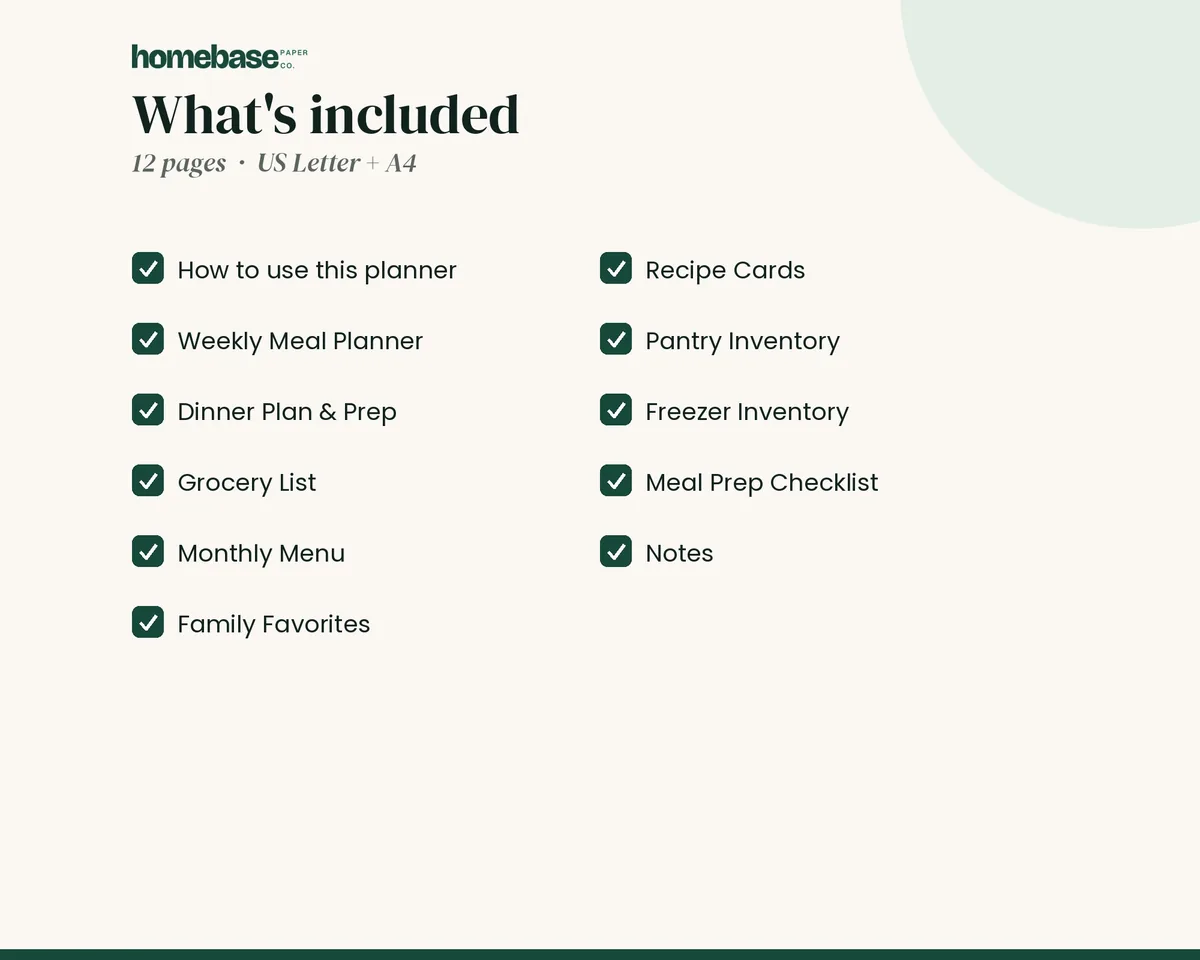
Jerk chicken needs a day's notice for the marinade, so it helps to plan it on paper first.
- Meal Planner & Grocery List, $3.99. A weekly menu and an aisle-sorted grocery list, with room to note the night before marinating.
- Family Recipe Binder, $6.99. Write down how many Scotch bonnets your family likes so the next batch hits the same heat.
Browse more kitchen printables in the printables shop.
Want the starter pages by email? Get the free recipe book pages (we email them to you).
Frequently asked questions
What is jerk chicken? Jerk chicken is a Jamaican dish of chicken marinated in a paste of Scotch bonnet peppers, allspice, thyme, green onions, garlic and ginger, then cooked slowly over smoky heat. At home it is grilled or baked until the meat reaches 165°F.
What gives jerk chicken its flavor? Jerk chicken gets its flavor mainly from allspice, called pimento in Jamaica, and Scotch bonnet peppers, backed by fresh thyme, green onions, garlic and ginger. Traditional jerk is cooked over pimento wood, which adds smoke.
How long should jerk chicken marinate? Jerk chicken should marinate in the refrigerator for at least 4 hours, and overnight gives the deepest flavor. This recipe uses up to 24 hours; never marinate the chicken at room temperature.
How spicy is jerk chicken? Jerk chicken made with whole Scotch bonnets is very spicy, since Scotch bonnets are among the hottest common chiles. For a milder batch, use 1 pepper with the seeds and ribs removed, or swap in a jalapeño.
What temperature should jerk chicken reach? Jerk chicken must reach 165°F in the thickest part, away from the bone, checked with a food thermometer. The dark crust can look done long before the inside is safe.
Can you bake jerk chicken in the oven? Jerk chicken bakes well at 425°F on a rack over a sheet pan for about 35 to 45 minutes for bone-in thighs and legs, until 165°F inside. A few minutes under the broiler adds char.
Can you use leftover jerk marinade as a sauce? Jerk marinade that touched raw chicken can be used as a sauce only after it is brought to a rolling boil for 1 minute. The simpler option is to set aside some clean marinade before adding the chicken.
What cut of chicken is best for jerk chicken? Bone-in, skin-on thighs and drumsticks are the best cuts for jerk chicken because they stay juicy through a long, smoky cook. Breasts work but dry out faster; pull them as soon as they reach 165°F.
What do you serve with jerk chicken? Jerk chicken is traditionally served with rice and peas, fried plantains, festival dumplings or hard dough bread. Coleslaw, grilled corn or a mango salad also cool the heat.
How long does leftover jerk chicken last? Leftover jerk chicken should be refrigerated within 2 hours and eaten within 3 days. Reheat it to 165°F, checked with a food thermometer.
Sources
- Clemson Cooperative Extension HGIC: Safe handling of poultry hgic.clemson.edu
- FDA: Safe food handling fda.gov