

The short answer: how to clean a dishwasher: food, grease and minerals build up in the filter, spray arms and door seals, so the machine works harder and cleans worse.
- Clean the filter and clear the spray arms
- Wipe the door and gasket and check the drain
- Run a cleaning cycle with dishwasher cleaner or citric acid
- Fixes for smells, film and dirty dishes
- Next step: Plan it with the Cleaning Schedule ($4.49).
If your dishes come out cloudy or the kitchen smells a little off, it's time to learn how to clean a dishwasher. Dishwashers don't clean themselves. Food, grease and minerals build up in the filter, spray arms and door seals, and the machine works harder and cleans worse. This guide walks through each part, how often to clean it, and how to fix common problems like smells, film and dirty dishes.
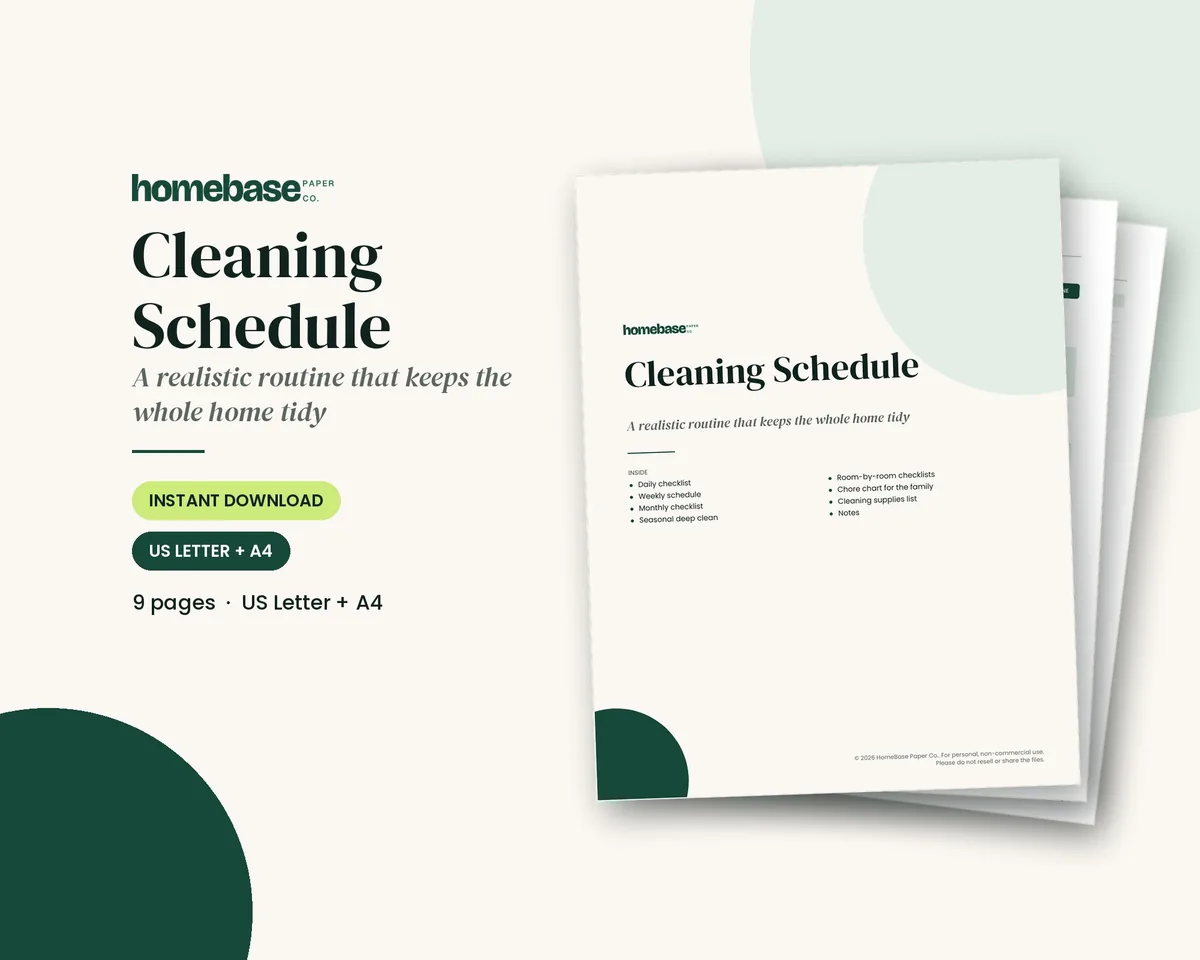
What you need
| Item | Use |
|---|---|
| Dishwasher cleaner or citric acid. | Cleans the tub and lines. |
| White vinegar (optional). | Cuts grease and mineral film. |
| Baking soda (optional). | Freshens and lifts stains. |
| Soft brush or old toothbrush. | Scrubs the filter and seals. |
| Toothpick or wooden skewer. | Clears spray arm holes. |
| Microfiber cloth and dish soap. | Wipes seals and the door. |
Skip steel wool and harsh scrubbers. Consumer Reports' tips on making your dishwasher last longer warn that they scratch the tub and finish.
How to clean a dishwasher in 7 steps
- Empty it. Take out the racks if you need room to reach the bottom.
- Clean the filter. Twist out the filter at the bottom of the tub. Rinse it under hot water and scrub it gently with a soft brush and a drop of dish soap. Put it back securely.
- Clear the spray arms. Remove them if they unclip or unscrew. Rinse, then poke any clogged holes clear with a toothpick. Make sure they spin freely.
- Wipe the door and gasket. Use a cloth with warm, soapy water on the rubber seal, the door edges and the bottom of the door, where gunk hides.
- Check the drain. Look for bits of food, glass or labels near the drain and remove them.
- Run a cleaning cycle. Use a dishwasher cleaner, following the package, on the hottest cycle with the machine empty. Consumer Reports' dishwasher cleaning guide suggests a monthly cleaning cycle.
- Wipe the outside. Clean the control panel and handle with a damp cloth. For stainless steel, wipe with the grain.
Cleaning the filter
The filter is the most important part. Consumer Reports' filter guide explains there are two types:
- Manual filters are removable and need regular cleaning. Most newer dishwashers have them, because they're quieter.
- Self-cleaning filters grind up food and send it down the drain. They need little care but are louder.
If your filter is manual, clean it every month or so, or every 2 to 3 months if you don't run the machine daily. A dirty filter is the number one cause of bad smells and gritty dishes.
How often to clean each part
| Task | How often |
|---|---|
| Scrape dishes before loading. | Every load. |
| Wipe the door edges and gasket. | Weekly. |
| Clean a manual filter. | Monthly, or every 2 to 3 months. |
| Run a cleaning cycle. | Monthly. |
| Clear the spray arms. | Every 3 months, or when dishes come out dirty. |
| Check the drain area. | Every 3 months. |
| Wipe the outside. | Weekly. |
Add these to your cleaning calendar so they don't get forgotten. Our kitchen cleaning checklist and cleaning schedule template show where they fit.
Vinegar, baking soda or a dishwasher cleaner?
A store-bought dishwasher cleaner, often made with citric acid, is the simplest choice and is safe for most machines. Many people also use a two-step method: run a hot cycle with a cup of white vinegar standing upright on the top rack, then sprinkle a cup of baking soda on the bottom and run a short cycle. Vinegar works, but some manufacturers say frequent use can wear rubber parts, so read your manual first. Never combine vinegar or ammonia with bleach.
Fixing common problems
If the sink next to the dishwasher smells, see how to clean a garbage disposal; the splash guard can even go in the top rack. To shine the basin itself, here's how to clean a stainless steel sink.
A bad smell
Clean the filter and gasket, then run a cleaning cycle. Run the kitchen sink until the water is hot before starting each load, so the first fill isn't cold. Leave the door cracked open after a cycle to let it dry.
White film or spots
That's usually hard water. Run a citric-acid cleaner, and keep the rinse aid dispenser full. A detergent made for hard water helps too.
Dishes still dirty
Check the filter and spray arms first. Then check how you load: don't block the spray arms, face dirty sides toward the center, and don't overcrowd.
Water left in the bottom
A little water near the filter is normal. More than that usually means a clogged filter or drain hose. Clean the filter. If it's still not draining, check the garbage disposal connection, since a new disposal's knockout plug or a full disposal can block it.
Cleaning mold or mildew
Black or pink spots on the gasket, the door edges or the bottom of the door are usually mold or mildew. They grow where water sits and the air stays damp. Wear gloves, and scrub the spots with warm water, dish soap and an old toothbrush, working into the folds of the rubber seal. For stubborn spots, a paste of baking soda and water helps. Rinse with a damp cloth, then run a cleaning cycle with a dishwasher cleaner. To stop it from coming back, leave the door open a few inches after each cycle so the inside can dry, and wipe the gasket weekly.
The same smell problem shows up in washers. Our guide on how to clean a washing machine covers the gasket, drum and filter.
Plastic vs. stainless steel tubs
Older and budget dishwashers often have plastic tubs, while most mid-range and higher models have stainless steel. Plastic tubs can stain orange or pink from tomato sauce and hard water. A paste of baking soda and water, or a citric-acid cleaner, usually lifts those stains. Stainless tubs resist stains but can show white mineral film, which a cleaning cycle removes. On either one, skip abrasive pads, and check your manual before using bleach.
Loading for cleaner dishes
How you load affects how well the machine cleans, and how often it needs a deep clean:
- Big items on the bottom, facing the center and the spray arm.
- Cups and bowls on top, tilted so water drains off.
- Utensils mixed, handles down for forks and spoons and handles up for knives.
- Nothing blocking the detergent door or the spray arms.
- Large pans to the sides or back, so they don't shadow other dishes.
Spin each spray arm by hand after loading to make sure nothing blocks it.
A pre-holiday dishwasher clean
The dishwasher works overtime from Thanksgiving to New Year's. Give it a full clean the weekend before the first big meal: filter, spray arms, gasket and a cleaning cycle. Then run it empty again in early January to clear the holiday grease. Add both dates to your calendar now.
Habits that keep it clean longer
Our guide on how to clean a Keurig covers the weekly parts wash and how to descale the machine.
- Scrape, don't rinse. Consumer Reports notes that modern detergents need some food to work on.
- Run full loads. It saves water and energy.
- Use the right amount of detergent. Too much leaves film.
- Use rinse aid. It helps dishes dry and keeps spots away.
- Run hot water first. It helps the first fill start hot.
Cleaning the outside and the control panel
The outside of the dishwasher picks up fingerprints, splashes and sticky handprints. Wipe the front with a soft cloth and warm, soapy water, then dry it. For stainless steel, wipe in the direction of the grain, and finish with a few drops of mineral oil on a cloth if you want a streak-free shine. Don't spray cleaner directly on the control panel, since liquid can seep behind the buttons. Spray the cloth instead. If your model has a child lock, turn it on before wiping so you don't start a cycle by accident. Clean the handle often during cold and flu season, along with the fridge and microwave handles.
For more on fronts and handles, see our guide on how to clean stainless steel.
When it's time for a new dishwasher
If yours is leaking, rusting or still cleaning poorly after a deep clean, it may be time to replace it. ENERGY STAR's dishwasher page explains that certified models use less water and energy than older ones, which lowers utility bills over time. Write the model, purchase date and repairs in a home maintenance log, so you know how old your appliances are.
Keep the whole house on a schedule
A clean dishwasher is one monthly job among many. The Cleaning Schedule ($4.49) has daily, weekly, monthly and seasonal cleaning lists plus a family chore chart, so the filter, fridge and oven all get their turn. For the whole home, the Home Management Bundle ($16.99) includes a household binder, a maintenance log, a cleaning schedule, a home inventory and more.
Hosting soon? See how to clean house before holiday guests and our deep cleaning checklist.
Make it easier
Tools for this
Printables
Cleaning Schedule
Daily, weekly, monthly and seasonal lists - plus a family chore chart.
 Save 48%
Bundles
Home Management Bundle
Household binder, maintenance log, moving planner, cleaning schedule, home inventory and password log.
Frequently asked questions
How do you clean a dishwasher? To clean a dishwasher, empty it, remove and rinse the filter, clear the spray arm holes, wipe the door gasket and edges, then run a hot cycle with a dishwasher cleaner or citric acid. Finish by wiping the outside. The whole job takes about 30 minutes plus the cycle time.
How often should you clean a dishwasher? Clean the filter about once a month if it is manual, or every 2 to 3 months for lighter use. Run a cleaning cycle with a dishwasher cleaner about once a month, and wipe the door gasket and edges weekly or whenever you see buildup. Self-cleaning filters need less attention.
Where is the dishwasher filter? The filter is usually at the bottom of the tub, under the lower spray arm, in a round or rectangular cylinder. Remove the bottom rack, then twist the cylinder counterclockwise and lift it out. Check your manual if you can't find it, since a few models use a self-cleaning filter you can't remove.
Can you clean a dishwasher with vinegar? Yes, many people place a cup of white vinegar upright on the top rack and run a hot cycle to cut grease and mineral buildup. Some manufacturers advise against frequent vinegar use because it can wear rubber seals, so check your manual. A citric-acid dishwasher cleaner is a safe alternative.
Can you clean a dishwasher with baking soda? Yes, you can clean a dishwasher with baking soda: sprinkle about a cup of baking soda across the bottom of the empty tub and run a short hot cycle to freshen it and lift stains. It works well after a vinegar or citric-acid cycle. Never mix vinegar and bleach.
Why does my dishwasher smell? A smelly dishwasher usually has food trapped in the filter, gunk in the door gasket, or standing water from a clogged drain. Clean the filter first, then wipe the seals and run a cleaning cycle. Running the kitchen sink until the water is hot before starting a cycle also helps.
Should you rinse dishes before putting them in the dishwasher? No, you don't need to rinse dishes before putting them in the dishwasher; just scrape off the food. Consumer Reports says pre-rinsing wastes water, and modern detergents work better when there is some food for their enzymes to act on. Scraping big scraps keeps the filter clear.
Why are my dishes still dirty after a cycle? Dirty dishes usually mean a clogged filter, blocked spray arm holes, overloading, or water that isn't hot enough. Clean the filter and spray arms, load so water can reach every dish, and run the sink until hot before starting. Hard water may also need a rinse aid.
How do you clean dishwasher spray arms? Remove the spray arms, usually by unscrewing or unclipping them, and rinse them under hot water. Clear any blocked holes with a toothpick or wooden skewer, not metal. Check that each arm spins freely after you put it back.
How do you get rid of white film in a dishwasher? White film is usually hard-water minerals. Run an empty cycle with a citric-acid dishwasher cleaner or a cup of vinegar on the top rack, and use a rinse aid in every load. If your water is very hard, a detergent with a built-in water softener helps.
Can you use bleach to clean a dishwasher? Only if your dishwasher has no stainless steel interior and your manual allows it, and never with vinegar or other cleaners, because mixing them makes toxic gas. Most people don't need bleach. A dishwasher cleaner handles mold and buildup safely.
How do I remember to clean the dishwasher? Put it on a cleaning schedule. The Cleaning Schedule ($4.49) has daily, weekly, monthly and seasonal lists plus a family chore chart, so monthly jobs like the dishwasher filter come up on time.
More from HomeBase
You may also like

Printables
Household Binder
Family info, emergency plan, calendars, meals, groceries, cleaning, bills and sitter notes.

Printables
Home Maintenance Log
Monthly, seasonal and annual checklists plus a record of every appliance and repair.

Printables
Home Inventory
Printable pages and a spreadsheet that totals the value of every room.

Printables
Vehicle Maintenance Log
Oil changes, repairs, tires, fuel and MPG, trip mileage and renewal dates - so resale and warranty records are easy.
 Club
Monthly club
Planner & Calendar Club
Anyone who wants a monthly calendar, bill calendar and meal plan ready to print.
Free printable
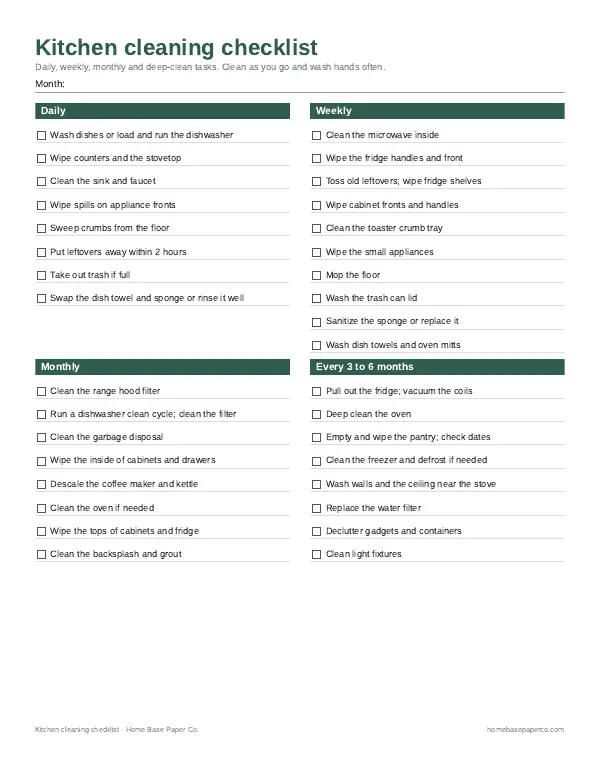
Keep the kitchen clean with a little every day
Daily, weekly, monthly and deep-clean tasks plus a who-does-what table. You'll also get our weekly HomeBase email with simple cleaning routines and chore ideas the whole family can help with.
Sources
- Consumer Reports: How to clean a dishwasher consumerreports.org
- Consumer Reports: How to clean your dishwasher filter consumerreports.org
- Consumer Reports: How to make your dishwasher last longer consumerreports.org
- ENERGY STAR: Dishwashers energystar.gov