The short answer: semi monthly means twice a month: two fixed pay dates each month, usually the 1st and 15th or the 15th and the last day, for 24 paychecks a year.
- Biweekly is every two weeks, for 26 paychecks
- On $60,000: $2,500.00 gross per semi monthly check
- To calculate: divide your annual salary by 24
- How to budget each check
- Next step: Plan it with the Paycheck Budget Spreadsheet ($5.99).
Semi monthly means twice a month. A semi monthly pay schedule pays you on two fixed dates each month, usually the 1st and 15th or the 15th and the last day, for 24 paychecks a year. Many people mix up semi monthly pay with biweekly pay, which comes every two weeks and gives 26 paychecks. Below is the full semi monthly meaning, a side-by-side comparison of pay schedules, how to calculate a paycheck and a step-by-step way to budget each check. We also cover which states require it, using the Department of Labor's state payday requirements table.
Semi monthly meaning
"Semi" means half, so semi monthly means every half month. In payroll, a semi monthly schedule splits the year into 24 pay periods. Each period covers about 15 days. The pay dates stay the same every month, but the day of the week moves around.
You may see it spelled semimonthly, semi-monthly or semi monthly. They all mean the same thing. IRS Publication 15, the employer's tax guide, lists semimonthly alongside weekly, biweekly and monthly as standard payroll periods for figuring withholding.
Semi monthly vs. biweekly, weekly and monthly pay
The quickest way to see the difference is to put the schedules next to each other. The example uses a $60,000 salary before taxes.
| Pay schedule | How often | Paychecks per year | Gross per check on $60,000 | Pay dates |
|---|---|---|---|---|
| Weekly | Every week | 52 | $1,153.85 | Same weekday |
| Biweekly | Every two weeks | 26 | $2,307.69 | Same weekday, every other week |
| Semi monthly | Twice a month | 24 | $2,500.00 | Same dates, such as the 1st and 15th |
| Monthly | Once a month | 12 | $5,000.00 | One date |
The biweekly "extra paycheck" difference
With biweekly pay, most months have two paydays, but two months a year have three. Many people treat those third checks as a bonus for savings or debt. With semi monthly pay there is never a third check. Each paycheck is larger instead, and the yearly total is exactly the same.
How to calculate semi monthly pay
For salaried workers, the math is simple:
- Find your annual salary. Example: $52,000.
- Divide by 24. $52,000 ÷ 24 = $2,166.67 gross per paycheck.
- Subtract deductions. Federal and state income tax, Social Security and Medicare, health insurance and retirement contributions come out next.
- Check your pay stub. Your net pay is what lands in your bank account.
For hourly workers, multiply your hourly rate by the hours worked in that pay period. A full-time year of 2,080 hours divided by 24 is about 86.7 hours per semi monthly period on average. Actual hours vary because some periods have more workdays than others.
| Annual salary | Semi monthly gross | Monthly gross |
|---|---|---|
| $36,000 | $1,500.00 | $3,000.00 |
| $45,000 | $1,875.00 | $3,750.00 |
| $60,000 | $2,500.00 | $5,000.00 |
| $75,000 | $3,125.00 | $6,250.00 |
| $90,000 | $3,750.00 | $7,500.00 |
Semi monthly pay and overtime
If you are hourly and not exempt, overtime still follows the workweek. The Department of Labor's overtime rules say the FLSA applies on a workweek basis, a fixed 168-hour period, and that averaging hours over two or more weeks is not permitted. Your employer adds up overtime week by week and pays it on the regular payday for that pay period.
Common semi monthly pay dates
Employers choose their own dates within state rules. These pairs are the most common:
- 1st and 15th: popular for salaried staff; the first check often lines up with rent.
- 15th and last day of the month: common in payroll software.
- 5th and 20th, or 10th and 25th: gives payroll a few days to process hours after a period closes.
When a payday falls on a weekend or holiday, many employers pay on the business day before. Others pay the next business day. Your offer letter or employee handbook should say which.
Which states require semi monthly pay?
There is no single federal rule on how often you must be paid. States set their own minimums. The Department of Labor's state payday table, last revised January 1, 2023, shows that many states require at least semi monthly pay for most private employees. Some, like Colorado and Washington, list monthly. Others, like Connecticut and Rhode Island, generally require weekly pay. Several states have special rules by job type, and laws change, so confirm with your state labor department.
Pros and cons of semi monthly pay
Neither schedule pays you more over a year. The difference is timing, and timing matters when bills are due.
| Semi monthly pay | Biweekly pay | |
|---|---|---|
| Paychecks per year | 24 | 26 |
| Lines up with monthly bills | Yes, always two per month | Mostly; two months have three checks |
| Check size | Larger | Smaller |
| Payday weekday | Changes each month | Always the same |
| Hours per period (hourly) | Varies, about 80 to 96 | Always two workweeks |
| "Extra" paychecks | None | Two a year |
Semi monthly pay works well if your rent or mortgage is due on the 1st, you like a predictable monthly rhythm, or you are salaried and want the same check amount every time.
It is harder if you are hourly and want steady checks, or you rely on the two extra biweekly paychecks as your savings plan. If that is you, set up an automatic transfer of a small amount from every semi monthly check to build the same cushion.
When your pay schedule changes
Switching from biweekly to semi monthly, often with a new job, can leave a gap. Your first semi monthly check may come later than your old biweekly payday would have, and it may cover a partial period. Before the switch, list the bills due in that first month and check that your savings can cover any gap. After the switch, rebuild your budget around the new dates rather than the old ones.
How to budget with semi monthly pay
Semi monthly pay is one of the easiest schedules to budget around, because every month has exactly two paychecks. Use this five-step method.
- List your monthly bills and due dates. Include rent or mortgage, utilities, phone, insurance, car payment, debt minimums and subscriptions.
- Split bills between the two checks. Bills due from about the 1st to the 14th get paid from the paycheck before them. Bills due from the 15th to the end of the month come from the mid-month check.
- Balance the load. If rent eats most of the first check, move smaller bills to the second so both checks have breathing room.
- Divide flexible spending in half. Groceries, gas and household items get the same amount from each check.
- Pay yourself first. Move a set amount to savings on each payday, even $25, before you spend the rest.
Here is a sample plan for $2,500 semi monthly paychecks paid on the 1st and 15th.
| Paycheck | Bills it covers | Amount |
|---|---|---|
| 1st | Rent (due 1st) | $1,400 |
| 1st | Groceries and gas | $450 |
| 1st | Phone and internet | $140 |
| 1st | Savings | $250 |
| 1st | Left to spend | $260 |
| 15th | Car payment and insurance | $520 |
| 15th | Utilities | $180 |
| 15th | Credit card minimum | $150 |
| 15th | Groceries and gas | $450 |
| 15th | Savings | $250 |
| 15th | Left to spend | $950 |
The second check has more room because rent comes out of the first. That is a good place for extra debt payments or a sinking fund.
A paycheck budget that knows your pay schedule
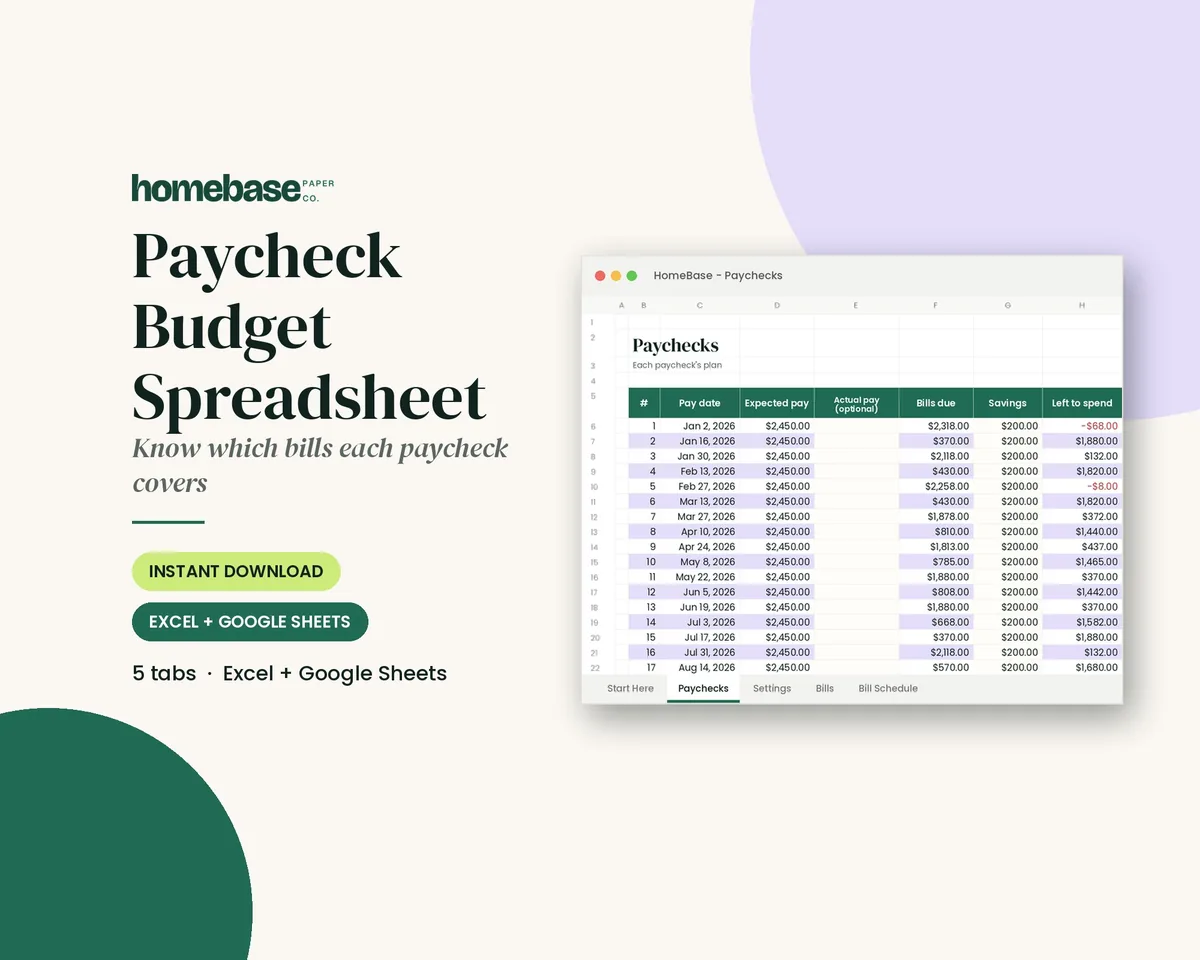
The Paycheck Budget Spreadsheet ($5.99) is built for this. Choose weekly, biweekly, semi monthly or monthly pay and it calculates your pay dates for the year. Enter each bill once and it schedules all 12 months, assigns every bill to the right paycheck and shows what is left to spend from each check. You can override any bill's paycheck and tick bills off as paid.
If you are paid every two weeks instead, see our biweekly budget template guide. Our paycheck budget planner walks through the method on paper. To understand every line on your check, read how to read a pay stub, and to convert any pay schedule into a monthly number, see our guide to gross monthly income.
Make it easier
Tools for this
Spreadsheets
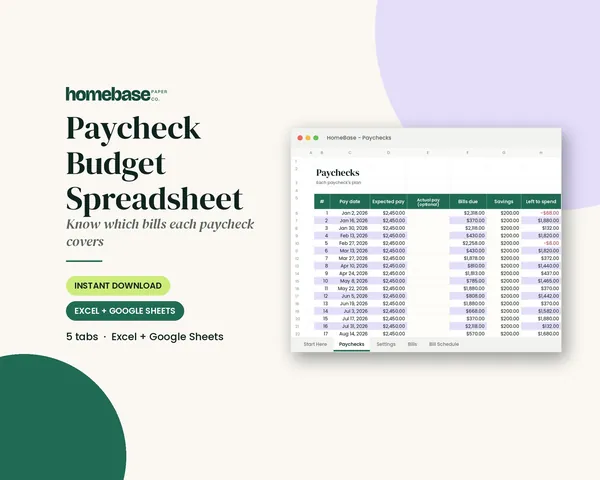
Paycheck Budget Spreadsheet
Enter your bills once. The sheet tells you which paycheck pays each one, all year.
Frequently asked questions
What does semi monthly mean? Semi monthly means twice a month. A semi monthly pay schedule pays you on two set dates each month, such as the 1st and 15th or the 15th and the last day, for a total of 24 paychecks a year. It is different from biweekly, which means every two weeks.
What is semi monthly pay? Semi monthly pay is a payroll schedule with two paydays every month, 24 a year. If you earn a $60,000 salary, each semi monthly paycheck is $2,500 before taxes and deductions. The dates stay the same each month, but the weekday changes, and a payday on a weekend usually moves to a nearby business day.
Is semi monthly the same as biweekly? No, semi monthly is not the same as biweekly. Semi monthly pay comes twice a month on fixed dates, 24 times a year. Biweekly pay comes every other week on the same weekday, 26 times a year. Biweekly checks are smaller, but two months a year you get a third paycheck. Semi monthly checks are larger and line up with monthly bills.
How many paychecks do you get with semi monthly pay? You get 24 paychecks a year with semi monthly pay, exactly two per month. Biweekly pay gives 26, weekly gives 52 and monthly gives 12. Your yearly salary is the same on every schedule; only the size and number of checks change.
How do I calculate a semi monthly paycheck? Divide your annual salary by 24 to get your gross semi monthly paycheck. For example, $48,000 divided by 24 is $2,000 per paycheck. For hourly pay, multiply your rate by your hours in that pay period. Taxes, insurance and retirement contributions come out before you see your net pay.
What are the usual semi monthly pay dates? The most common semi monthly pay dates are the 1st and 15th, or the 15th and the last day of the month. Some employers use the 5th and 20th or the 10th and 25th. When a payday falls on a weekend or holiday, many employers pay on the business day before. Check your employee handbook.
Is semi monthly pay good for budgeting? Yes, semi monthly pay is often easier for budgeting because there are always exactly two paychecks a month. Rent, a car payment and other monthly bills can each be assigned to the first or second check every month, which the Paycheck Budget Spreadsheet does automatically. The downside is no bonus third paycheck like biweekly pay gives twice a year.
How does overtime work with semi monthly pay? Overtime is still figured by the week, not the pay period. The Department of Labor says the FLSA applies on a workweek basis and averaging hours over two or more weeks is not allowed. So a semi monthly pay period can include overtime from any week where you worked over 40 hours.
Do semi monthly paychecks have the same hours each time? Semi monthly paychecks don't always have the same hours each time. A semi monthly pay period can have 10 to 12 workdays depending on the month, so hourly workers may see different paycheck amounts. Salaried workers usually get the same gross amount each time because the salary is simply divided by 24.
Which states require semi monthly pay? Many states set a minimum pay frequency, and a large group require at least semi monthly pay for most workers. The Department of Labor's state payday table lists, for example, Arkansas, Georgia, Kentucky, Missouri, Ohio, Oklahoma, Tennessee and Wyoming as semi monthly states. Rules and exceptions change, so check your state labor office.
How do I budget with semi monthly pay? List every monthly bill with its due date. Assign bills due from roughly the 1st to the 14th to the paycheck before them, and bills due later to the second paycheck. Then split groceries, gas and savings evenly between both checks so each paycheck has a clear plan.
What is semimonthly vs semi-monthly vs semi monthly? Semimonthly, semi-monthly and semi monthly all mean the same thing: twice a month. Payroll software and the IRS often write semimonthly as one word. Job offers and pay stubs may use any of the three spellings, and all of them mean 24 paychecks a year.
More from HomeBase
You may also like
Printables
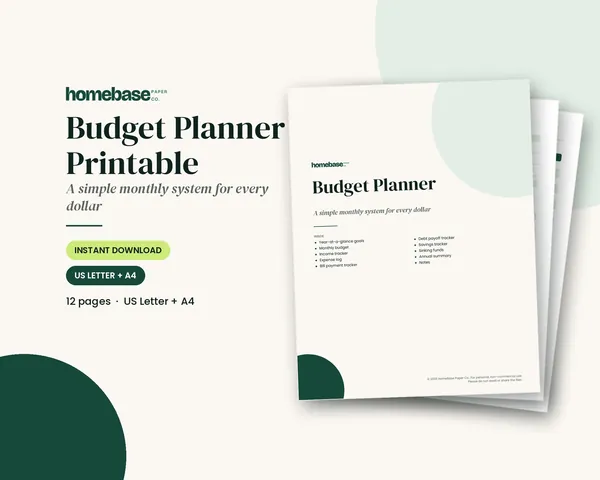
Budget Planner Printable
Twelve undated pages you can print every month: budget, bills, spending, savings and debt.
Spreadsheets
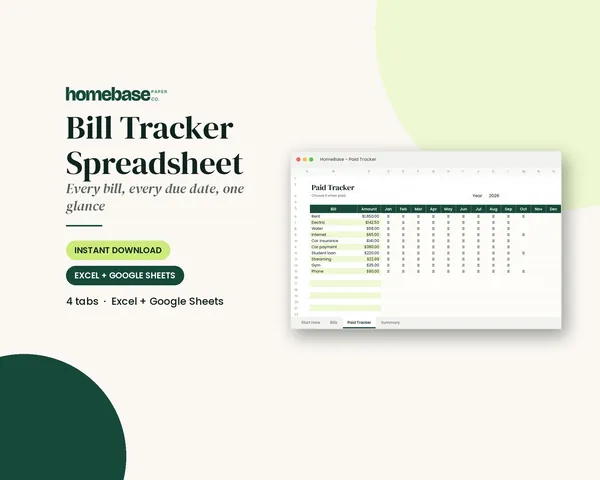
Bill Tracker Spreadsheet
Bills due in 3 days or less light up red, so nothing slips through.
Spreadsheets
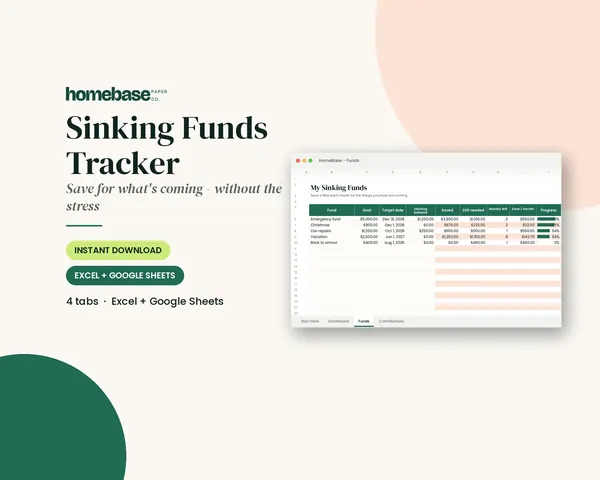
Sinking Funds Tracker
It does the math: how much to set aside each month to hit every goal on time.
Spreadsheets
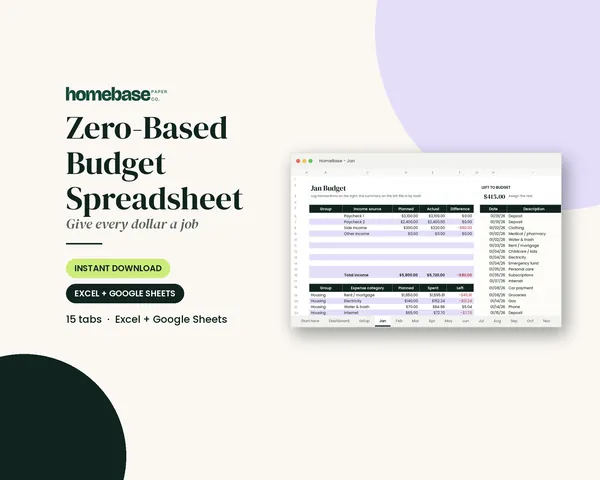
Zero-Based Budget Spreadsheet
The 'Left to budget' counter turns green when every dollar has a job.
 Club
Monthly club
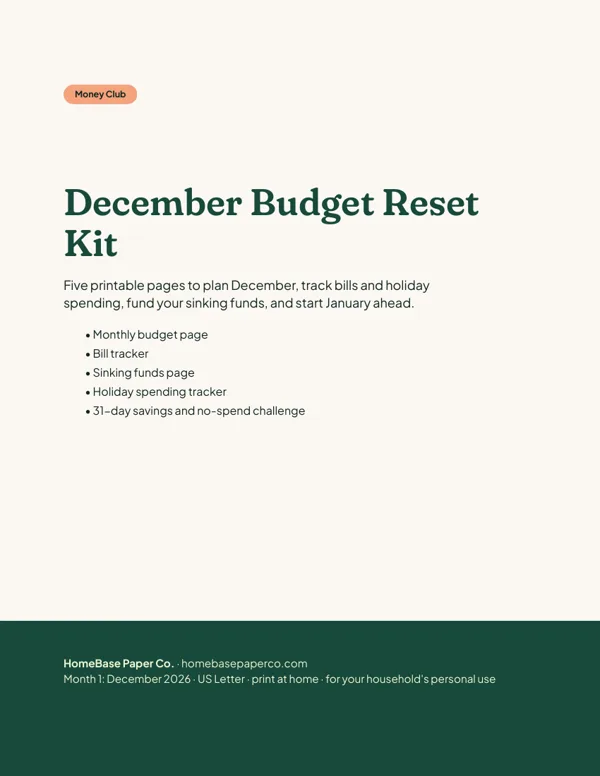
Money Club
Anyone who wants a clear plan for the month's bills, holiday spending and savings.
Free printable
Give every dollar a job: get the free monthly budget template
A printable zero-based monthly budget: income, bills, everyday spending and savings on one page, with a planned vs. actual column. You'll also get our weekly HomeBase email with simple budgeting and bill-paying tips.